Emergency Tree Service in Midland Park, NJ
Cost Estimates - Midland Park
Storm Damage in Midland Park
Bergen County averages 16 significant storm events per year, including 12 high-wind events. Emergency tree service is not a matter of if, but when.
What to Do Right Now
- Stay away - keep everyone out of the fall zone. If a tree is leaning on a power line, call the utility company first, not a tree service.
- Document the damage - take photos from a safe distance before anything is touched. Your insurance company will want these.
- Don't DIY - storm-damaged trees are under tension. Cutting the wrong branch releases stored energy and can kill you. This is not a chainsaw-on-the-weekend job.
- Call a certified arborist - not just "a guy with a truck." Storm chasers flood into areas after major storms, do bad work, and disappear. ISA certification matters more after a storm than any other time.
Emergency vs Regular Pricing
Expect to pay 50-100% more for emergency response compared to scheduled work. In Midland Park, that means emergency tree removal typically runs $1,687 to $7,380. After major storms, demand spikes and prices go higher. If you can safely wait 48-72 hours, the "emergency" premium drops significantly.
See full climate profile and risk assessment for Midland Park →
Common Trees in Midland Park
Native & Adapted Species
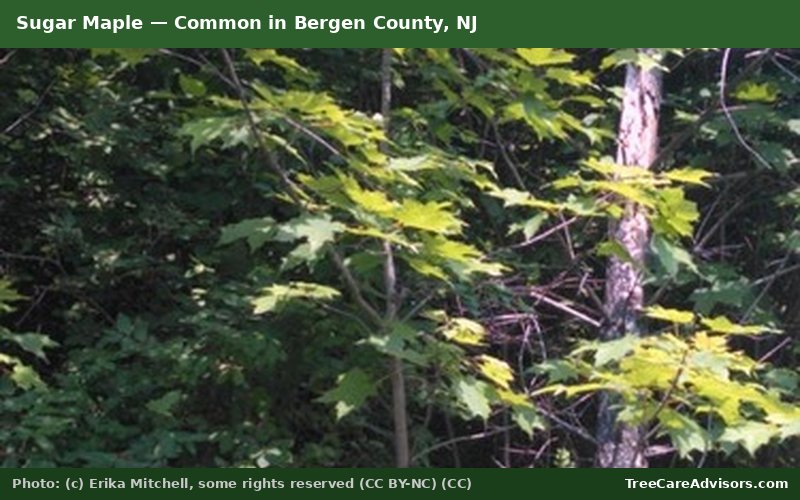
Sugar Maple
The iconic fall color tree - brilliant orange/red, shade champion, slow-growing
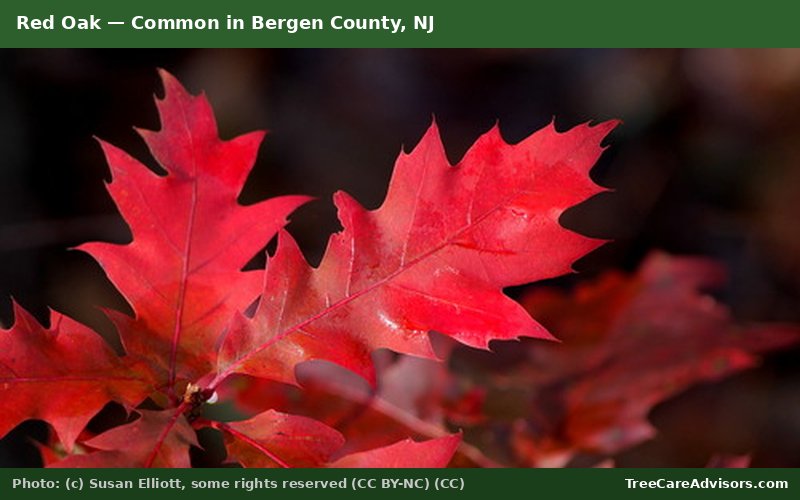
Red Oak
Fast-growing oak, excellent shade, good fall color, valuable timber
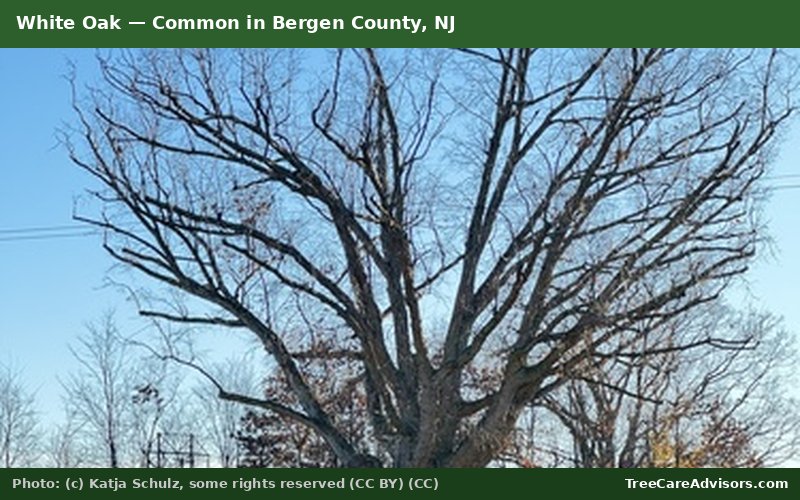
White Oak
Long-lived (300-600 years), wide-spreading, slow-growing, acorn producer
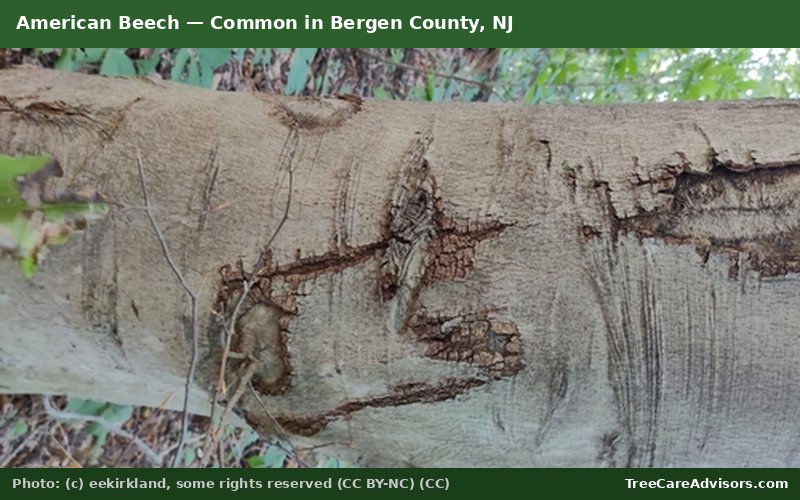
American Beech
Smooth gray bark, golden fall color, shallow roots, colonial root sprouts
Problem Species to Watch
Norway Maple
Invasive - dense shade kills understory, shallow roots heave sidewalks, now banned in some states
Bradford Pear
Structurally catastrophic - splits in half at 15-20 years, invasive cross-pollination
Silver Maple
Extremely fast but weak wood, aggressive surface roots, splits in storms
Emergency Tree Service Cost in Midland Park
Midland Park's regional cost multiplier is 1.3x the national average, reflecting higher property values (median $557,800) and labor costs in the New York-Newark-Jersey City, NY-NJ area. Varies significantly by tree size, species, and access
Tree Services Near Midland Park
We also cover tree care in these nearby communities:
Storm Damage Risk in Midland Park
Bergen County averages 16.2 significant storm events per year, including 12.0 high-wind events.
Wind is the primary threat to trees in Midland Park. Severe thunderstorms and high-wind events cause the most tree failures.
Freeze Protection for Midland Park Trees
With January lows averaging 21.6°F in Midland Park, freezing temperatures can damage non-native and marginally hardy species. Tropical and semi-tropical plantings are particularly vulnerable.
Managing Midland Park's Aging Tree Canopy
~72-year-old trees need regular professional assessment. Watch for crown dieback, deadwood, and root-infrastructure conflicts.
Active Tree Threats in Bergen County
Emerald Ash Borer (EAB) critical
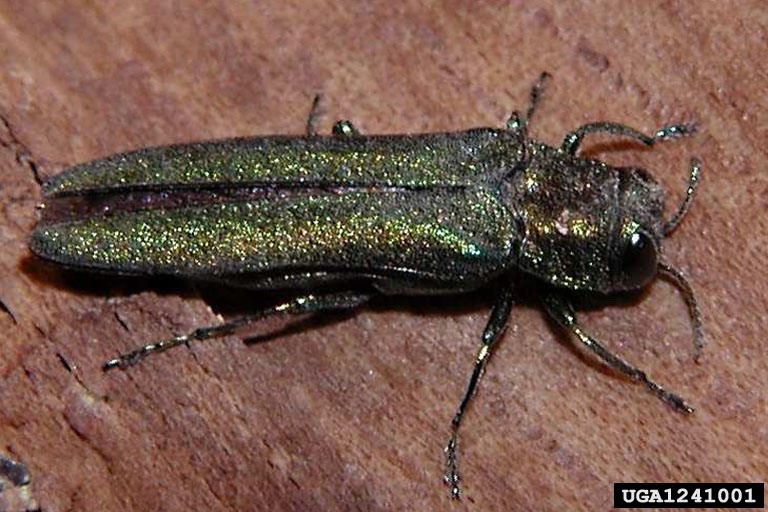
Affects: All ash species (Fraxinus) - green, white, black, blue ash
Metallic green beetle native to Asia. Larvae feed under bark, cutting off water and nutrient transport. Tree dies within 2-5 years of infestation. Has killed hundreds of millions of ash trees in North America since 2002.
Spotted Lanternfly high
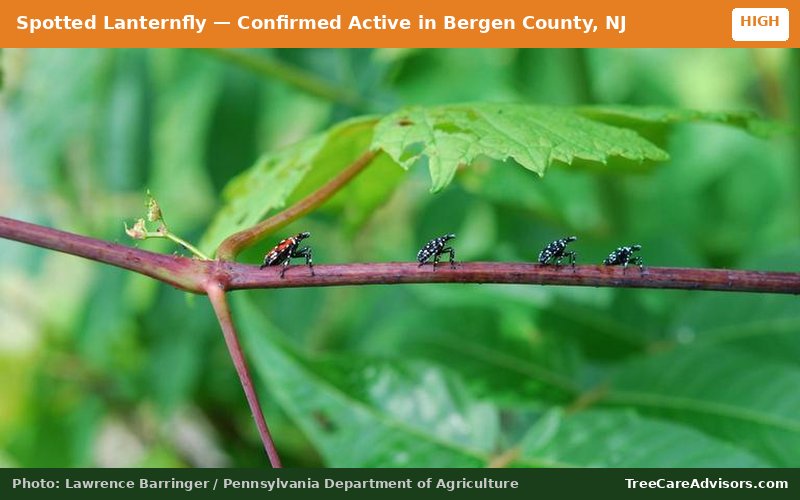
Affects: Tree of Heaven (primary host), but feeds on 70+ species including maples, oaks, walnut, willow, birch, grape
Showy planthopper from Asia. Feeds on sap, excretes honeydew that promotes sooty mold. Doesn't usually kill trees directly but weakens them and creates a mess. Major agricultural pest on grapes and orchards.
Oak Wilt high
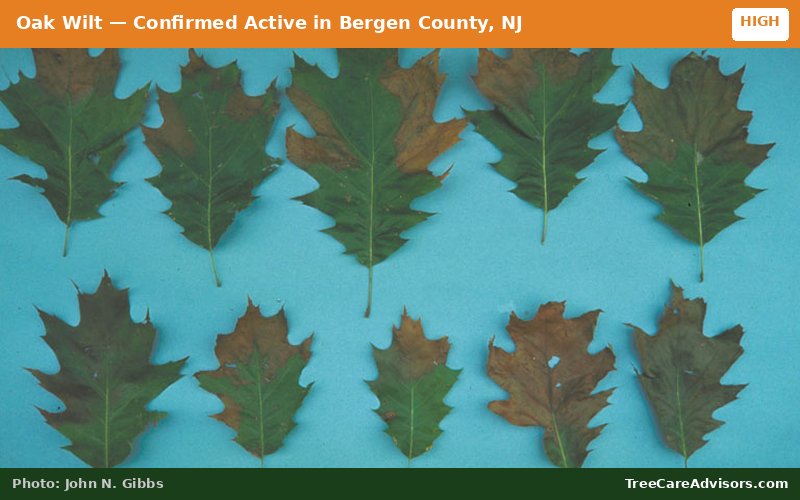
Affects: Red oak group (red, pin, scarlet, black - usually fatal). White oak group (white, bur, swamp white - slower, sometimes survivable).
Fungal disease (Ceratocystis fagacearum) that clogs water-conducting vessels. Red oaks can die within weeks. Spreads through connected root systems between nearby oaks and via beetles attracted to fresh wounds.
What 1940s-1960s-Era Trees Need in 2026
1940s-1960s Homes (65-85 years old trees)
Post-war suburban boom. Cookie-cutter developments planted the same few species on every property.
Common Issues
- **Silver Maple crisis** - these fast-growing trees are now enormous with weak, brittle wood. They split in every ice storm. Surface roots have destroyed lawns, driveways, and sewer lines. The most-removed tree in America.
- **Norway Maple invasiveness** - dense shade has killed lawn and understory. Shallow roots heave sidewalks. Many states now prohibit planting. 65-year-old specimens are large and expensive to remove.
- **Overgrown evergreens** - Blue Spruce and White Pine planted as 3ft nursery trees are now 50-60ft specimens too close to houses, blocking light and dropping branches on roofs.
Recommended Actions
- Remove declining Silver Maples before they fail - budget $3,000-8,000 for large specimen removal
- Replace Norway Maples with native alternatives (Sugar Maple, Red Maple, or Zelkova)
- Assess Blue Spruce for Cytospora canker and Rhizosphaera needle cast - if lower half is bare, removal is likely best
Frequently Asked Questions
How much does emergency tree service cost in Midland Park?
How quickly can an arborist respond to storm damage in Midland Park?
Can freezing temperatures damage my trees in Midland Park?
How do I find a good arborist in Midland Park?
Get Emergency Tree Service Quotes in Midland Park
Compare ISA-certified arborists serving Midland Park and Bergen County.
Get Free Quotes