Tree Care in Waldwick, NJ
Why Tree Care Matters in Waldwick
Professional tree care here isn't just about aesthetics; it's about risk management. You can't see inside a tree from the outside. Decay can be advanced internally for years before any external symptom appears. In our storms, wind primarily causes two failures: uprooting in our saturated soils and branch failure from weak unions or deadwood. A certified arborist uses tools like sounding with a mallet to detect hidden decay by listening for a dull, hollow tone versus solid wood. This proactive assessment is critical for protecting your property from the sudden failure of a large, mature tree, especially with threats like the invasive Emerald Ash Borer now in our area.
Your Tree's History
The 1940s to 1960s building boom defined Waldwick's landscape. Developers planted fast-growing, readily available trees like Norway maple, silver maple, and Bradford pear to give new subdivisions instant greenery. Now, those trees are at full maturity, and their biological limits are showing. Norway maples are crowding out native oaks and beeches. The Bradford pears have hit their 15-20 year lifespan where splitting is inevitable. This era created a uniform age class of trees across town, meaning many properties are facing similar, simultaneous issues with aging canopy trees that were never suited for their long-term location.
Waldwick Climate Profile
Risk Assessment
Growing & Pruning
Typical Tree Care Costs in Waldwick
Tree Removal
When a tree should come down, and what removal runs here
Trimming & Pruning
Which pruning your trees need and when to do it
$193-$771 per tree
Stump Grinding
Grinding vs chemical removal
priced by stump diameter
Storm Damage
What to do first, and what emergency work costs
emergency removal, 50-100% over normal rates
Tree Health
Warning signs and local threats
annual care plan: pruning, health check, pest monitoring
These are estimates, not quotes: national price ranges adjusted by Waldwick's regional cost multiplier (1.29x), which reflects local home values (median $546,200) and labor costs. Tree size, species, access and cleanup move the real price more than location does.
Common Trees in Waldwick
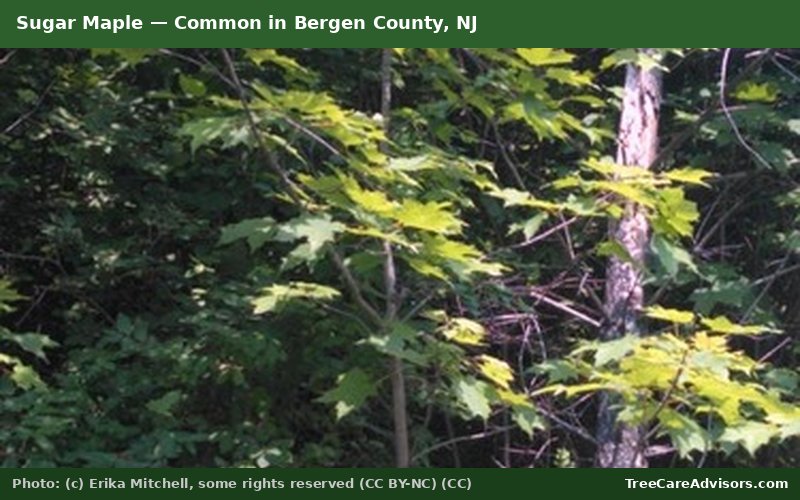
Sugar Maple
The iconic fall color tree - brilliant orange/red, shade champion, slow-growing
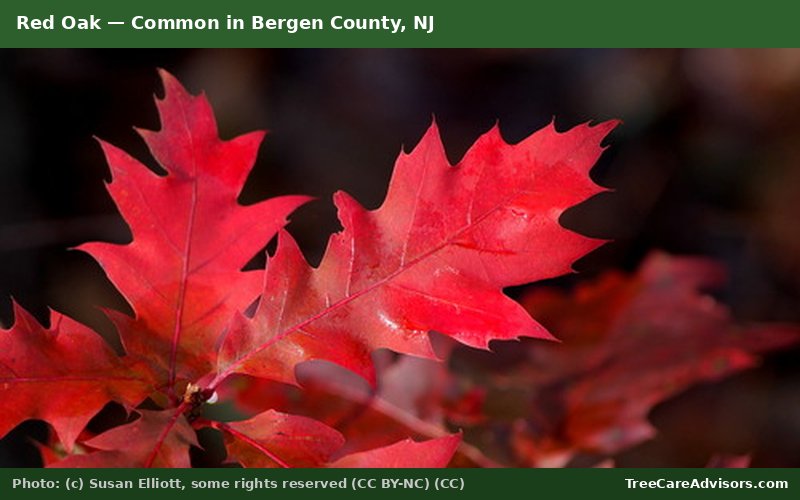
Red Oak
Fast-growing oak, excellent shade, good fall color, valuable timber
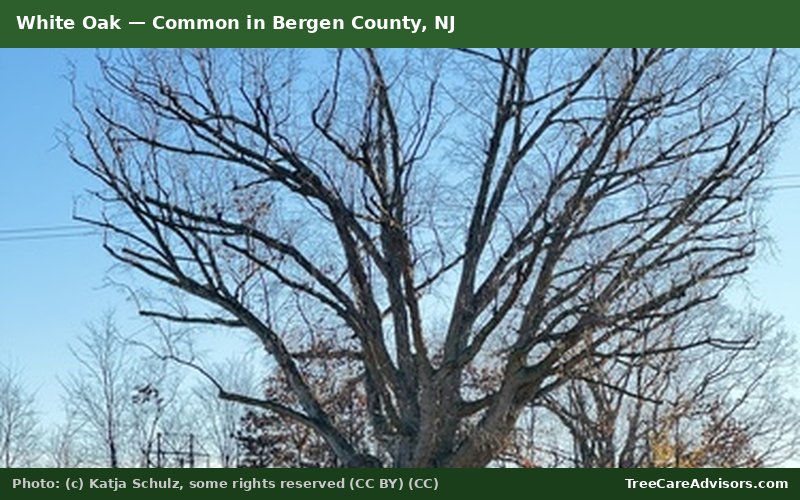
White Oak
Long-lived (300-600 years), wide-spreading, slow-growing, acorn producer
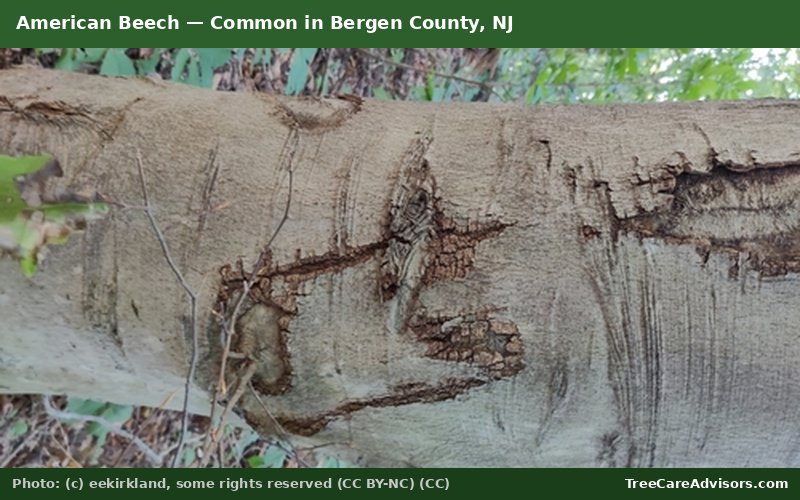
American Beech
Smooth gray bark, golden fall color, shallow roots, colonial root sprouts
Eastern White Pine
Tallest eastern conifer, soft needles, susceptible to white pine weevil
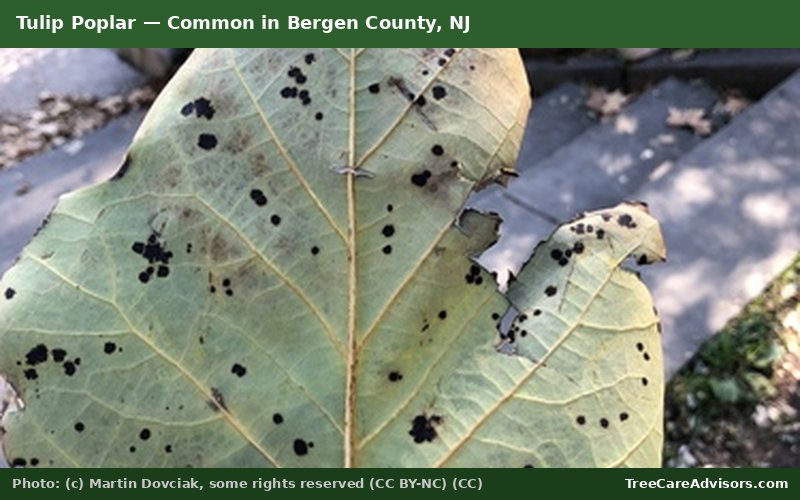
Tulip Poplar
Fast-growing, very tall (80-100ft), tulip-shaped flowers, yellow fall color
Problem Species to Watch
Norway Maple
Invasive - dense shade kills understory, shallow roots heave sidewalks, now banned in some states
Bradford Pear
Structurally catastrophic - splits in half at 15-20 years, invasive cross-pollination
Silver Maple
Extremely fast but weak wood, aggressive surface roots, splits in storms
Active Tree Threats in Bergen County
Emerald Ash Borer (EAB) critical
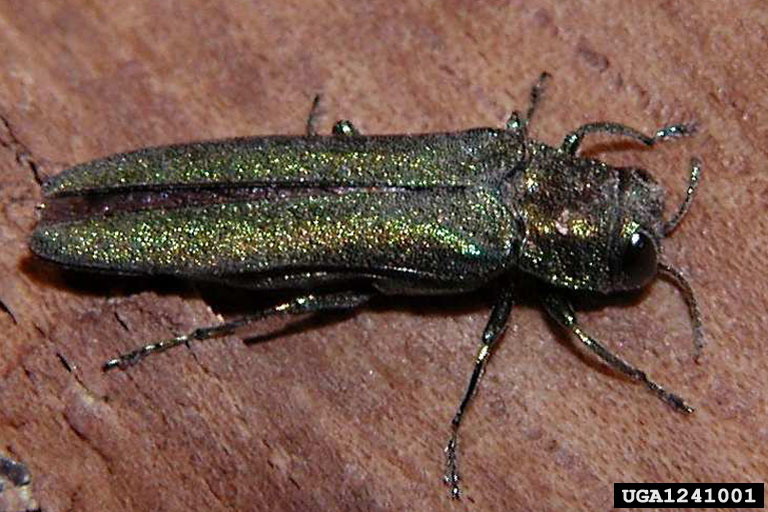
Affects: All ash species (Fraxinus) - green, white, black, blue ash
Metallic green beetle native to Asia. Larvae feed under bark, cutting off water and nutrient transport. Tree dies within 2-5 years of infestation. Has killed hundreds of millions of ash trees in North America since 2002.
Spotted Lanternfly high
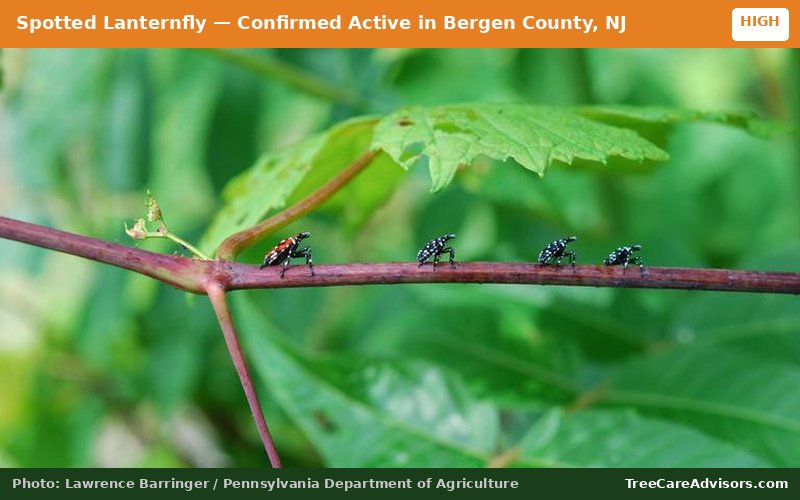
Affects: Tree of Heaven (primary host), but feeds on 70+ species including maples, oaks, walnut, willow, birch, grape
Showy planthopper from Asia. Feeds on sap, excretes honeydew that promotes sooty mold. Doesn't usually kill trees directly but weakens them and creates a mess. Major agricultural pest on grapes and orchards.
Oak Wilt high
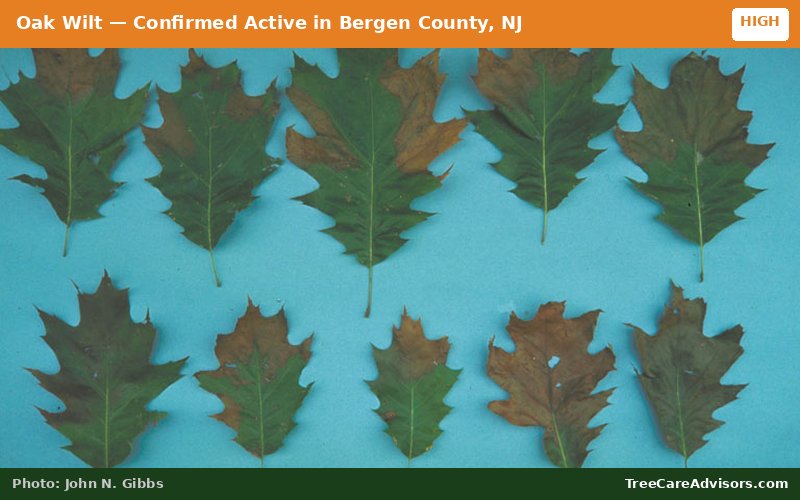
Affects: Red oak group (red, pin, scarlet, black - usually fatal). White oak group (white, bur, swamp white - slower, sometimes survivable).
Fungal disease (Ceratocystis fagacearum) that clogs water-conducting vessels. Red oaks can die within weeks. Spreads through connected root systems between nearby oaks and via beetles attracted to fresh wounds.
When Should You Remove a Tree in Waldwick?
Not every problem tree needs to come down. But some situations in Cool-Humid climates make removal the safest option:
- Dead or dying trees - a dead tree becomes a brittle hazard within 1-2 years, especially with 16 storm events per year in Bergen County
- Trees with more than 50% crown dieback - recovery is unlikely and the remaining structure is compromised
- Severe lean that developed suddenly - indicates root failure, not natural growth. Urgent removal needed.
- Mushrooms or conks at the base - visible fruiting bodies mean extensive internal decay. The tree may look fine but is structurally hollow.
- ~69-year-old trees with multiple defects - at this age in Waldwick, compounding issues (included bark + deadwood + root damage) make removal safer than repeated pruning
Many communities in New Jersey regulate removal of large trees. Check with Bergen County planning before taking down anything big.
Pruning Trees in Waldwick
In a Cool-Humid climate (Zone 7a), timing matters. Pruning at the wrong time can stress trees, invite disease, or kill them outright. The pruning calendar in the climate profile above shows the best and worst months here.
Pruning season: Late winter (January-March) while dormant. Oaks: November-March only to prevent oak wilt
What Type of Pruning Do Your Trees Need?
- Crown cleaning - removing dead, diseased, and crossing branches. The most common and important job. Most trees benefit from this every 2-3 years.
- Crown thinning - selectively removing interior branches to reduce wind resistance and improve light penetration. Important for dense canopy species like Sugar Maple.
- Crown raising - removing lower branches for clearance over sidewalks, driveways, and structures. Especially needed for ~69-year-old trees that have grown into walkways.
- Crown reduction - reducing overall canopy size. Only appropriate when trees have outgrown their space. Proper reduction cuts back to lateral branches.
What NOT to Do
Never "top" a tree (cutting all branches back to stubs). Topping destroys the tree's structure, causes rapid weak regrowth, and creates a more dangerous tree than you started with. Any company that recommends topping isn't worth hiring.
Should You Remove the Stump?
After a tree comes down, the stump isn't just ugly - it can cause problems:
- Root sprouting - many species (especially Sugar Maple) send up aggressive shoots from the stump. You'll be cutting sprouts for years.
- Pest habitat - decaying stumps attract termites, carpenter ants, and beetles. In Waldwick's moderate heavy termite zone, this is a real concern.
- Fungal spread - root rot fungi like Armillaria can spread from a dead stump to living trees through root contact underground.
- Tripping hazard and lawn care headache - can't mow over it, grass doesn't grow around it, and it takes 10-15 years to decompose naturally.
Grinding vs Chemical Removal
Grinding is the standard method - a machine chews the stump down 6-12 inches below grade. Takes 30-90 minutes for a typical stump. You're left with a pile of wood chips that makes decent mulch. This is what most arborists recommend.
Chemical removal (potassium nitrate) accelerates decomposition over 4-6 weeks, then you can break up the softened wood. Cheaper but slower, and doesn't address the root system.
What to Do After Storm Damage
- Stay away - keep everyone out of the fall zone. If a tree is leaning on a power line, call the utility company first, not a tree service.
- Document the damage - take photos from a safe distance before anything is touched. Your insurance company will want these.
- Don't DIY - storm-damaged trees are under tension. Cutting the wrong branch releases stored energy and can kill you. This is not a chainsaw-on-the-weekend job.
- Call a certified arborist - not just "a guy with a truck." Storm chasers flood into areas after major storms, do bad work, and disappear. ISA certification matters more after a storm than any other time.
Emergency pricing: expect to pay 50-100% more for emergency response than for scheduled work. In Waldwick, that puts emergency tree removal at roughly $1,800 to $10,496. After major storms, demand spikes and prices go higher. If you can safely wait 48-72 hours, the premium usually drops.
Signs Your Tree Needs Help
In USDA Zone 7a (Cool-Humid), these are the warning signs worth acting on, alongside the local threats listed above:
- Leaf discoloration out of season - yellowing, browning, or spotted leaves during the growing season indicate disease, nutrient deficiency, or root stress
- Premature leaf drop - healthy trees hold leaves until fall. Early drop means something is wrong underground or in the vascular system
- Thinning canopy - if you can see more sky through the crown than you used to, the tree is declining
- Bark abnormalities - oozing sap, cankers (sunken dead patches), or bark falling off in sheets
- Mushrooms at the base - fruiting bodies indicate extensive internal decay. Get a professional assessment immediately.
Storm Damage Risk in Waldwick
Bergen County averages 16.2 significant storm events per year, including 12.0 high-wind events.
Wind is the primary threat to trees in Waldwick. Severe thunderstorms and high-wind events cause the most tree failures.
Freeze Protection for Waldwick Trees
With January lows averaging 21.6°F in Waldwick, freezing temperatures can damage non-native and marginally hardy species. Tropical and semi-tropical plantings are particularly vulnerable.
Managing Waldwick's Aging Tree Canopy
~69-year-old trees need regular professional assessment. Watch for crown dieback, deadwood, and root-infrastructure conflicts.
What 1940s-1960s-Era Trees Need in 2026
1940s-1960s Homes (65-85 years old trees)
Post-war suburban boom. Cookie-cutter developments planted the same few species on every property.
Common Issues
- **Silver Maple crisis** - these fast-growing trees are now enormous with weak, brittle wood. They split in every ice storm. Surface roots have destroyed lawns, driveways, and sewer lines. The most-removed tree in America.
- **Norway Maple invasiveness** - dense shade has killed lawn and understory. Shallow roots heave sidewalks. Many states now prohibit planting. 65-year-old specimens are large and expensive to remove.
- **Overgrown evergreens** - Blue Spruce and White Pine planted as 3ft nursery trees are now 50-60ft specimens too close to houses, blocking light and dropping branches on roofs.
Recommended Actions
- Remove declining Silver Maples before they fail - budget $3,000-8,000 for large specimen removal
- Replace Norway Maples with native alternatives (Sugar Maple, Red Maple, or Zelkova)
- Assess Blue Spruce for Cytospora canker and Rhizosphaera needle cast - if lower half is bare, removal is likely best
Waldwick Tree Data
Hiring a Tree Service in Waldwick
With nearly 600 landscaping companies in Bergen County, choosing the right service is key. Always hire a certified arborist who is insured. Ask specifically about their experience with mature shade trees and the local pest threats like Spotted Lanternfly and Oak Wilt. A true professional will provide a detailed assessment and explain their recommendations in plain terms, focusing on the health and safety of your specific trees, not just a quick quote for removal.
Frequently Asked Questions
How much does tree removal cost in Waldwick?
How much does tree trimming & pruning cost in Waldwick?
How much does stump grinding & removal cost in Waldwick?
Do I need a permit to remove a tree in Waldwick?
How do I know if my 69-year-old tree needs to be removed?
Can freezing temperatures damage my trees in Waldwick?
How do I find a good arborist in Waldwick?
When is the best time to prune trees in Waldwick?
How often should trees be trimmed in Waldwick?
Nearby Areas We Serve
Get Tree Care Quotes in Waldwick
Compare ISA-certified arborists serving Waldwick and Bergen County.
Get Free Quotes