Windmill Palm
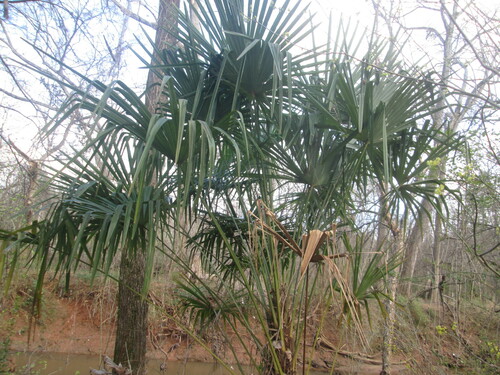
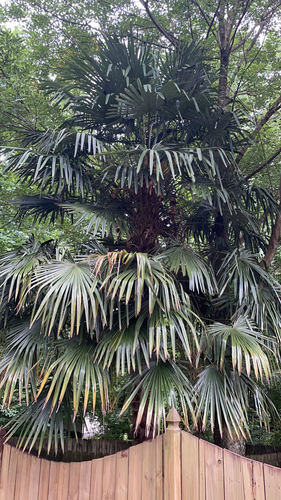
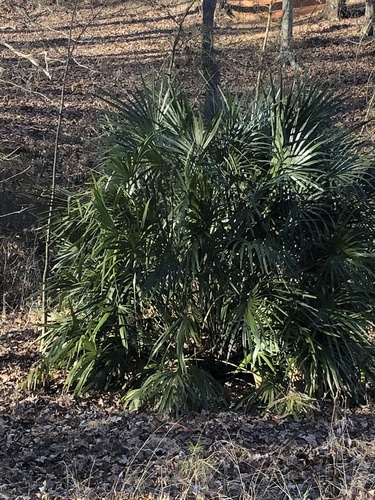
In cultivation, windmill palms commonly live 50 to 80 years with reasonable care. In ideal conditions and native habitat, specimens over 100 years old are documented.
Typically 20 to 40 feet tall with a crown spread of 6 to 10 feet. Growth is slow, often less than a foot per year, so the 40-foot specimens you see are genuinely old trees.
Care & Maintenance
Windmill palms prefer well-drained soil and do poorly if their roots sit in standing water, which is a real concern in low-lying coastal yards with heavy clay. They tolerate full sun but establish better with some afternoon shade in their first year or two. Fertilize three times a year with a slow-release palm-specific fertilizer that includes magnesium and manganese, not a generic lawn fertilizer, which will cause more problems than it solves.
Common Issues & Threats
- Manganese deficiency (frizzle top): The newest leaves emerge stunted, brown, and twisted. Most people assume the palm is dying, but it's almost always a nutritional issue caused by alkaline soil or the wrong fertilizer. Drench the root zone with manganese sulfate and switch to a palm-specific blend.
- Ganoderma butt rot: A fungal pathogen that colonizes the base of the trunk and is essentially untreatable. If you see a shelf-like, red-brown conk (bracket mushroom) at or near ground level, that palm is structurally compromised and eventually coming down. There's no cure, and the fungus can persist in the soil.
- Cold injury in marginal zones: Windmill palms marketed as 'cold-hardy' can handle temps down to around 5-10°F, but repeated hard freezes damage the growing tip, which is called the apical meristem and is the only growing point a palm has. If the spear leaf pulls out easily or smells like rot after a hard freeze, the palm is almost certainly dead, even if the lower fronds look green for a few more weeks.
Pruning Guide
Only remove fronds that are fully brown and dead. The rule most homeowners get wrong is thinking yellow or slightly tatty fronds need to go, but green and yellow fronds are still photosynthesizing and feeding the palm. Never cut into the green crown shaft, and never remove fronds that point upward or horizontally, only those hanging below horizontal. Over-pruning, sometimes called hurricane cutting, stresses the palm and has been linked to increased susceptibility to bud rot.
Did You Know?
Windmill palm is native to central China and Japan, not the tropics, which is exactly why it handles cold that would kill a royal or sabal palm. It has been growing in England's milder coastal gardens since the 1800s. The fibrous trunk covering is not bark in the traditional sense; it's composed of old leaf base sheaths that accumulate over decades and actually provide some insulation to the trunk during cold snaps.
Where Windmill Palm Is Found
Windmill Palm is common in 458 of the US communities we cover, across 1 climate regions.
... and 446 more cities
Need Windmill Palm Care?
Find ISA-certified arborists experienced with Windmill Palm in your area.
Take the Tree Risk Quiz