White Oak
Typically 300 to 600 years under good conditions. There are documented white oaks in the Mid-Atlantic that have been standing since before the American Revolution. This is not a tree you replace in your lifetime, or your children's.
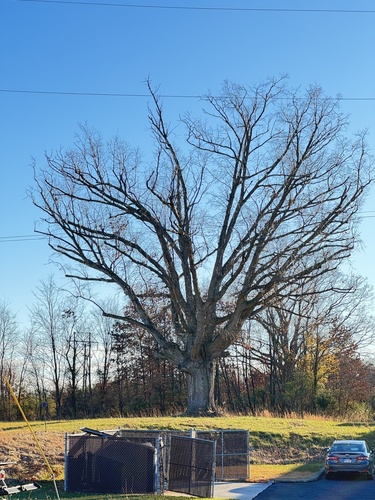
Expect 60 to 100 feet tall with a crown spread of 60 to 80 feet on a good site. In open suburban settings, white oaks often grow wider than they are tall over time, and that expansive crown is where most of the tree's value lives, along with most of its potential liability over a driveway or roofline.
Care & Maintenance
White oaks prefer deep, well-drained, acidic soil and full sun, and they handle drought well once established. Resist the urge to water them on a heavy schedule like you would a lawn, they do not want wet feet. Fertilizing a healthy white oak with high-nitrogen lawn fertilizer is one of the worst things you can do, it pushes fast, weak growth and makes the tree more attractive to boring insects.
Common Issues & Threats
- Oak wilt (Bretziella fagacearum): White oaks are less vulnerable than red oaks, but they are not immune. The fungus spreads through root grafts between neighboring oaks and through sap beetles drawn to fresh wounds. Rapid wilting and brown streaking through the outer sapwood are the warning signs.
- Two-lined chestnut borer (Agrilus bilineatus): This beetle targets stressed white oaks and can kill large branches fast. Look for D-shaped exit holes in the bark and branches dying from the tips inward. Any tree that has been drought-stressed, flooded, or had its roots disturbed during construction is the most at risk.
- Bacterial leaf scorch (Xylella fastidiosa): This shows up as brown leaf margins that look exactly like drought stress but do not respond to watering. There is no cure, and it is chronic and progressive. A certified arborist can confirm it with lab testing, and management is about keeping overall tree health as high as possible to slow the decline.
Pruning Guide
The window that matters most is late winter, January through early March, before the tree breaks dormancy. Pruning from April through July is the highest-risk period because sap beetles that carry oak wilt are most active then, and fresh wounds attract them. If a branch fails in summer, paint the wound immediately with a pruning sealant as a precaution, even though this is not standard advice for most other species.
Did You Know?
Here is what most people get wrong: they treat acorns as a nuisance rather than the point of the whole tree. A single mature white oak can drop 20,000 acorns in a good mast year, feeding deer, turkeys, squirrels, and over 500 species of caterpillars and insects that in turn support your entire bird population. White oak wood is also specifically used for whiskey and wine barrels because the grain structure is tight enough to hold liquid without leaking, something red oak cannot do.
Where White Oak Is Found
White Oak is common in 1369 of the US communities we cover, across 1 climate regions.
... and 1357 more cities
Need White Oak Care?
Find ISA-certified arborists experienced with White Oak in your area.
Take the Tree Risk Quiz