Western Hemlock
Western Hemlock typically lives 400 to 500 years in forest conditions. In a residential landscape with soil disturbance, altered drainage, and urban heat, a realistic lifespan is more like 80 to 150 years.
In a yard setting, expect 100 to 130 feet tall with a spread of 25 to 35 feet. In a forest with no competition it can push past 200 feet, though that is not something you will see in a residential landscape.
Care & Maintenance
Western Hemlock wants consistent moisture and will tell you it is stressed by dropping needles and thin foliage before anything more dramatic happens. It prefers slightly acidic, well-drained but reliably moist soil and does not tolerate drought or compacted roots. Fertilizing is rarely necessary in native PNW soils, and over-fertilizing with nitrogen can actually push soft growth that is more vulnerable to disease.
Common Issues & Threats
- Armillaria root rot: This is the one that kills western hemlocks in yards. Armillaria is a native fungus that attacks the root system, and by the time you see mushrooms at the base or resin bleeding from the lower trunk, the structural roots are already compromised. There is no cure once it is established.
- Western hemlock bark beetle (Pityokteines elegans): Bark beetles do not kill healthy trees on their own, but a hemlock under drought stress or with root damage becomes a target fast. Watch for pitch tubes and fine sawdust on the bark, especially in the lower trunk.
- Cytospora canker: This fungal canker shows up as sunken, discolored bark patches with resin bleeding on branches or the main stem. It is almost always a secondary problem following drought, root damage, or construction disturbance, so treat the cause, not just the symptom.
Pruning Guide
Western Hemlock rarely needs pruning, and most homeowners make the mistake of trying to shape it like a shrub, which ruins its natural form. If you need to remove a branch, do it in late winter before growth starts, cutting just outside the branch collar without leaving a stub. Never top a western hemlock. The drooping leader is not a problem to fix, it is the tree doing exactly what it is supposed to do.
Did You Know?
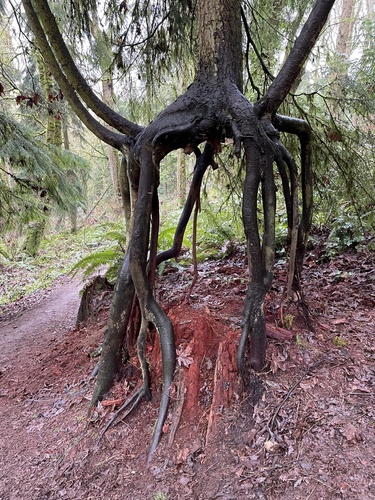
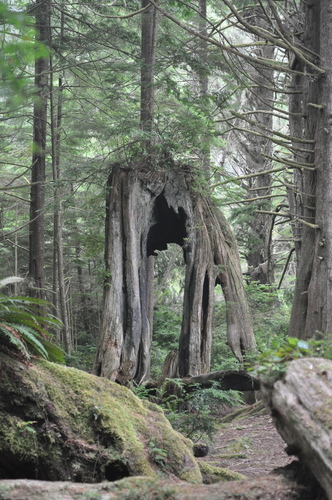
Here is what most people get wrong: western hemlock is not a shade-tolerant tree that just tolerates sun, it is one of the most shade-tolerant large trees in North America. Seedlings can survive under a nearly closed canopy for decades, waiting for a gap. In old-growth forests, hemlocks commonly germinate on top of fallen logs, which is why you see those distinctive raised root systems straddling a ridge of soil where a nurse log rotted away centuries ago.
Where Western Hemlock Is Found
Western Hemlock is common in 345 of the US communities we cover, across 1 climate regions.
... and 333 more cities
Need Western Hemlock Care?
Find ISA-certified arborists experienced with Western Hemlock in your area.
Take the Tree Risk Quiz