Velvet Mesquite
150 to 200 years under natural conditions, though urban trees with root restrictions or overwatering rarely reach that age.
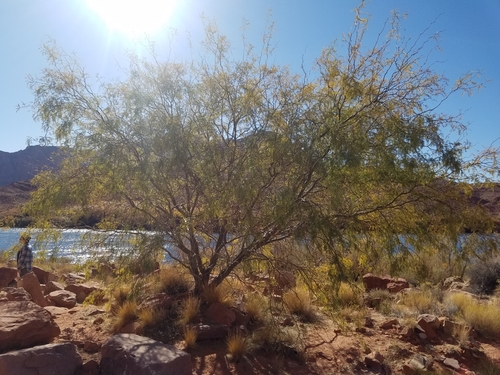
20 to 30 feet tall with a canopy spread of 25 to 40 feet, though trees in ideal conditions with access to deep water can push larger.
Care & Maintenance
Once established, velvet mesquite wants almost no supplemental irrigation. Here is what most people get wrong: they water it like a shade tree, and that extra moisture drives fast, weak wood growth that splits under wind load. Fertilizing is unnecessary and counterproductive since the tree fixes its own atmospheric nitrogen through root nodule bacteria. Full sun, well-drained native soil, and benign neglect is genuinely the right prescription.
Common Issues & Threats
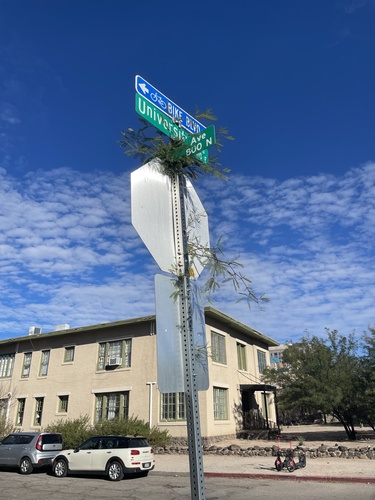
- Desert mistletoe (Phoradendron californicum): This parasitic plant taps directly into the tree's vascular system, stealing water and nutrients. You will see dense ball-shaped clumps of leafy growth throughout the canopy. Prune infected branches 12 inches below the point of attachment, and do it early before the infestation spreads to major scaffold limbs.
- Flatheaded borers (Agrilus species): These beetles target stressed or wounded mesquite, laying eggs under bark where larvae tunnel and girdle branches. You will notice D-shaped exit holes, weeping sap, and dying branch tips. Keeping the tree healthy and avoiding unnecessary wounds is your best defense since there is no effective chemical treatment once larvae are inside.
- Construction and grade damage: Mesquite has a taproot that can reach 50 feet or more, but the lateral feeder roots near the surface are highly sensitive to soil compaction and fill. A single grading pass within the drip line can start a slow decline that looks like drought stress two or three years later. If construction is planned near a mature mesquite, treat the entire drip line as a no-disturb zone.
Pruning Guide
Prune velvet mesquite in late winter, after hard freezes have passed but before the spring flush of new growth. Focus on removing dead wood, crossing branches, and low limbs that create clearance problems. Avoid the common practice of lion's tailing, which strips interior branches and leaves a heavy canopy on the branch tips, creating enormous leverage that leads to catastrophic splits in monsoon wind events.
Did You Know?
The seed pods are roughly 40 percent sugar and were ground into a flour called pinole by Tohono O'odham people for thousands of years. The taproot depth record for this species is over 160 feet, documented in a mine shaft in Arizona, making it one of the deepest-rooted trees documented anywhere on earth.
Where Velvet Mesquite Is Found
Velvet Mesquite is common in 94 of the US communities we cover, across 1 climate regions.
... and 82 more cities
Need Velvet Mesquite Care?
Find ISA-certified arborists experienced with Velvet Mesquite in your area.
Take the Tree Risk Quiz