Tulip Tree
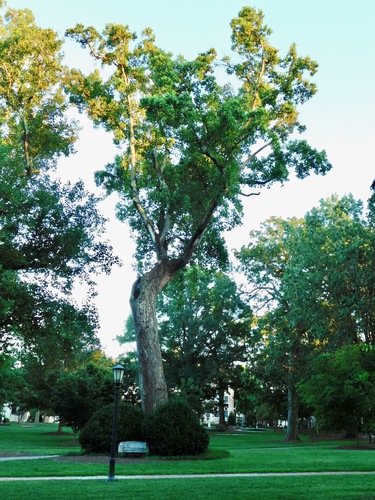
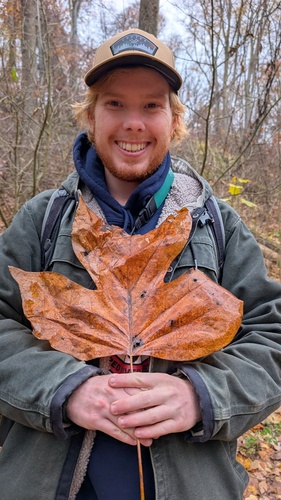
In ideal conditions with good soil and adequate moisture, tulip trees can live 200 to 500 years. In a suburban yard with compacted soil, summer drought stress, and restricted root space, expect significantly less, often 80 to 120 years.
Typically 70 to 90 feet tall with a spread of 35 to 50 feet at maturity. Exceptional specimens in ideal conditions exceed 100 feet. This is not a tree for a small lot, and its size at maturity is something to think hard about before planting near a house or utility lines.
Care & Maintenance
Tulip trees want deep, moist, well-drained soil with a slightly acidic pH and full sun. The critical thing in the Pacific Northwest is summer irrigation. This tree evolved in the humid eastern U.S., and our dry summers will stress it without supplemental watering, especially in the first ten years. Fertilizing is rarely necessary; if growth seems slow, get a soil test before reaching for a fertilizer bag.
Common Issues & Threats
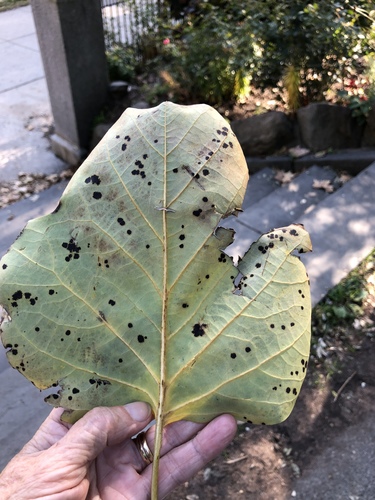
- Tuliptree aphid (Illinoia liriodendri): This is the one that catches homeowners off guard. Enormous colonies build up on leaf undersides and drip sticky honeydew onto everything below, your car, your patio, your lawn furniture. Black sooty mold then grows on that honeydew. It looks like the tree is dying, but it's almost never fatal. What most people get wrong is treating the mold. The mold is a symptom. Treat the aphids, and the mold goes away on its own.
- Summer leaf scorch: Brown, papery leaf margins showing up in July or August are this tree telling you it is not getting enough water. Repeated drought stress over several seasons weakens the tree, makes it more vulnerable to secondary pests and disease, and can cause significant dieback in the upper canopy. In the Pacific Northwest this is the most common reason these trees decline.
- Verticillium wilt: A soil-borne fungal pathogen that colonizes the vascular system and causes sudden wilting and branch dieback, often in one section of the canopy first. There is no cure. If a plant in that area of your yard has died of verticillium before, the fungus is already in the soil and tulip tree is a susceptible host. Worth knowing before you plant.
Pruning Guide
Prune in late winter while the tree is dormant, before bud break in late February or early March in the Pacific Northwest. Tulip trees bleed sap heavily when cut in spring and summer, which is not dangerous but is messy and stressful to the tree. More importantly, do your structural work early, when the tree is young. Large wounds on a mature tulip tree do not compartmentalize well, and removing a major limb from a 60-foot specimen opens the door to decay.
Did You Know?
Tulip trees are one of the tallest hardwoods in North America and were hollowed out by Indigenous peoples to make dugout canoes up to 60 feet long. The flowers produce an unusually large amount of nectar, making them a significant food source for hummingbirds and bumblebees in their native eastern range, though that pollinator relationship is much weaker here in the Pacific Northwest where the tree is outside its native ecosystem.
Where Tulip Tree Is Found
Tulip Tree is common in 345 of the US communities we cover, across 1 climate regions.
... and 333 more cities
Need Tulip Tree Care?
Find ISA-certified arborists experienced with Tulip Tree in your area.
Take the Tree Risk Quiz