Tree of Heaven
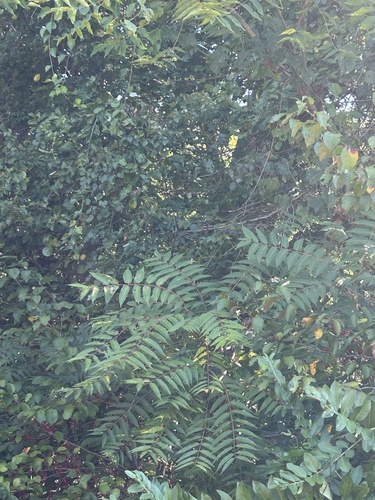

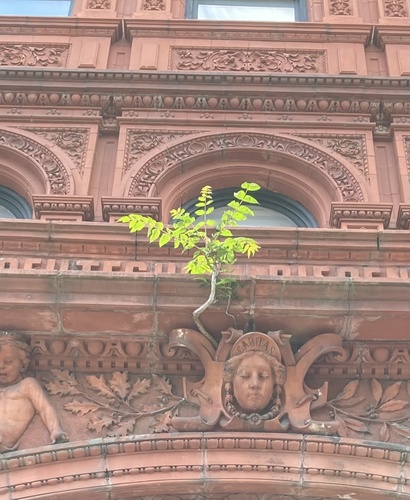
Typically 50 to 80 years, though structural failure from brittle wood often ends trees earlier, especially in storms.
50 to 80 feet tall with a spread of 40 to 60 feet, though suburban specimens are often shorter due to competition or repeated cutting.
⚠ Problem Species
Why it's a problem: Invasive, foul-smelling, hosts spotted lanternfly, nearly impossible to kill
Care & Maintenance
Do not fertilize it. Do not water it. Tree of Heaven thrives in compacted, poor, dry soils where nothing else will grow, and any additional resources just accelerate the problem. It grows up to 8 feet per year without any help, and giving it ideal conditions makes removal harder, not easier.
Common Issues & Threats
- Spotted Lanternfly (Lycorma delicatula) host: Tree of Heaven is the preferred host plant for spotted lanternfly, an invasive pest that sucks sap from dozens of plants including grapes, hops, apples, and hardwood trees. If you have Tree of Heaven on your property, you are actively providing a breeding ground and feeding station for one of the most destructive agricultural pests currently spreading through the Northeast.
- Root damage to structures: The root system is aggressive and shallow, and it will find its way into sewer lines, under foundations, and through sidewalk cracks. This is not hypothetical. If the tree is within 20 feet of a structure, pipe, or pavement, assume the roots are already there.
- Regrowth after cutting: Cutting it down without treating the stump immediately causes the root system to respond by sending up dozens of new sprouts. A 4-inch trunk can produce 20 or more shoots within weeks. Most homeowners cut it, see it come back worse, and give up.
Pruning Guide
Pruning Tree of Heaven is largely pointless unless you are trying to manage size temporarily while planning removal. Any wound to the tree stimulates vigorous sprouting from the base and roots. If you do cut branches, apply a concentrated herbicide like triclopyr directly to the cut surface within 60 seconds, otherwise the wound just triggers more growth.
Did You Know?
Tree of Heaven produces a chemical called ailanthone that is toxic to surrounding plants, essentially poisoning the soil to eliminate competition. Here is what most people get wrong: they assume it is just a fast-growing weed tree that is easy to deal with. It is actually one of the hardest woody plants to eradicate in North America. The root system can persist and resprout for years after the trunk is removed, and a single female tree produces up to 300,000 winged seeds annually, most of which germinate.
Where Tree of Heaven Is Found
Tree of Heaven is common in 1369 of the US communities we cover, across 1 climate regions.
... and 1357 more cities
Need Tree of Heaven Care?
Find ISA-certified arborists experienced with Tree of Heaven in your area.
Take the Tree Risk Quiz