Torrey Pine
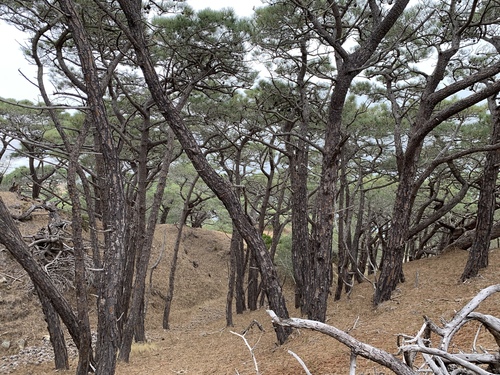
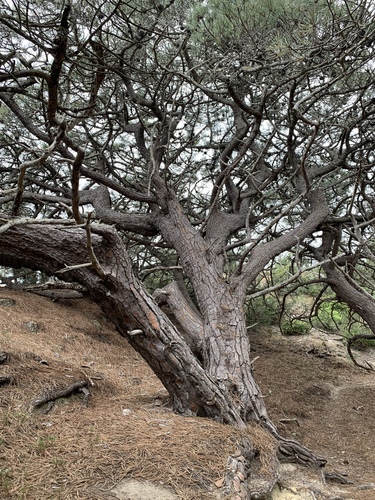
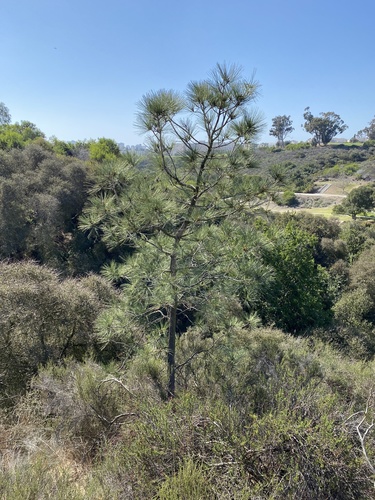
In natural coastal conditions, 100 to 200 years is typical. In cultivation, especially inland or with poor drainage, trees often decline significantly sooner.
In cultivation with good conditions, 40 to 60 feet tall with a spread of 20 to 40 feet. Wild trees in exposed coastal sites are often much shorter and wider due to wind pruning, sometimes barely 20 feet tall with a canopy spread twice that.
Care & Maintenance
Here's what most people get wrong: Torrey Pines do not want summer water. They are adapted to dry, nutrient-poor, sandy coastal soils, and regular irrigation in summer is one of the fastest ways to kill one. Established trees need little to no supplemental water once rooted in. They need full sun and well-drained soil. If your soil is clay or stays wet after rain, this is the wrong tree for that spot.
Common Issues & Threats
- Phytophthora root rot: Caused by a water mold pathogen that thrives in wet or poorly drained soil. You'll see yellowing needles, resin soaking at the base, and a tree that declines fast. By the time it's obvious above ground, the roots are already compromised.
- Ips bark beetles: These small beetles bore into stressed or drought-weakened trees and can kill a Torrey Pine within weeks. You'll notice pitch tubes on the bark, tiny entry holes, and reddish boring dust. A healthy, unstressed tree usually fends them off, so beetle attacks are often a symptom of a bigger problem.
- Pitch canker (Fusarium circinatum): A fungal disease that enters through pruning wounds, insect damage, or natural openings. It causes resinous, sunken cankers on branches and the trunk, and kills branches back from the tips. There is no cure. Management is about keeping the tree vigorous and avoiding unnecessary wounds.
Pruning Guide
Prune only in winter when bark beetles and Fusarium spores are least active. Every cut is a wound and a potential entry point for pitch canker, so prune only what you have to. Remove dead wood and anything with obvious canker symptoms, cutting back to healthy tissue. Never top a Torrey Pine, and avoid heavy pruning that removes more than 15 to 20 percent of the canopy at one time.
Did You Know?
Torrey Pines produce large, heavy cones with edible seeds that indigenous Kumeyaay people harvested as a food source for centuries. The entire wild population of this species is estimated at fewer than 10,000 trees total across both natural locations, which means this tree is genuinely rarer in the wild than many species listed as endangered. If you have one on your property in San Diego, check your local ordinances before you do anything to it, because removal typically requires a permit.
Where Torrey Pine Is Found
Torrey Pine is common in 388 of the US communities we cover, across 1 climate regions.
... and 376 more cities
Need Torrey Pine Care?
Find ISA-certified arborists experienced with Torrey Pine in your area.
Take the Tree Risk Quiz