Tipuana
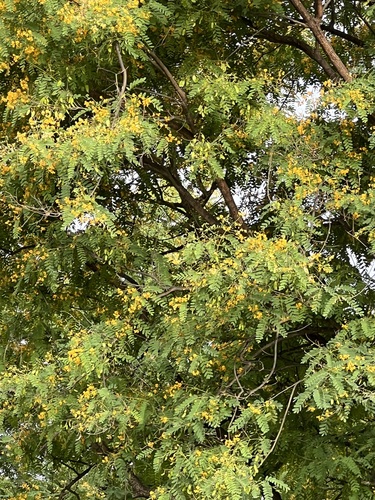
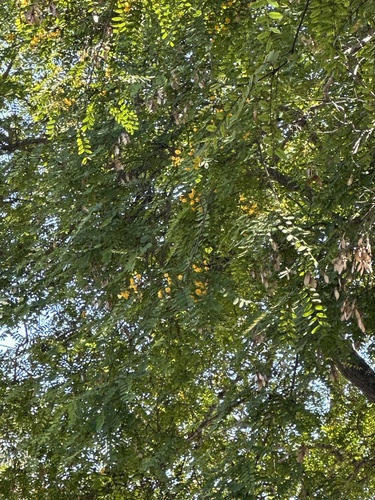
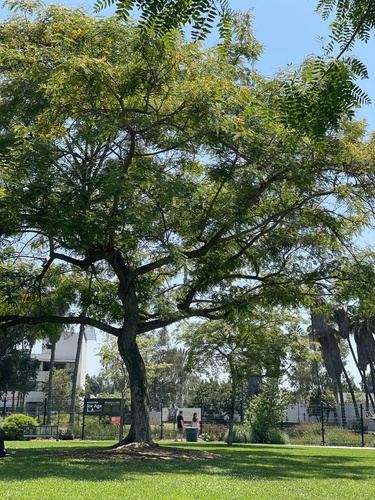
50 to 100 years in ideal conditions, though structural problems and root conflicts often shorten that significantly in urban settings.
30 to 50 feet tall with a canopy spread of 50 to 80 feet. The spread often exceeds the height, giving it a distinctive umbrella shape. In coastal SoCal with year-round mild temperatures, some specimens push past these ranges.
Care & Maintenance
Once established, tipuana is drought tolerant, but deep infrequent watering every 2-3 weeks in summer produces better structure than frequent shallow irrigation. It prefers well-drained soil and does not tolerate standing water or heavy clay that stays wet. Full sun is non-negotiable. Skip the fertilizer unless a soil test shows a specific deficiency. Fast-growing trees in rich soil tend to produce weak, poorly attached wood.
Common Issues & Threats
- Aphid and soft scale infestations: That sticky honeydew coating your car, furniture, and patio is frass from aphids or soft scale insects feeding on the canopy. The honeydew then grows sooty mold, a black fungal coating that follows the drip pattern. The mold itself doesn't damage the tree, but heavy scale infestations weaken new growth. A systemic drench of imidacloprid in early spring can suppress populations before they explode.
- Aggressive surface roots: Tipuana's roots spread as wide as the canopy and they will lift pavement, crack hardscape, and compete aggressively with anything planted beneath them. If your tree is within 10 feet of a foundation, sidewalk, or sewer lateral, you're managing a slow-moving conflict. Root barriers installed late are largely ineffective.
- Branch failure from included bark: Fast growth means tipuana often develops co-dominant stems with included bark, a weak union where two branches grow together and trap bark between them instead of forming solid wood. These unions can fail without warning, especially in Santa Ana wind events. This is the biggest liability issue with mature specimens.
Pruning Guide
Prune in late winter before the spring flush, which is also before flowering. The goal is to establish a single dominant leader early and remove co-dominant stems while they're still small, because correcting poor structure in a mature tipuana means removing large limbs, which creates wounds the tree heals slowly. Most people get this wrong by waiting too long and then over-pruning to compensate, which triggers excessive water sprout growth and makes the problem worse. Avoid topping. A topped tipuana grows back faster and weaker than before.
Did You Know?
Tipuana tipu is listed as invasive in parts of South Africa and Australia, where it escapes cultivation and displaces native vegetation. In Southern California it hasn't shown the same behavior, partly because the climate limits seed viability. The wood is sold commercially in South America as 'Brazilian rosewood' for furniture, though it's not a true rosewood. A well-placed tipuana can reduce cooling costs noticeably because that canopy spread puts a large area of your home and hardscape in shade during peak afternoon hours.
Where Tipuana Is Found
Tipuana is common in 388 of the US communities we cover, across 1 climate regions.
... and 376 more cities
Need Tipuana Care?
Find ISA-certified arborists experienced with Tipuana in your area.
Take the Tree Risk Quiz