Southern Live Oak
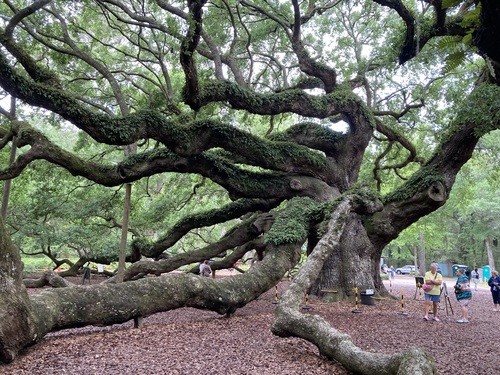
Under natural conditions, 200 to 500 years or more. Urban and suburban trees typically reach 100 to 150 years before compaction, construction damage, or infrastructure conflicts cut that short.
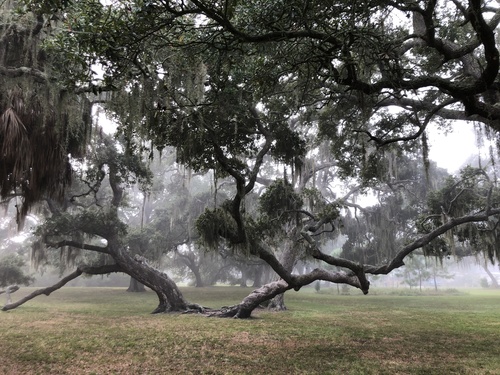
40 to 80 feet tall, but the canopy spread is the real story: 60 to 120 feet wide. The spread routinely exceeds the height by a significant margin, which is why a live oak planted 20 feet from a house will eventually become a serious structural concern.
Care & Maintenance
Live oaks are drought-tolerant once established, and here's what most people get wrong: overwatering is a far more common mistake than underwatering. They prefer sandy, well-drained soil and full sun, and they genuinely don't need supplemental fertilizer unless a soil test reveals a specific deficiency. Nitrogen-heavy fertilizers push fast, weak growth that's more prone to disease and storm damage.
Common Issues & Threats
- Oak wilt (Bretziella fagacearum): Live oaks are more resistant than red oaks but not immune. The disease spreads through root grafts between neighboring trees, so by the time you see crown dieback and yellowing leaves, adjacent trees may already be infected. Pruning during warm months when sap beetles are active is the primary way it spreads from tree to tree.
- Hypoxylon canker (Hypoxylon atropunctatum): This fungal pathogen attacks live oaks under stress, usually after drought, construction damage, or root compaction. You'll notice bark sloughing off to reveal a silver-gray mat underneath. There is no treatment; the fungus is opportunistic, so a healthy, unstressed tree is your only real defense.
- Construction and compaction damage: This is the silent killer of old live oaks. Their root systems are wide and shallow, extending well beyond the canopy edge, and they're extremely sensitive to soil disturbance. Parking equipment nearby, cutting roots for a driveway, or compacting soil during a home renovation can kill a 150-year-old tree over the next 3-7 years, long after you've forgotten the construction happened.
Pruning Guide
Prune only in winter, ideally December through February, to avoid attracting sap beetles that carry oak wilt from tree to tree. Never strip interior branches to push all the foliage to the tips of limbs, a practice called lion's tailing; it throws the weight distribution off and dramatically increases the chance of branch failure in a storm. Most live oaks need less pruning than homeowners think, and a single clearance cut to lift the canopy over a roofline is usually all that's warranted.
Did You Know?
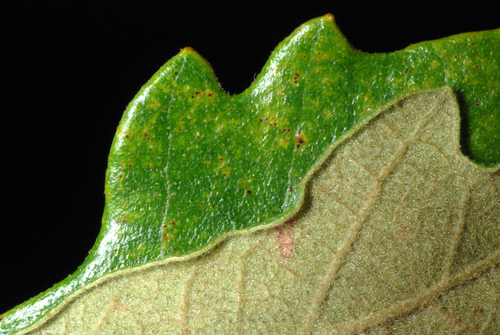
The USS Constitution, nicknamed Old Ironsides, was built primarily from live oak because the wood is so dense that British cannonballs literally deflected off the hull during the War of 1812. On a more practical note, live oaks aren't actually evergreen in the way most people assume: they drop their old leaves in late February and March while the new flush is coming in, so a few weeks of thin or patchy foliage in early spring is completely normal and not a sign of disease.
Where Southern Live Oak Is Found
Southern Live Oak is common in 458 of the US communities we cover, across 1 climate regions.
... and 446 more cities
Need Southern Live Oak Care?
Find ISA-certified arborists experienced with Southern Live Oak in your area.
Take the Tree Risk Quiz