Sitka Spruce
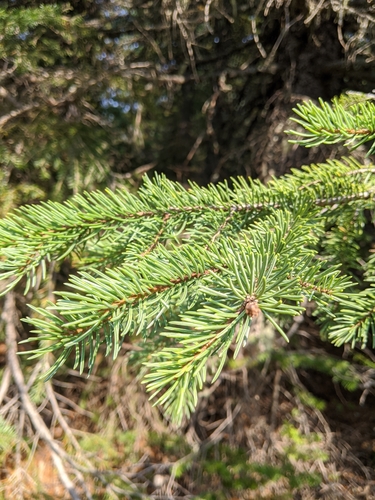
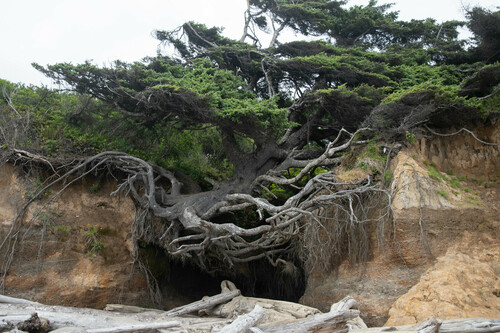
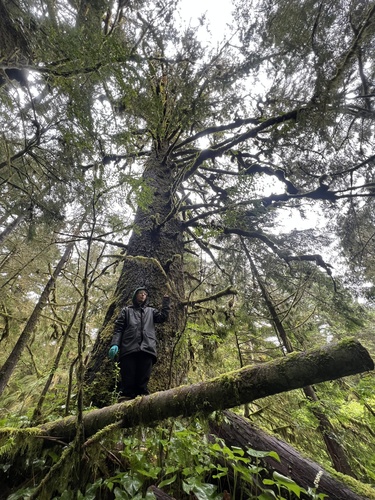
800 or more years in undisturbed old-growth coastal forest. In a managed landscape or urban setting, expect 150 to 300 years under good conditions.
In the Pacific Northwest, landscape trees commonly reach 150 to 180 feet tall with a spread of 35 to 50 feet. Old-growth specimens along the coast regularly exceed 200 feet, and the largest known individual stands over 317 feet tall.
Care & Maintenance
This tree evolved in consistently moist coastal conditions, so it needs reliable soil moisture, especially in its first five years. It prefers cool, humid air and acidic, well-drained soil. Moving it inland away from coastal fog usually spells trouble: it will struggle in hot summers and is not a good fit for dry, eastern-facing slopes.
Common Issues & Threats
- Sitka Spruce Weevil (Pissodes strobi): This is the big one. The adult weevil lays eggs in the terminal leader each spring, and the larvae bore through it, killing the top of the tree. You'll see the leader droop into a 'shepherd's crook' shape. Repeated attacks over several years produce a forked, multi-stemmed tree that loses its natural form and structural integrity.
- Spruce Aphid (Elatobium abietinum): Here's what most people get wrong about this pest. Homeowners notice needle drop in spring and assume the tree is sick or stressed. What actually happened is that aphids fed heavily on the older inner needles the previous fall or winter, and the damage just becomes visible later. By the time you see it, the feeding is already done.
- Cytospora Canker: This fungal disease causes resinous, white or orange-stained patches on the bark and dead branches that die back from the bottom of the tree upward. It is almost always a sign of underlying stress, usually from drought or compacted soil around the roots, not a disease you can simply spray away.
Pruning Guide
Sitka spruce has a strong central leader, and you should protect it. Never top this tree or remove the dominant upright leader. If the Sitka Spruce Weevil kills the leader, you need to select the strongest lateral branch, stake it upright, and train it as a replacement leader. General pruning is minimal; remove dead or damaged branches in late summer after any insect activity has settled down.
Did You Know?
During both World Wars, Sitka spruce was specifically harvested for aircraft construction because it has one of the highest strength-to-weight ratios of any wood in the world. The Spruce Goose, Howard Hughes's famous aircraft, was built from it. Today it is still the wood of choice for acoustic guitar soundboards and violin tops, prized by luthiers worldwide.
Where Sitka Spruce Is Found
Sitka Spruce is common in 345 of the US communities we cover, across 1 climate regions.
... and 333 more cities
Need Sitka Spruce Care?
Find ISA-certified arborists experienced with Sitka Spruce in your area.
Take the Tree Risk Quiz