Siberian Elm
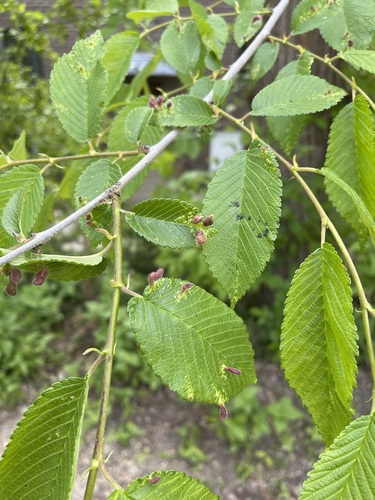
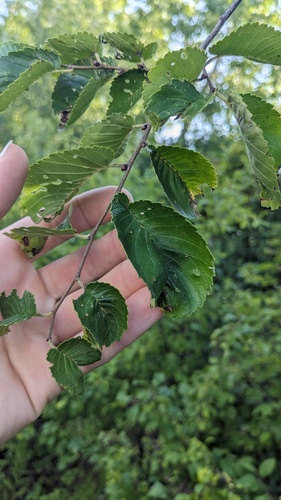
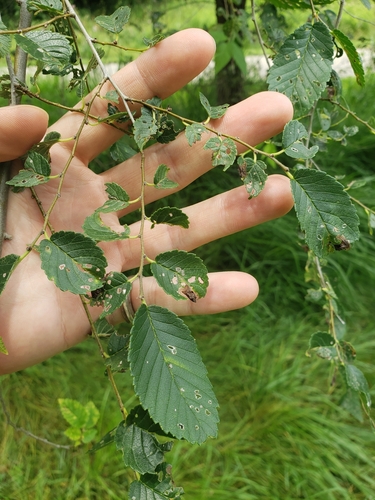
Typically 30 to 60 years, which sounds reasonable until you consider that a well-maintained bur oak on the same site could live 300 years.
50 to 70 feet tall with a 35 to 50 foot spread, though many trees never reach full size because branch failures and disease take them down first.
⚠ Problem Species
Why it's a problem: Weak, messy, invasive - the tree equivalent of a weed
Care & Maintenance
Siberian elm survives in almost any soil, from clay to sand, and handles drought and cold better than most trees. That toughness is exactly the problem: it needs no help from you to spread aggressively into areas where you do not want trees. If you have one you are keeping, it does not need fertilizing, and overwatering only encourages faster, weaker growth.
Common Issues & Threats
- Elm leaf beetle (Xanthogaleruca luteola): These beetles skeletonize the leaves every summer, leaving a brown, papery canopy by August. Heavy infestations repeat year after year and steadily weaken an already short-lived tree.
- Witches' broom: Caused by eriophyid mites, this produces dense, twiggy clusters scattered through the canopy that look like bird nests. It does not kill the tree outright, but it signals a stressed tree and looks terrible.
- Branch failure: The wood is genuinely brittle. Ice storms, high winds, and even heavy wet snow regularly split major limbs. If the tree overhangs a roof, driveway, or fence, you should treat it as an active liability rather than a background feature of the yard.
Pruning Guide
Prune in late winter before the seeds drop, which reduces the mess somewhat and lets you see the structure clearly. Focus on removing dead wood and the crossing branches most likely to fail, but understand that heavy pruning on a weak-wooded tree often stimulates rapid, even weaker regrowth. Here is what most people get wrong: they prune a Siberian elm to extend its life, not realizing the structural problems are baked into the species, not the individual tree.
Did You Know?
Siberian elm is resistant to Dutch elm disease, which is why foresters originally promoted it as a replacement after that disease devastated American elms in the mid-20th century. The replacement turned out to be a disaster of a different kind: a single mature tree can drop 200,000 seeds per year, and the seedlings germinate in sidewalk cracks, fence lines, gutters, and anywhere else you do not want a tree.
Where Siberian Elm Is Found
Siberian Elm is common in 729 of the US communities we cover, across 2 climate regions.
... and 717 more cities
Need Siberian Elm Care?
Find ISA-certified arborists experienced with Siberian Elm in your area.
Take the Tree Risk Quiz