Salt Cedar
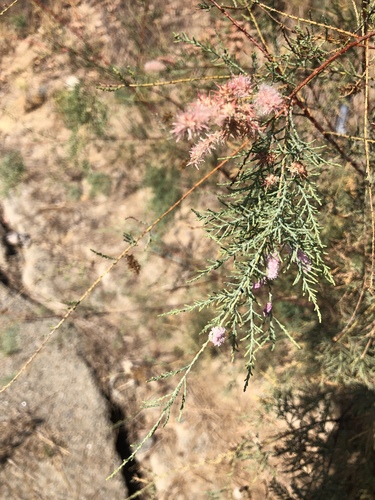
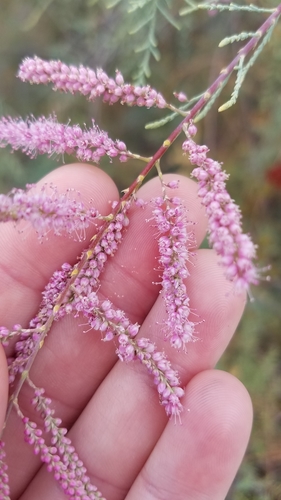
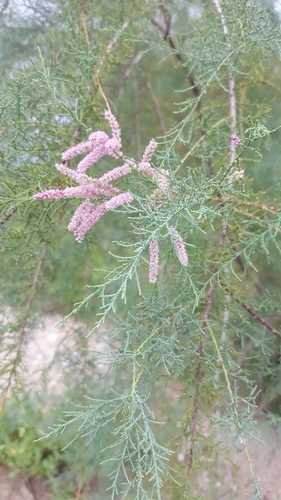
50 to 100 years under undisturbed conditions, though most individuals face repeated stress from drought, flooding, herbicide treatments, and beetle defoliation that shortens that considerably.
Typically 10 to 20 feet tall with a spread of 10 to 15 feet, though plants in high-water riparian zones can reach 25 to 30 feet. Multi-stemmed shrub form is far more common than a single upright trunk.
⚠ Problem Species
Why it's a problem: Invasive, consumes enormous water, displaces native riparian species
Care & Maintenance
This is where the profile gets uncomfortable: salt cedar does not need your help and should not be on your property intentionally. It is classified as a noxious weed in Arizona, New Mexico, Nevada, and several other states. It thrives in drought, flooding, high salinity, and disturbed soil that kills native plants. If someone told you it's low-maintenance and drought-tolerant, they were right, but that is the problem, not a selling point.
Common Issues & Threats
- Soil salinization: Salt cedar pulls salt from groundwater, concentrates it in its leaves, then deposits it through leaf litter. This is not a treatable condition. Over time it permanently alters soil chemistry and makes the surrounding area hostile to native vegetation, which is exactly why it wins.
- Tamarisk leaf beetle (Diorhabda spp.) defoliation: A biocontrol beetle introduced specifically to attack this species will repeatedly strip the tree bare through the growing season. If your salt cedar looks dead in July, this beetle is likely the cause, and that is actually useful for weakening the plant before chemical treatment.
- Extreme fire risk: Salt cedar drops massive quantities of dry, salt-encrusted litter that ignites easily and burns hot. A stand near your home, shed, or fence line is a real fire hazard, not just an ecological problem. Most people underestimate this until they see one burn.
Pruning Guide
Here is what most people get wrong: cutting salt cedar without treating the stump makes it worse. Cutting stimulates aggressive resprouting from the root crown, and you can end up with a plant two or three times denser than what you started with. If removal is your goal, cut-stump treatment with a concentrated triclopyr herbicide applied immediately to the fresh cut surface is the standard approach. Repeated cutting alone will not kill it.
Did You Know?
A single mature salt cedar can consume 200 gallons of water per day during the growing season, which is a meaningful reason why sections of the Rio Grande and Colorado River tributaries that ran year-round a century ago now go dry by midsummer. It is also allelopathic, meaning the salt it deposits in the soil actively suppresses germination of competing plants, so it does not just crowd out natives physically, it chemically rigs the ground to favor its own seedlings.
Where Salt Cedar Is Found
Salt Cedar is common in 94 of the US communities we cover, across 1 climate regions.
... and 82 more cities
Need Salt Cedar Care?
Find ISA-certified arborists experienced with Salt Cedar in your area.
Take the Tree Risk Quiz