Saguaro Cactus
150 to 200 years under natural conditions, with some specimens in protected desert areas documented at close to 300 years.
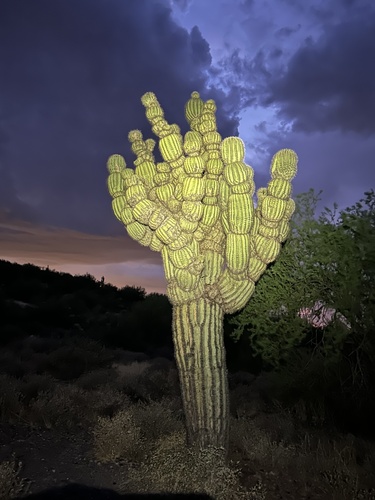
40 to 60 feet tall at full maturity. Arm spread varies by individual but a large multi-armed specimen can extend 10 to 15 feet across. Growth is extremely slow, averaging about one inch per year in the first decade.
Care & Maintenance
Established saguaros need no irrigation. If you have a newly transplanted or young specimen, water every two to three weeks during its first two summers, then stop. Plant it in full sun with fast-draining sandy or rocky soil, and never in a low spot where water pools after monsoon rain. Fertilizer is unnecessary and counterproductive, promoting the kind of soft rapid growth that invites rot.
Common Issues & Threats
- Bacterial necrosis caused by Erwinia cacticida: You will notice dark, wet, foul-smelling patches on the trunk or arms. The bacteria liquefy the interior tissue. There is no chemical treatment. A skilled person can cut out the infected area and apply a copper fungicide to the wound edge, but success depends on how far it has spread.
- Root rot from poor drainage: Most homeowners do not realize their saguaro is dying until it leans or falls. The damage happens underground months or years earlier, usually in compacted soil or caliche layers that hold standing water after heavy rain. By the time the trunk goes soft at the base, the plant is already lost.
- Woodpecker drilling creating bacterial entry points: Gila woodpeckers are native and protected, so you cannot discourage them. The cactus normally seals these holes into hard chambers called boots. The problem comes when repeated drilling in the same area opens fresh wounds faster than the plant can wall them off, giving bacteria a path in.
Pruning Guide
You do not prune a saguaro the way you prune a tree. Cutting into living tissue creates an open wound that becomes a bacterial entry point, so you never remove healthy arms for looks or clearance. If a dead or structurally compromised arm poses a hazard to a structure or person, removal is warranted, but a professional needs to make that cut at the right location with clean tools to minimize rot risk. Do not DIY this with a chainsaw.
Did You Know?
Here is what most people get wrong: they assume that big multi-armed saguaro on their property is maybe 30 or 40 years old. In reality, a saguaro does not grow its first arm until it is 50 to 75 years old. A specimen with five arms is likely well over 100 years old. In Arizona, removing or relocating a saguaro without a state permit can result in felony charges and fines up to $50,000, so if a contractor offers to just 'take care of it' without paperwork, walk away.
Where Saguaro Cactus Is Found
Saguaro Cactus is common in 94 of the US communities we cover, across 1 climate regions.
... and 82 more cities
Need Saguaro Cactus Care?
Find ISA-certified arborists experienced with Saguaro Cactus in your area.
Take the Tree Risk Quiz