Sabal Palmetto
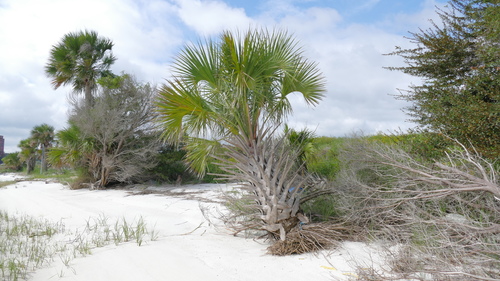
Under good coastal conditions, sabal palmetto commonly lives 70 to 100 years. Some documented specimens in Florida are estimated at over 200 years old, though growth is slow enough that aging them precisely is difficult.
Typically 30 to 50 feet tall with a crown spread of 10 to 15 feet. Growth averages about 1 to 2 feet per year under ideal conditions, so a large specimen represents decades of slow work.
Care & Maintenance
Once established, sabal palmetto is drought-tolerant and needs very little water. Young transplanted trees are the exception and need consistent moisture for the first two years, especially since they transplant slowly and spend most of that time regrowing roots. If you fertilize, use a palm-specific slow-release fertilizer with an 8-2-12 ratio and added micronutrients — standard lawn fertilizer can actually trigger potassium deficiency. Full sun is required; shaded palms decline and do not recover.
Common Issues & Threats
- Fusarium wilt (Fusarium oxysporum f. sp. palmarum): A lethal fungal disease that kills the spear leaf first, then progresses downward through the crown. It spreads on contaminated pruning tools, and there is no cure. The tree must come down, and every tool used on it needs to be disinfected with a 10% bleach solution before touching another palm.
- Lethal bronzing: A phytoplasma disease spread by a small planthopper insect that causes progressive frond browning starting at the bottom of the crown and working up. Trunk injections of oxytetracycline can slow it down but rarely save the tree. If you see this pattern in your neighborhood, watch your own trees closely.
- Palmetto weevil (Rhynchophorus cruentatus): The largest native weevil in North America, and it targets stressed or recently transplanted palms. The larvae tunnel into the crown and destroy it from the inside before you see any outward symptoms. Keeping your palm healthy and avoiding transplant stress is the only real defense.
Pruning Guide
Here is what most people get wrong: removing green fronds does not protect the palm during hurricanes. It actually weakens it. The palm pulls nutrients back from aging fronds before they die, so cutting green ones starves the tree. Remove only brown, fully dead fronds, and follow the 9-to-3 rule: if a frond hangs below the horizontal and is brown, it can go. Always sterilize your tools between trees because Fusarium spreads on blades.
Did You Know?
Sabal palmetto does not have a traditional woody trunk. Its stem is made of bundled fibrous tissue, which is why it bends dramatically in hurricane winds instead of snapping like an oak or pine. That flexibility is structural, not accidental. Early colonial South Carolinians figured this out and built Fort Moultrie's walls from sabal logs, which absorbed British cannonballs during the Revolutionary War instead of shattering.
Where Sabal Palmetto Is Found
Sabal Palmetto is common in 458 of the US communities we cover, across 1 climate regions.
... and 446 more cities
Need Sabal Palmetto Care?
Find ISA-certified arborists experienced with Sabal Palmetto in your area.
Take the Tree Risk Quiz