Royal Poinciana
50 to 150 years with adequate space and no major storm damage
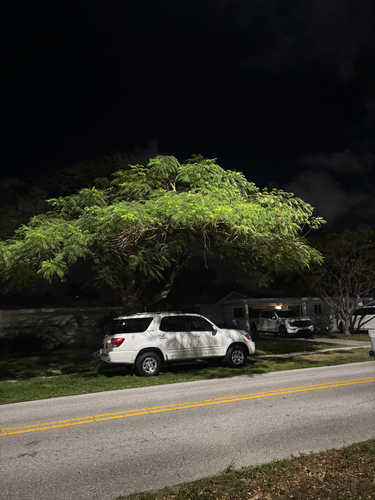
30 to 40 feet tall, with a canopy spread of 40 to 70 feet. The spread routinely exceeds the height, which is the defining characteristic of this tree's silhouette.
Care & Maintenance
Once established, this tree wants full sun and very little from you. It's drought-tolerant and grows in a range of soils as long as drainage is good. Most people get this wrong: fertilizing a Royal Poinciana, especially with nitrogen, often gives you lush foliage at the expense of flowers. If yours isn't blooming well, back off the fertilizer before assuming something is wrong.
Common Issues & Threats
- Root damage to hardscape: The roots are shallow, fast-spreading, and strong. If you plant one within 15 feet of a sidewalk, driveway, or foundation, expect cracking within a decade or two. This isn't a maybe.
- Poinciana looper caterpillar (Pericyma cruegeri): These caterpillars can strip a mature tree of every leaf in a matter of days. You'll notice the fine droppings first, then bare branches. The tree usually recovers, but repeated defoliation weakens it over time and opens the door to secondary problems.
- Storm and limb failure: The same broad canopy that makes this tree beautiful makes it a sail in high winds. The wood isn't especially strong, and large horizontal limbs on older trees are real failure risks during tropical storms. A professional inspection before hurricane season is worth doing.
Pruning Guide
Prune after the main bloom cycle winds down, typically late summer. Focus on removing dead or crossing branches and any limbs growing back toward the center of the canopy. Never top this tree. Topping destroys the umbrella form it takes years to build and triggers dense, weakly attached regrowth that's far more likely to fail in a storm than the original structure.
Did You Know?
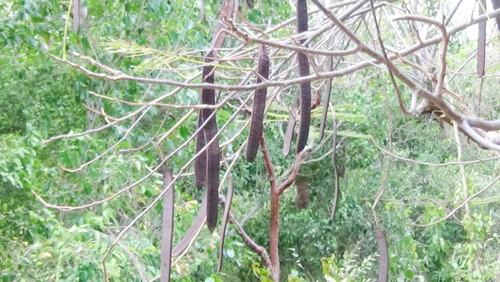
The seed pods this tree drops are woody, dark brown, and can reach two feet long. They're heavy enough to dent a car roof and accumulate fast, so factor in cleanup if you're parking underneath one. Also worth knowing: Royal Poinciana is native to Madagascar, not Hawaii or anywhere in the Pacific. It was introduced and naturalized, which is part of why it thrives so aggressively here.
Where Royal Poinciana Is Found
Royal Poinciana is common in 121 of the US communities we cover, across 1 climate regions.
... and 109 more cities
Need Royal Poinciana Care?
Find ISA-certified arborists experienced with Royal Poinciana in your area.
Take the Tree Risk Quiz