Royal Palm
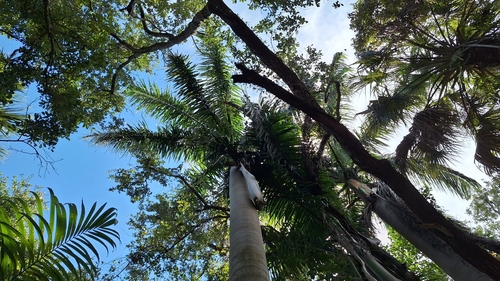
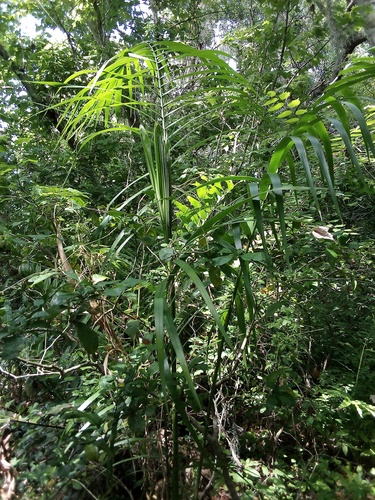
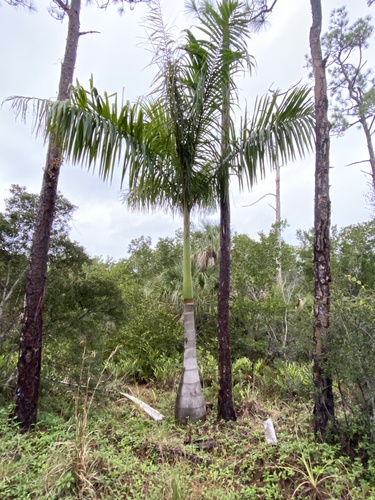
Royal Palms in ideal conditions can live 70 to 100 years, though many residential specimens are removed long before that due to disease, storm damage, or construction impacts to the root zone.
Typically 60 to 80 feet tall with a canopy spread of 15 to 25 feet. In particularly favorable conditions with deep soil and consistent fertilization, some specimens push past 80 feet.
Care & Maintenance
Royal Palms need a palm-specific fertilizer with elevated potassium and manganese, applied three to four times a year. Deficiency shows up fast in these trees, and the damage from skipping fertilizer is often irreversible. They want full sun, well-draining soil, and regular irrigation while establishing. Once mature, they are reasonably drought-tolerant, but they will look stressed if you ignore them entirely.
Common Issues & Threats
- Potassium deficiency: The oldest fronds develop translucent orange-brown spotting on the leaflets. Most homeowners assume it's a disease or pest, but it's almost always a nutrition problem. The fix is consistent palm fertilizer, but you cannot reverse damage already done to existing fronds.
- Manganese deficiency (Frizzle Top): New growth emerges stunted, crinkled, and streaked with yellow. This one is serious because it attacks the emerging spear leaf, which is the only growing point on the tree. Caught early and treated with manganese sulfate, palms can recover. Ignored, it kills them.
- Ganoderma butt rot: A fungal pathogen (Ganoderma zonatum) that rots the lower trunk from the inside out. The first sign is a shelf-like conk growing from the base of the trunk. There is no treatment once it appears. The tree will eventually become structurally unsafe and needs to come down.
Pruning Guide
Here is what most people get wrong: Royal Palms are self-cleaning. The crownshaft releases dead fronds on its own, so you should not be paying anyone to climb up there and cut green fronds. Only remove a frond if it is fully brown and hanging. Over-pruning, especially removing green fronds or cutting above a 9 and 3 o'clock angle, stresses the tree and can introduce pathogens directly into the crown.
Did You Know?
The crownshaft on a Royal Palm is not just decorative. It is actually a tightly wrapped structure made of the bases of the youngest leaves, and it protects the single growing point of the entire tree. If that growing point is damaged by a freeze, a lightning strike, or a careless chainsaw, the tree is dead. There is no second chance, no coppicing, no regrowth from the base.
Where Royal Palm Is Found
Royal Palm is common in 458 of the US communities we cover, across 1 climate regions.
... and 446 more cities
Need Royal Palm Care?
Find ISA-certified arborists experienced with Royal Palm in your area.
Take the Tree Risk Quiz