Quaking Aspen
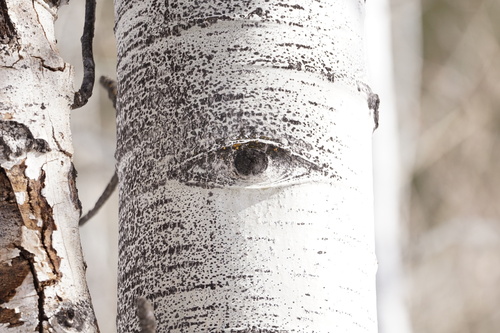
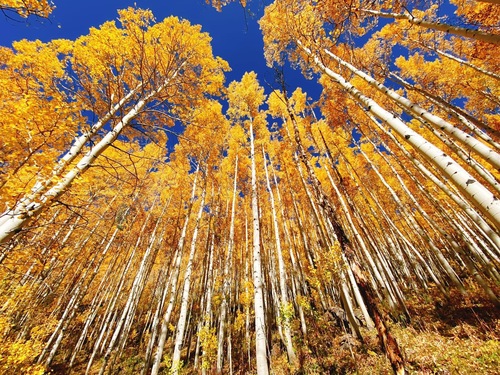
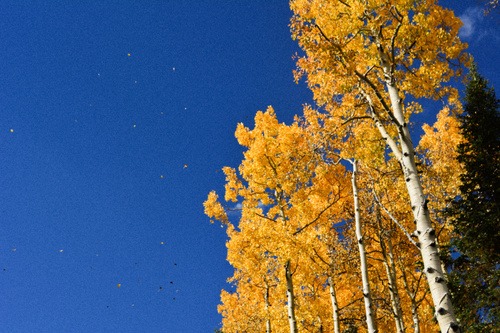
Individual stems typically live 40 to 60 years, but the clonal root system they share can persist for thousands of years, continuously sending up new stems as old ones die.
Individual trunks typically reach 40 to 50 feet tall with a spread of 20 to 30 feet, though grove conditions and elevation affect this considerably.
Care & Maintenance
Aspens want consistent moisture, especially in the first few years after planting. They prefer well-drained, slightly acidic soil and full sun. Fertilizing is rarely necessary and can actually push soft, disease-prone growth, so skip it unless a soil test shows a specific deficiency.
Common Issues & Threats
- Cytospora canker: A fungal disease that causes sunken, discolored patches on the bark and kills branches from the top down. It's the most common killer of aspens in residential settings and moves fast on stressed trees.
- Marssonina leaf spot: Dark brown spots appear on leaves in summer, leading to early defoliation. It looks alarming but rarely kills a healthy tree on its own. Repeated infections year after year, though, weaken the tree significantly.
- Oystershell scale: Tiny, oyster-shaped insects that crust along the bark and suck sap. A heavy infestation looks like the bark is peeling or encrusted, and it can kill branches or whole trees if left untreated.
Pruning Guide
Prune aspens in late summer or early fall, after the leaves have fully hardened off but before the first hard frost. Pruning in spring or early summer triggers heavy suckering from the roots, which most homeowners do not want. Remove dead or diseased wood promptly, cutting back to healthy tissue, and sterilize your tools between cuts because Cytospora canker spreads on blades.
Did You Know?
Here is what most people get wrong: they buy a single aspen and wonder why it looks scraggly and dies within a decade. Aspens evolved to grow in groves, and a lone tree is genuinely stressed and short-lived. Plant at least three to five together, and the root system will knit into something far more resilient. The Pando grove in Utah is a single clonal aspen organism covering 106 acres, estimated to weigh six million kilograms, and is considered one of the oldest living things on Earth.
Where Quaking Aspen Is Found
Quaking Aspen is common in 421 of the US communities we cover, across 1 climate regions.
... and 409 more cities
Need Quaking Aspen Care?
Find ISA-certified arborists experienced with Quaking Aspen in your area.
Take the Tree Risk Quiz