Plumeria
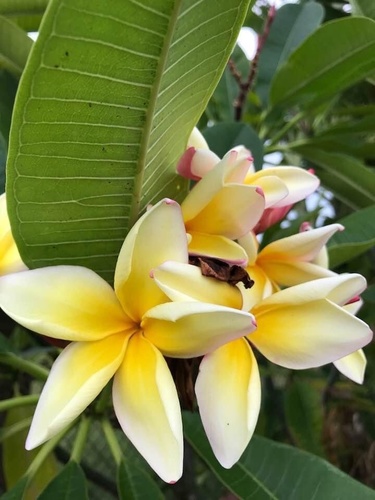
50 to 100 years or more in suitable conditions. There are specimens in Hawaii well over a century old.
Typically 15 to 25 feet tall with a similar spread, though many cultivated plants in residential landscapes stay in the 10 to 15 foot range depending on how aggressively they are pruned.
Care & Maintenance
Plumeria needs full sun, at least 6 hours a day, and well-draining soil. It is surprisingly drought-tolerant once established and will rot if overwatered or planted in heavy clay. Fertilize with a high-phosphorus mix like 10-30-10 during the growing season to encourage blooms, not a high-nitrogen lawn fertilizer.
Common Issues & Threats
- Plumeria rust (Coleosporium plumeriae): This fungal disease shows up as orange-yellow powdery pustules on the undersides of leaves. It spreads fast in humid conditions and can cause significant defoliation. Remove infected leaves and improve air circulation around the canopy.
- Black tip fungus (Phytophthora species): The branch tips turn black and die back, often several inches down the stem. This is almost always caused by overwatering or poor drainage, not a soil-borne disease you can spray away. Fix the watering first.
- Frangipani hawkmoth caterpillar (Pseudosphinx tetrio): These large, brightly colored caterpillars can strip a plumeria of every leaf in just a few days. If you see pellet-shaped droppings under the tree, look up. Handpick them or use Bt (Bacillus thuringiensis) before the infestation gets ahead of you.
Pruning Guide
Prune plumeria during winter dormancy when the branches are bare and you can clearly see the structure. Here is what most people get wrong: every cut you make will produce two to three new branch tips, so think carefully before you cut or you will end up with a very dense, tangled canopy in a few seasons. Let cut ends dry out for at least a day before any rain hits them, because fresh cuts are an entry point for the stem rot fungi.
Did You Know?
Plumeria flowers produce no nectar at all. They are essentially deceiving sphinx moths into pollinating them with scent alone, which is a fairly unusual strategy in the plant world. Also worth knowing: the milky sap is a skin irritant and mildly toxic if ingested, so wear gloves when pruning and keep pets away from fresh cuttings.
Where Plumeria Is Found
Plumeria is common in 121 of the US communities we cover, across 1 climate regions.
... and 109 more cities
Need Plumeria Care?
Find ISA-certified arborists experienced with Plumeria in your area.
Take the Tree Risk Quiz