Palo Verde
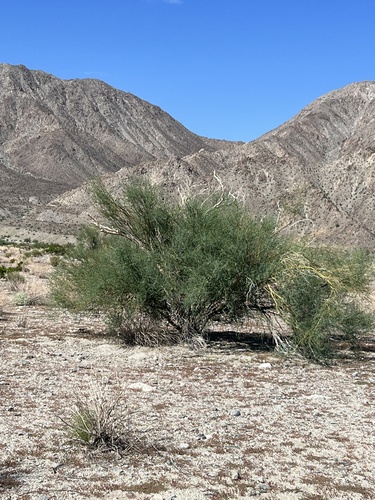
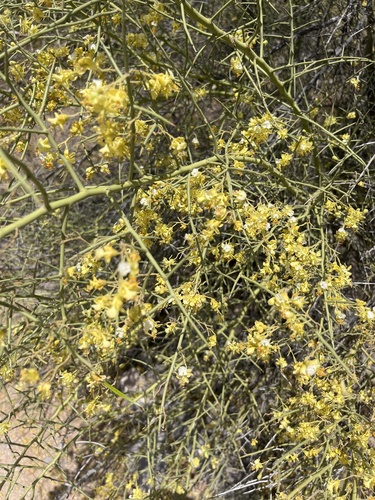
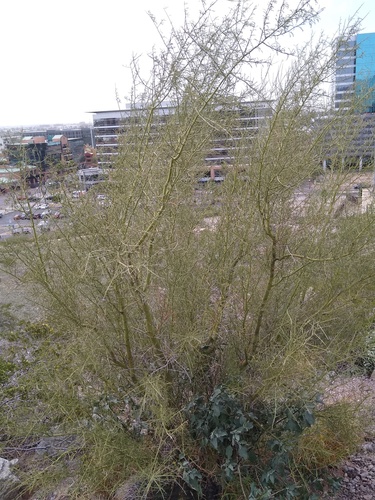
Native Palo Verde species typically live 100 years or more in the wild. In residential landscapes with irrigation and root zone competition, expect 40 to 75 years depending on conditions.
Blue Palo Verde typically reaches 25 to 35 feet tall with a similar spread. Desert Museum hybrids tend to be a bit larger and faster-growing, sometimes reaching 35 to 40 feet wide — which surprises a lot of homeowners who plant them too close to the house.
Care & Maintenance
Once established — usually after two to three years of deep, infrequent watering — a native Palo Verde needs almost no supplemental irrigation in the ground. Deep water every two to four weeks in summer if you want faster growth or better canopy density; more than that and you're inviting problems. It wants full sun and well-draining soil; put it in clay or a low spot that collects water and you'll fight root rot from day one.
Common Issues & Threats
- Palo Verde borers (Derobrachus hovorei): These are large, long-horned beetles whose larvae tunnel into the roots and lower trunk. You'll know you have them when you see coarse sawdust-like frass at the base of the tree or pencil-sized exit holes in the trunk. Overwatered or stressed trees are far more vulnerable — a healthy tree in the right soil can usually outgrow the damage.
- Mistletoe (Phoradendron californicum): Desert mistletoe is a parasitic plant that taps directly into the tree's vascular system. It looks like a ball of twiggy growth clustered in the canopy and, left unchecked, it slowly starves out branches and eventually the whole tree. You need to remove the branch it's rooted in, not just the visible clump — cutting just the mistletoe ball is a temporary fix.
- Overwatering and root rot: This is the most common way Palo Verdes die in residential landscapes. Drip systems set to the same schedule as lawn irrigation will slowly rot the root crown. Watch for early leaf yellowing, a thinning canopy, or bark that looks sunken near the base — those are warning signs before the tree visibly declines.
Pruning Guide
Prune Palo Verde in late winter to early spring, before the flush of new growth. The biggest mistake people make is over-pruning the interior — 'lion-tailing,' where all the weight ends up at the branch tips, makes the tree far more likely to fail in a monsoon wind event. Remove crossing or rubbing branches, dead wood, and anything growing toward the center of the canopy; aim to keep as much of the interior structure as possible.
Did You Know?
Here's what most people get wrong: they think a Palo Verde dropping its leaves in summer or drought is dying. It's not — leaf drop is the tree's survival strategy, and the green bark takes over photosynthesis in the meantime. Also worth knowing: the Desert Museum hybrid, which you'll see sold at nearly every nursery, was specifically bred for thornlessness and an extended bloom period, but it's a sterile hybrid and won't reseed the way wild species do.
Where Palo Verde Is Found
Palo Verde is common in 94 of the US communities we cover, across 1 climate regions.
... and 82 more cities
Need Palo Verde Care?
Find ISA-certified arborists experienced with Palo Verde in your area.
Take the Tree Risk Quiz