Mexican Fan Palm
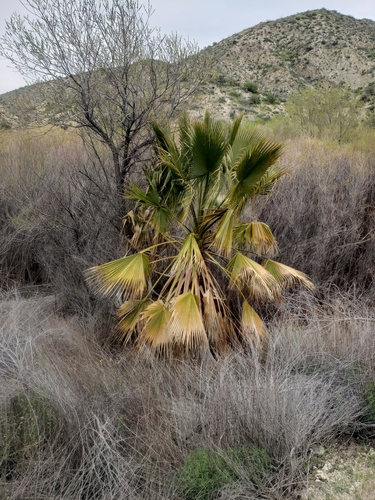
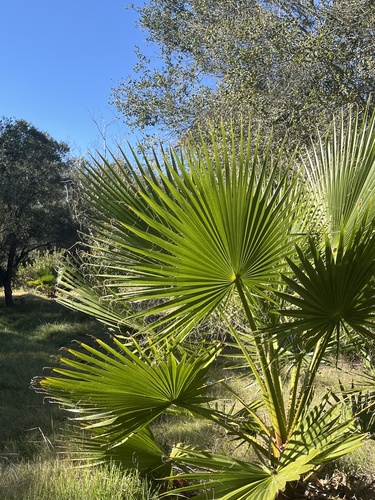
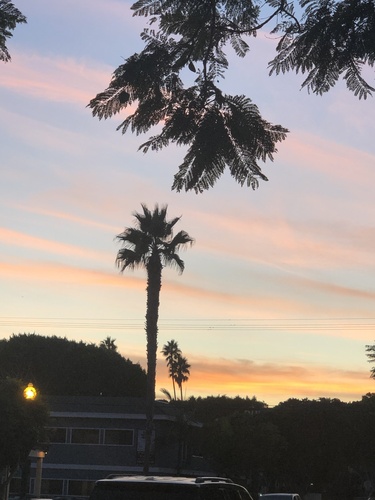
Typically 100 to 150 years in optimal conditions, though street-planted trees under repeated stress from poor pruning, compacted soil, and utility conflicts often decline much earlier.
Height of 70 to 100 feet with a canopy spread of only 10 to 15 feet. The trunk stays narrow, usually 12 to 18 inches in diameter, which is what gives it that signature telephone-pole silhouette.
Care & Maintenance
Once established after two to three years, Mexican Fan Palm survives on rainfall alone in most of its range, though it grows faster with occasional deep watering in summer. It needs full sun and tolerates poor, sandy, or alkaline soils well. Fertilize once or twice a year with a palm-specific granular fertilizer that includes potassium and manganese, because deficiencies in those two nutrients are the most common reason fronds look yellow or brown before they should.
Common Issues & Threats
- Frond drop: Dead fronds detach and fall unpredictably, sometimes from 60 feet up. A frond weighing 10-15 pounds falling that distance can seriously injure someone or damage a roof. The petticoat of retained dead fronds is the source of this hazard, along with being prime nesting habitat for roof rats and pigeons.
- South American Palm Weevil (Rhynchophorus palmarum): This beetle, now established in Southern California and spreading, bores into the crown and kills palms from the inside out. By the time you notice the spear leaf collapsing or a rotting smell, the palm is usually already dying. There is no reliable cure once a heavy infestation takes hold.
- Pink Rot (Nalanthamala vermoeseni): A fungal disease that attacks stressed palms, causing the base of new fronds to turn brown and mushy. It's almost always a secondary problem following physical injury, over-watering, or poor pruning cuts that leave tissue exposed. Treating the underlying stress matters more than spraying fungicide.
Pruning Guide
Remove only fully brown, dead fronds and do it once a year at most. The worst thing you can do is the 'hurricane cut,' where a crew strips everything down to a tiny tuft of green fronds at the top. That practice stresses the palm, slows growth, depletes nutrient reserves stored in older fronds, and does nothing to reduce wind resistance the way most people assume. Cut fronds flush with the trunk without leaving stubs, and never remove green or yellowing fronds unless they pose an immediate hazard.
Did You Know?
Here is what most people get wrong: the petticoat of dead fronds looks natural, but it is a serious fire hazard in dry climates. A single ember can ignite a 60-foot column of dry fronds in seconds, and fire can travel from tree to tree along a street of unpruned palms. On the more surprising side, Washingtonia robusta is one of the fastest-growing palms in the world and can add three to five feet of height per year under good conditions, which is why a small nursery tree becomes a roofline problem in under a decade.
Where Mexican Fan Palm Is Found
Mexican Fan Palm is common in 482 of the US communities we cover, across 2 climate regions.
... and 470 more cities
Need Mexican Fan Palm Care?
Find ISA-certified arborists experienced with Mexican Fan Palm in your area.
Take the Tree Risk Quiz