Madrone
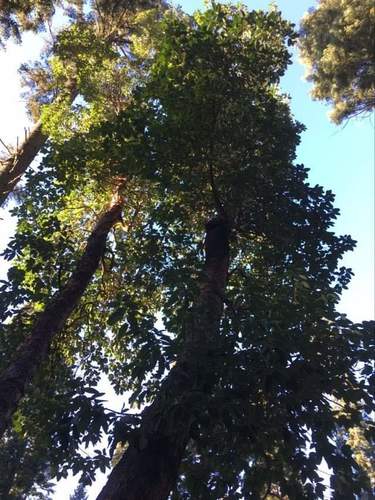
200 to 400 years in undisturbed native conditions. Landscape specimens often fall well short of that due to irrigation, soil compaction, and construction damage near the roots.
Typically 20 to 50 feet tall with a 20 to 30 foot spread. Old-growth trees in ideal native habitat can push past 80 feet, but that is not what you will see in a residential setting.
Care & Maintenance
Here is what most people get wrong: madrone hates summer water. If yours is inside a lawn irrigation zone or getting drip during the dry season, you are actively shortening its life. It wants fast-draining, acidic to neutral soil, full sun, and zero supplemental irrigation once it is established. Do not fertilize it.
Common Issues & Threats
- Root rot from summer irrigation: Phytophthora and other water molds thrive when soil stays wet in summer. This is the single most common way madrones die in landscaped yards, and by the time you notice decline, the roots are already gone.
- Madrone leaf blight caused by Botryosphaeria dothidea: Look for brown or black lesions on leaves and tip dieback on young shoots. It spreads aggressively in wet conditions and there is no cure, but keeping the canopy dry and avoiding wet-weather pruning limits how far it progresses.
- Sudden Oak Death (Phytophthora ramorum): Madrone is a confirmed host for this pathogen, which has killed millions of oaks and tanoaks across the Bay Area. Your madrone may not die from it directly, but it can harbor and spread spores to the oaks growing next to it.
Pruning Guide
Prune only when necessary, and only during dry weather, ideally late summer after the rainy season is long over. Any cut made when it is wet is an open invitation for Botryosphaeria to enter the wood. Focus on dead branches and anything rubbing or crossing the canopy, and leave the natural form alone.
Did You Know?
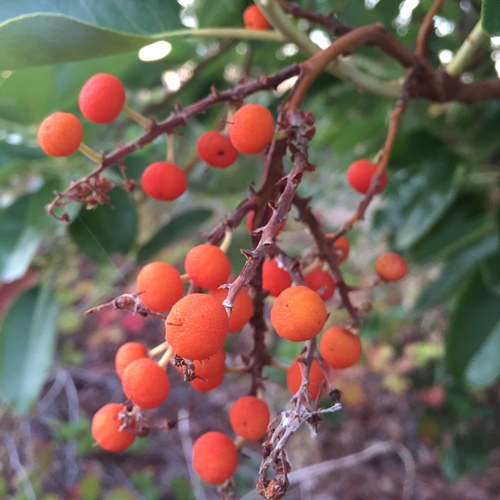
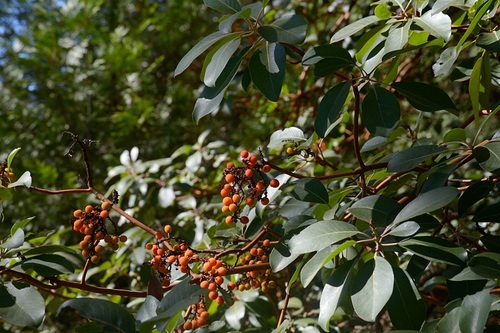
Madrone drops its leaves in summer, not fall, which sends homeowners into a panic every single year thinking the tree is dying. It is not. It is perfectly normal. The berries are consumed by over 50 species of birds and mammals, so a healthy, established madrone is one of the most ecologically productive trees you can have on a Bay Area property.
Where Madrone Is Found
Madrone is common in 279 of the US communities we cover, across 1 climate regions.
... and 267 more cities
Need Madrone Care?
Find ISA-certified arborists experienced with Madrone in your area.
Take the Tree Risk Quiz