Kousa Dogwood
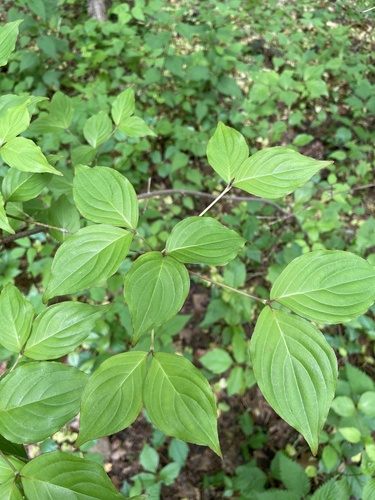
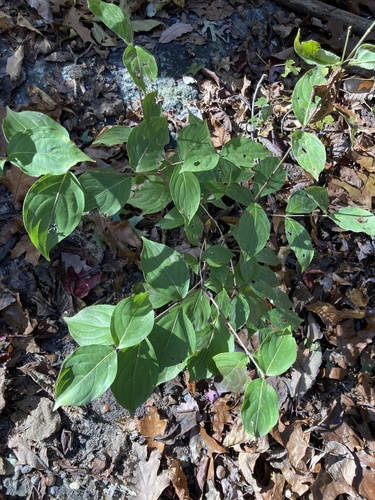
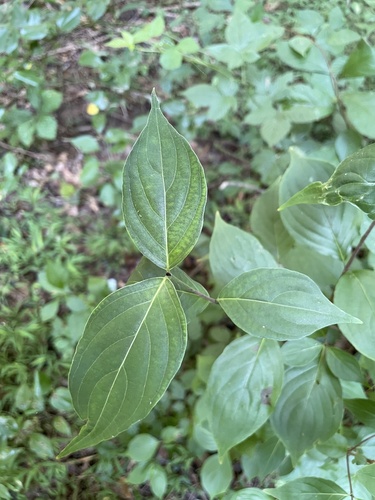
Typically 25 to 50 years in a landscape setting, occasionally longer in ideal conditions.
Usually 15 to 25 feet tall with a similar or slightly wider spread. In open settings with room to grow, wide specimens are common.
Care & Maintenance
Kousa dogwood wants well-drained, acidic soil with a pH around 5.5 to 6.5. If your soil is alkaline, you'll see yellowing leaves from iron chlorosis before you see anything else. It does best in full sun to partial shade, and while it handles drought better than native dogwood once established, it needs consistent watering for the first two to three years.
Common Issues & Threats
- Dogwood borer (Synanthedon scitula): This is the one most homeowners miss. The larva tunnels under the bark near the base of the trunk and crown, causing dieback that looks like drought stress. Lawnmower and string trimmer wounds are the main entry point, so keep equipment away from the base.
- Spot anthracnose (Elsinoe corni): Not the same disease that kills native dogwoods, but it causes tan leaf spots with purple borders and can defoliate a tree in a wet spring. Kousa shrugs it off cosmetically in most years and puts out new leaves. It looks alarming but rarely causes lasting damage.
- Iron chlorosis from high soil pH: Yellow leaves with green veins, starting on newer growth, usually mean your soil is too alkaline for the tree to absorb iron. Applying sulfur to lower pH is a longer-term fix; chelated iron is a faster band-aid.
Pruning Guide
Prune in late fall or winter when the tree is dormant. Kousa has a naturally beautiful structure, and the biggest mistake people make is over-pruning it into a lollipop shape. Remove crossing or rubbing branches and anything growing toward the center of the canopy, but otherwise let the layered branching do its thing. Never top it.
Did You Know?
Here's what most people get wrong: they assume Kousa is just a disease-proof copy of the native dogwood. It's actually a fundamentally different species that blooms after the leaves have emerged, which means the flowers don't pop the same way as native dogwood. The fruit is edible and tastes faintly like a cross between a fig and a mango, though the texture is grainy. Also, the resistance to dogwood anthracnose is real and significant. Discula destructiva has wiped out native dogwoods across the Mid-Atlantic, and Kousa largely shrugs it off.
Where Kousa Dogwood Is Found
Kousa Dogwood is common in 1369 of the US communities we cover, across 1 climate regions.
... and 1357 more cities
Need Kousa Dogwood Care?
Find ISA-certified arborists experienced with Kousa Dogwood in your area.
Take the Tree Risk Quiz