Koa
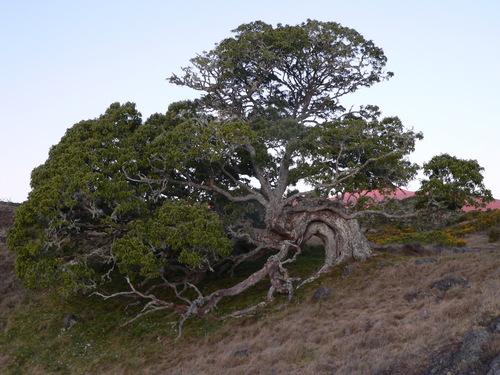
Typically 50 to 150 years under good conditions, though some old-growth specimens in protected forest areas have exceeded that.
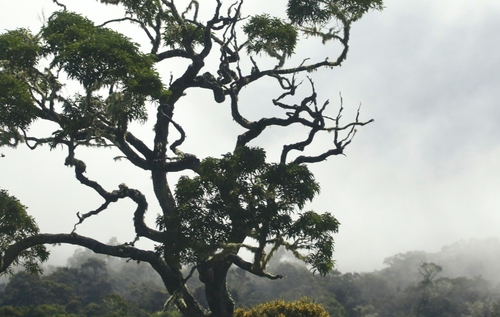
50 to 100 feet tall with a canopy spread of 30 to 60 feet, depending on elevation, rainfall, and competition.
Care & Maintenance
Koa wants full sun and well-draining soil. It fixes its own nitrogen, so fertilizing is usually unnecessary and can actually push excessive, weak growth. Once established, it handles dry conditions well, but young trees need consistent moisture for the first year or two to develop a strong root system.
Common Issues & Threats
- Koa wilt (Fusarium oxysporum f.sp. koae): This is the one that should concern you most. It's a soil-borne fungal disease that moves through the root system and causes sudden dieback, often killing trees quickly. There's no cure once a tree is infected, and infected soil can persist for years.
- Koa looper caterpillars (Scotorythra paludicola): These native caterpillars can completely defoliate a tree during outbreak years. A healthy tree usually recovers, but repeated defoliation over multiple seasons weakens it significantly.
- Root rot from poor drainage: Koa does not tolerate wet feet. Planting in compacted or low-lying areas invites Phytophthora root rot, which mimics drought stress and is often misdiagnosed as a watering problem.
Pruning Guide
Prune during the dry season to reduce disease pressure at wound sites. Koa does not compartmentalize decay well, so avoid large cuts if possible. The most common mistake is removing the lower scaffold branches to 'clean up' the tree, which exposes the trunk to sunscald and stress on a species that really prefers to develop its own shading canopy.
Did You Know?
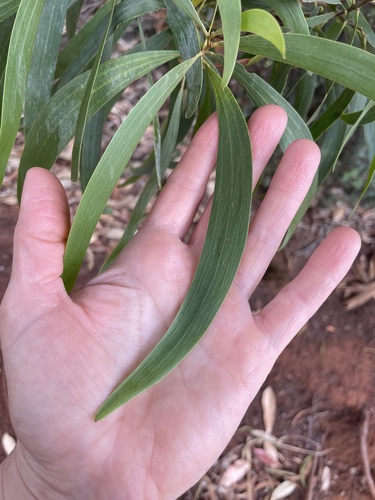
Here's what most people get wrong: the young seedling and mature tree look like completely different species. Seedlings grow true bipinnate leaves, then switch entirely to phyllodes as they mature. If you see what looks like a different tree growing from your koa's base, check whether it's a seedling before pulling it. The wood is genuinely one of the most valuable domestic hardwoods in the U.S., with figured koa slabs regularly selling for hundreds of dollars per board foot.
Where Koa Is Found
Koa is common in 121 of the US communities we cover, across 1 climate regions.
... and 109 more cities
Need Koa Care?
Find ISA-certified arborists experienced with Koa in your area.
Take the Tree Risk Quiz