Kentucky Coffeetree
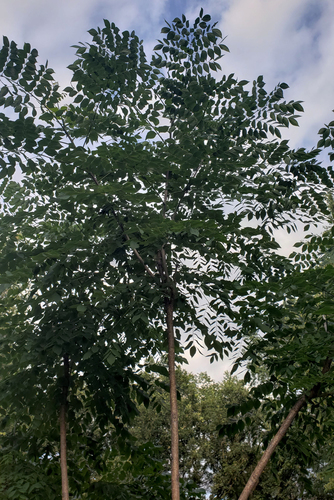
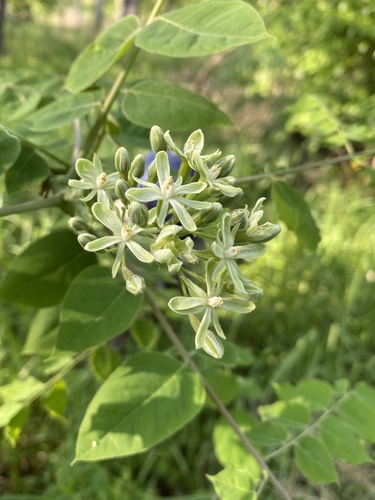
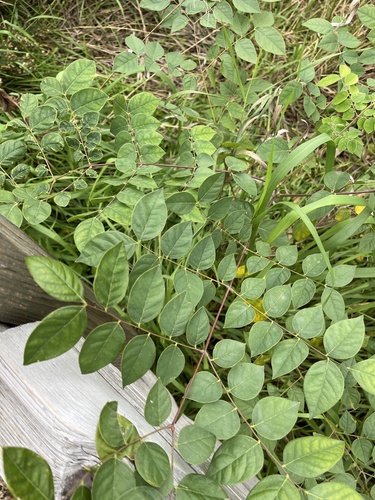
Typically 100 to 150 years under good conditions, though urban specimens may fall short of that without adequate soil volume.
60 to 80 feet tall with a spread of 40 to 55 feet. Male cultivars like 'Espresso' tend to run slightly smaller and more uniform than wild-type trees.
Care & Maintenance
Once established after two or three years, this tree is remarkably drought tolerant and needs almost no supplemental watering. It handles alkaline soils, compacted ground, and road salt better than most shade trees. Full sun is non-negotiable. Fertilizing is rarely necessary unless a soil test shows a specific deficiency.
Common Issues & Threats
- Female tree pod litter: Female trees drop thick, leathery pods up to 10 inches long that don't break down easily, become slippery when wet, and contain seeds that are toxic to dogs and livestock. If you have a female tree, this is the defining management problem every fall.
- Abnormally long leafless period: This tree is bare for nearly six months of the year, one of the last to leaf out in May and one of the first to drop in fall. Homeowners regularly call thinking their tree is dead. It isn't. That's just how this species works.
- Poor branch structure if neglected when young: Without corrective pruning in the first decade, Coffeetrees tend to develop competing leaders and tight branch unions that can fail under ice or snow load. The window to fix this cheaply is early.
Pruning Guide
Prune during full dormancy, late winter before any bud swell, ideally February in the Upper Midwest. The focus when the tree is young should be establishing a single dominant leader and removing any branches with narrow, included bark angles. Mature specimens need very little pruning beyond removing dead wood, which can be done any time.
Did You Know?
Here is what most people get wrong: they assume a big, tough native tree needs no attention in youth, then end up with a structurally compromised 30-foot tree that costs thousands to correct or remove. The other genuinely surprising fact is the name itself. Settlers ground the roasted seeds as a coffee substitute during hard times, though the raw seeds are toxic. The tree was so little-known to early botanists that it was once thought to be extinct in the wild.
Where Kentucky Coffeetree Is Found
Kentucky Coffeetree is common in 729 of the US communities we cover, across 2 climate regions.
... and 717 more cities
Need Kentucky Coffeetree Care?
Find ISA-certified arborists experienced with Kentucky Coffeetree in your area.
Take the Tree Risk Quiz