Katsura Tree
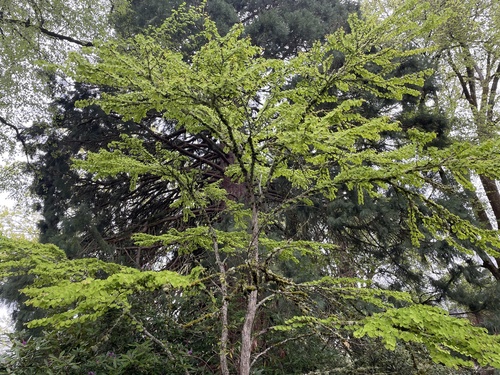
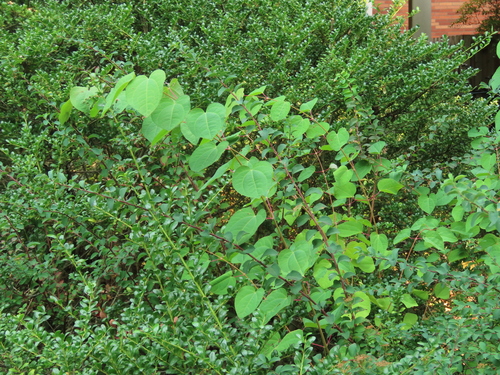
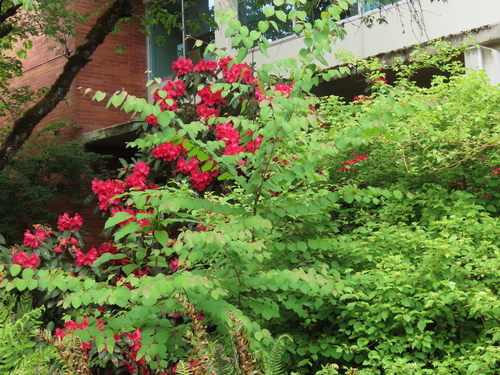
Katsura typically lives 50 to 150 years in cultivation, with well-sited specimens on the longer end of that range.
Single-trunk forms typically reach 40 to 60 feet tall with a 25 to 35 foot spread. Multi-stem forms tend to stay shorter and wider, often 20 to 35 feet in both directions, which makes them more manageable in a residential setting.
Care & Maintenance
Katsura wants consistent moisture, especially in its first three to five years. In the Pacific Northwest, natural rainfall usually carries it through, but during dry summers you should water deeply every two weeks rather than sprinkling lightly every day. It prefers slightly acidic, well-drained soil and does best in full sun to partial shade. Fertilizing is rarely necessary if your soil is decent.
Common Issues & Threats
- Leaf scorch in dry spells: During summer drought, the leaf margins turn brown and crispy. This is not a disease. It is a water stress response, and the tree usually recovers fine the following season if you improve irrigation.
- Structural failure on multi-stem forms: Here is what most people get wrong. Those elegant multiple trunks look beautiful but often develop included bark at the union points, which is a weak attachment that can split under snow load or wind. Get a certified arborist to assess the branch angles when the tree is young.
- Verticillium wilt: Occasionally affects katsura planted in poorly drained or recently disturbed soil. You will see sudden wilting or branch dieback on one side of the canopy. There is no cure, but a healthy tree in good soil can compartmentalize it and survive.
Pruning Guide
Prune katsura in late winter before bud break. The priority on multi-stem trees is identifying and either cabling or selectively removing co-dominant stems with tight, v-shaped unions before they become a structural problem. Avoid heavy pruning in summer, which stresses the tree and invites disease entry. Single-trunk forms need very little pruning beyond removing dead or crossing branches.
Did You Know?
The burnt-sugar smell is not from the tree itself but from maltol released as the fallen leaves dry. You can actually pick up a handful of dropped leaves, hold them to your nose, and smell it directly. Also, katsura is one of the few trees without a close living relative. It is the only species in its entire family, Cercidiphyllaceae, making it a genuine botanical oddity that has survived largely unchanged for millions of years.
Where Katsura Tree Is Found
Katsura Tree is common in 345 of the US communities we cover, across 1 climate regions.
... and 333 more cities
Need Katsura Tree Care?
Find ISA-certified arborists experienced with Katsura Tree in your area.
Take the Tree Risk Quiz