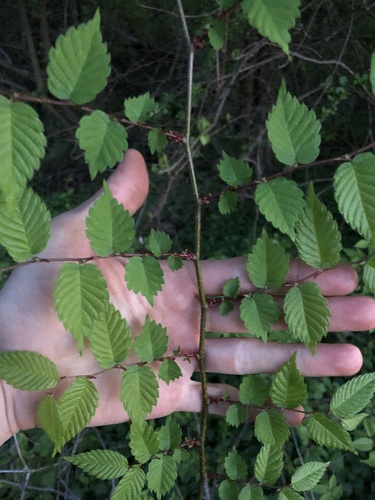
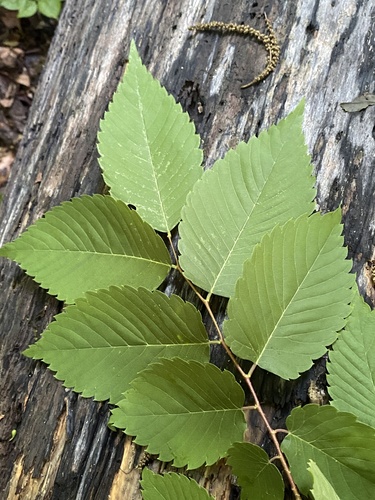
Japanese Zelkova
150 to 200 years under good conditions, though urban street trees often top out around 80 to 100 years due to soil compaction, root restriction, and repeated stress.
50 to 80 feet tall with a spread of 50 to 75 feet. Give it room. A Zelkova squeezed between a sidewalk and a building will spend its whole life telling you it was a bad idea.
Care & Maintenance
Zelkova tolerates the Pacific Northwest's wet winters and dry summers better than many trees, but young trees still need consistent summer watering for the first three to five years. It prefers well-drained soil and full sun, and it handles urban compaction and pollution better than most large shade trees. Skip the high-nitrogen fertilizer unless a soil test tells you something specific is missing.
Common Issues & Threats
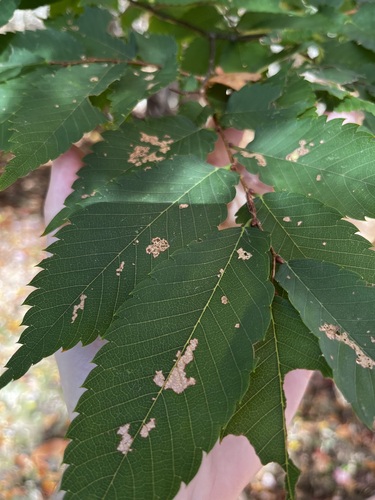
- Elm leaf beetle (Xanthogaleruca luteola): This is the one to watch for. The larvae skeletonize leaves from underneath, leaving a brown papery mess by mid-summer. You'll see the damage before you see the bug.
- Verticillium wilt: A soil-borne fungus that blocks the tree's vascular system. Symptoms look like random branch dieback, often on one side of the tree. There's no cure once it's established, so soil drainage and tree health are your only real defenses.
- Phytophthora root rot: Pacific Northwest soils stay wet for months, and Zelkova planted in low spots or heavy clay can develop root rot from Phytophthora. The tree declines slowly from the top down and most homeowners blame drought stress when the actual problem is drowning roots.
Pruning Guide
Prune Zelkova in late fall through early winter while it's fully dormant. The vase structure is the tree's best feature, so your goal is to preserve that natural form rather than fight it. Most people get this wrong by over-thinning the interior or topping to control size, both of which destroy the form and invite decay. Remove crossing branches and anything growing back toward the center, and let it do the rest.
Did You Know?
Zelkova is one of the few large trees that actually improves with age in an urban setting. The bark of a mature specimen develops this patchwork of gray and orange that looks almost architectural. Most homeowners also don't know that Zelkova is in the elm family but is naturally immune to Dutch elm disease, which is exactly why cities started planting it aggressively in the 1960s to fill the gaps left by dying elms.
Where Japanese Zelkova Is Found
Japanese Zelkova is common in 345 of the US communities we cover, across 1 climate regions.
... and 333 more cities
Need Japanese Zelkova Care?
Find ISA-certified arborists experienced with Japanese Zelkova in your area.
Take the Tree Risk Quiz