Japanese Maple
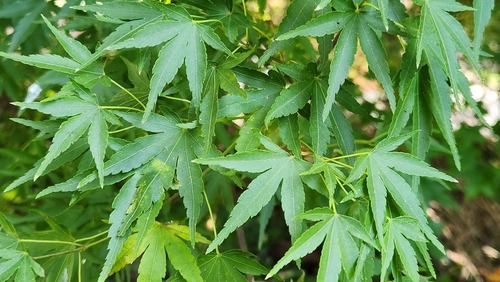
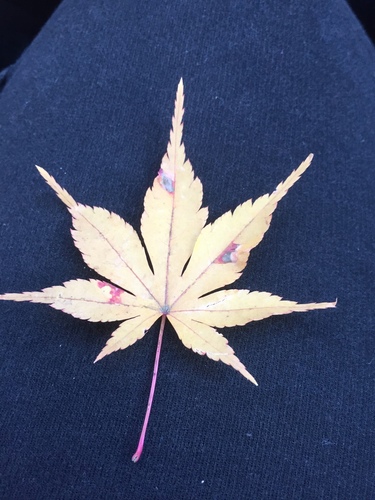
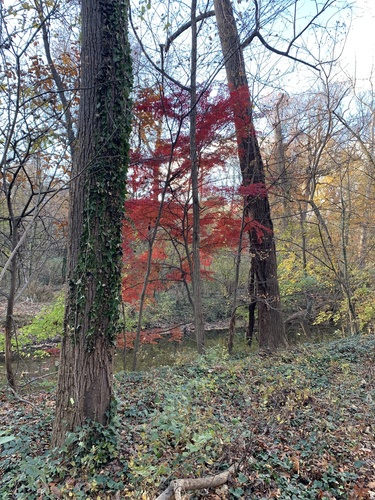
A properly sited Japanese maple can live 100 to 150 years. Most landscape specimens in poor sites or compacted urban soil fail within two to three decades.
Size varies significantly by cultivar. Upright types like 'Bloodgood' reach 15 to 25 feet tall with a similar spread. Weeping and dwarf forms like 'Crimson Queen' stay under 10 feet tall and often spread wider than they are tall.
Care & Maintenance
Japanese maples want consistent moisture, but standing water or compacted clay will rot the roots before drought ever becomes a problem. They prefer dappled shade to part sun -- full afternoon sun in hot inland valleys scorches the leaves hard, especially on red-leafed cultivars. Fertilize lightly with a slow-release balanced fertilizer once in early spring. Excess nitrogen pushes soft new growth that aphids target immediately and that late frosts damage easily.
Common Issues & Threats
- Verticillium wilt: A soil-borne fungal pathogen that causes one or more branches to wilt and die suddenly in summer. Cut through an infected branch and you'll see brown or olive discoloration in a ring inside the wood. There's no fungicide treatment that works -- you prune well below the discoloration, sterilize your tools between cuts, and hope the tree walls it off.
- Woolly aphid and green aphid infestations: These cluster on new growth in spring, coating leaves in sticky honeydew that then grows a layer of black sooty mold. A hard blast from a garden hose dislodges most of them. Insecticidal soap handles persistent colonies -- you almost never need a systemic insecticide on Japanese maples.
- Leaf scorch: Crispy brown margins appearing by mid-summer, most severe on red-leafed cultivars in hot or windy exposures. This is almost always a placement error, not a disease -- too much direct afternoon sun or inconsistent summer watering. Chronic scorch won't kill a tree quickly, but it steadily weakens it over years.
Pruning Guide
Prune in late winter while the tree is fully dormant, or in mid-summer after the first flush of new growth has hardened off. Here's what most homeowners get wrong: they prune in early spring when the sap is rising, which causes heavy bleeding at cut wounds and can genuinely stress the tree. Japanese maples are slow to seal over cuts, so keep removals small -- focus on dead wood, crossing branches, and anything breaking the natural layered silhouette. Never shear or 'lion's tail' these trees; it destroys what makes them worth having.
Did You Know?
Japanese maples can live over 100 years, but most landscape specimens fail within 20 to 30 years because they were planted in the wrong spot or in unamended clay. Almost all named cultivars are grafted onto rootstock, which is why you sometimes see a vigorous, plain-looking shoot emerging from the base -- that's the rootstock trying to take over, and it needs to come off immediately before it outcompetes the tree you actually paid for.
Where Japanese Maple Is Found
Japanese Maple is common in 2414 of the US communities we cover, across 4 climate regions.
... and 2402 more cities
Need Japanese Maple Care?
Find ISA-certified arborists experienced with Japanese Maple in your area.
Take the Tree Risk Quiz