Japanese Magnolia
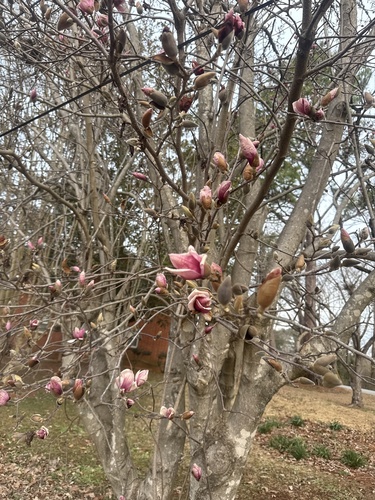
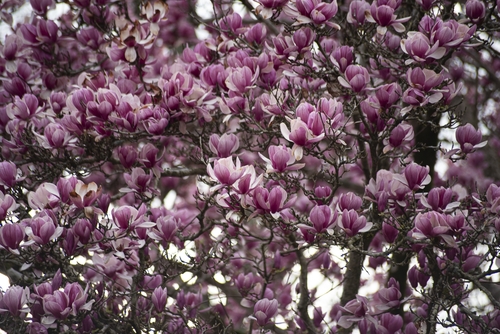
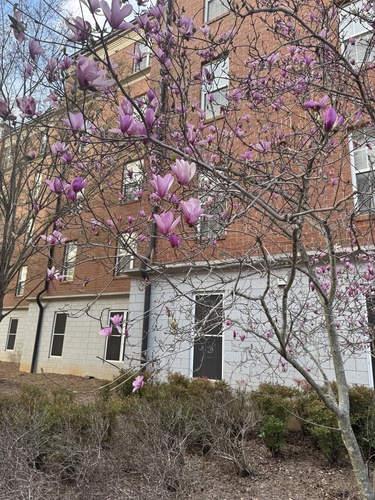
With good drainage and siting, Japanese Magnolia can live 80 to 150 years, though many in the Deep South decline earlier due to poorly drained clay soils and Verticillium wilt pressure.
Typically 20 to 30 feet tall with a spread of 20 to 25 feet at maturity. Multi-stemmed specimens tend to be wider than they are tall, especially when not pruned to a central leader.
Care & Maintenance
Japanese Magnolia wants well-drained, slightly acidic soil and at least six hours of direct sun to bloom well. Water deeply during the first two or three years while the root system establishes, then it becomes reasonably drought-tolerant. Go light on nitrogen fertilizer or you'll push leafy growth at the expense of flowers. A light application of balanced fertilizer in early spring is enough.
Common Issues & Threats
- Late frost flower damage: The flowers open so early that a single hard frost after bloom often turns them brown and mushy overnight. The tree itself is fine, but you'll lose the flower show for that year. This is the most common complaint homeowners have, and there's no fix other than choosing a sheltered north-facing spot at planting time.
- Magnolia scale (Neolecanium cornuparvum): This is the worst pest you'll deal with. These waxy, brownish bumps attach to stems and branches and produce sticky honeydew that turns black with sooty mold. If you see black, sticky residue on leaves and branches in summer, look closely at the stems for what looks like small brown helmets. Horticultural oil applied in late summer when crawlers are active is the most effective treatment.
- Verticillium wilt: This soil-borne fungus causes branches to suddenly wilt and die back, often on one side of the tree first. There's no cure once a tree is infected. You can prune out affected branches back to clean wood, but if the wilt is spreading through the main trunk, the tree is declining and eventually won't recover.
Pruning Guide
The biggest mistake people make is pruning Japanese Magnolia in fall or late winter. Those flower buds are already set on last season's wood, and if you prune then, you're cutting off your spring bloom. Prune immediately after flowering, before the tree leafs out fully. Remove crossing branches, anything rubbing the center of the canopy, and any dead wood. Avoid heavy cuts on large limbs because magnolias are slow to compartmentalize wounds, which invites decay and borers.
Did You Know?
Japanese Magnolia is actually a hybrid, created in France in the early 1800s by crossing two Chinese species. It has no native range anywhere. Most people also don't realize the flower buds are technically there all winter, already fully formed and waiting, which is why one bad frost in March can erase the entire bloom season in a single night.
Where Japanese Magnolia Is Found
Japanese Magnolia is common in 458 of the US communities we cover, across 1 climate regions.
... and 446 more cities
Need Japanese Magnolia Care?
Find ISA-certified arborists experienced with Japanese Magnolia in your area.
Take the Tree Risk Quiz