Ironwood
Typically 100 to 150 years in favorable conditions, with well-sited specimens occasionally exceeding that. Because it grows slowly and is rarely the dominant tree in the landscape, it often outlives the faster-growing trees around it.
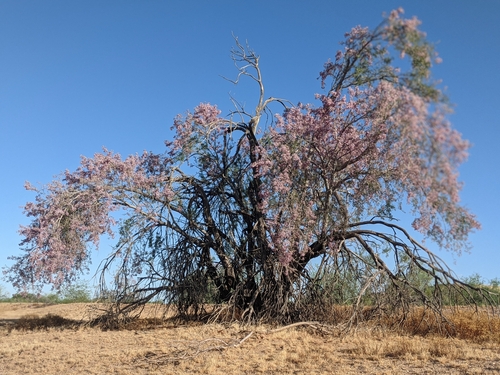
Usually 25 to 40 feet tall with a spread of 15 to 25 feet. In open conditions with good soil it can push 50 feet, but 30 to 35 feet is more realistic in most residential landscapes. The crown is naturally graceful and layered, which is part of what makes it a good ornamental understory choice.
Care & Maintenance
Ironwood is built for low maintenance in the right setting. It prefers well-drained, slightly acidic soils and is more drought-tolerant than most people expect once it has had two or three years to establish. It grows naturally in shade, but handles full sun without complaint as long as soil moisture is reasonable. Skip fertilizing unless a soil test confirms a deficiency, because pushing growth on a tree that thrives on neglect usually does more harm than good.
Common Issues & Threats
- Two-lined chestnut borer (Agrilus bilineatus): Despite the famously hard wood, this borer targets stressed ironwoods and leaves D-shaped exit holes in the bark along with canopy dieback that starts from the outer branches and moves inward. Drought stress or root disturbance from nearby construction is usually the trigger.
- Iron chlorosis: If the leaves are yellowing while the veins stay green, the soil pH is likely too high for the tree to absorb iron. This is more common in urban landscapes where concrete and construction debris have raised soil alkalinity. A soil test will confirm it.
- Powdery mildew: A white, dusty coating that appears on leaves in late summer, usually in trees with poor air circulation around them. It looks worse than it is and rarely causes lasting damage, but it signals that the tree is in a tight spot with limited airflow.
Pruning Guide
Prune during dormancy, late fall through early spring, before buds break. Here is what most people get wrong: because ironwood grows slowly, they assume it can handle big structural cuts without consequence. The opposite is true. Slow-growing trees compartmentalize wounds slowly, so a large pruning cut on an ironwood stays open to infection far longer than the same cut on a fast-growing maple. Keep cuts small, remove dead wood and crossing branches, and leave the tree alone otherwise.
Did You Know?
Ironwood produces the densest wood of any native tree in eastern North America, so dense it actually sinks in water, which is rare for wood. Historically it was the go-to material for tool handles, mallet heads, and fence posts anywhere long-term durability mattered more than easy availability. Most people assume slow-growing trees are weak or a poor landscape investment, but with ironwood the slow growth is exactly what produces the incredibly tight grain structure that makes it one of the most structurally sound trees you can have on a property.
Where Ironwood Is Found
Ironwood is common in 429 of the US communities we cover, across 2 climate regions.
... and 417 more cities
Need Ironwood Care?
Find ISA-certified arborists experienced with Ironwood in your area.
Take the Tree Risk Quiz