Honeylocust
Typically 70 to 120 years under good conditions, though urban stress and compaction can shorten that significantly.
Most landscape cultivars reach 40 to 60 feet tall with a spread of 30 to 50 feet. 'Shademaster' tends toward the larger end of that range. Give it more space than you think it needs.
Care & Maintenance
Once established, honeylocust is genuinely drought tolerant, but the first two to three years need consistent deep watering every 7-10 days in summer. It prefers full sun and performs poorly in shade. You do not need to fertilize a healthy honeylocust planted in native soil. If you are seeing yellowing leaves, test your soil before throwing nitrogen at it.
Common Issues & Threats
- Mimosa webworm (Homadaula anboinella): This is the big one in the Mountain West. In mid to late summer, you will see silky webbing bundling the leaflets together in tight clusters, followed by brown, scorched-looking foliage. A heavy infestation can defoliate a mature tree by August. It looks terrible but rarely kills a healthy tree. Two-spray timing in early summer, targeting the larvae before they web up, is far more effective than spraying after you notice the damage.
- Honeylocust plant bug (Diaphnocoris chlorionis): Most homeowners miss this one entirely because the damage happens in May and June when you are not paying close attention. These tiny insects feed on new growth and cause distorted, puckered, or stippled leaflets early in the season. By the time you notice something looks off, the bugs are already gone.
- Thyronectria canker: This is a fungal disease that shows up as sunken, discolored bark patches, usually on stressed or wounded trees. It is not common on vigorously growing honeylocusts, but if your tree has had drought stress, physical damage, or a bad pruning cut, watch for it. There is no spray fix for established cankers. You manage it by removing infected wood and keeping the tree as healthy as possible.
Pruning Guide
Prune honeylocust in late winter while it is fully dormant, before any bud swell. This species does not require heavy pruning and actually responds poorly to being over-thinned since that stimulates vigorous, weakly attached water sprout growth. Focus on removing dead wood, crossing branches, and any co-dominant leaders early in the tree's life. Here is what most people get wrong: they wait until the tree is 20 feet tall to address structural problems that should have been corrected in years two through five.
Did You Know?
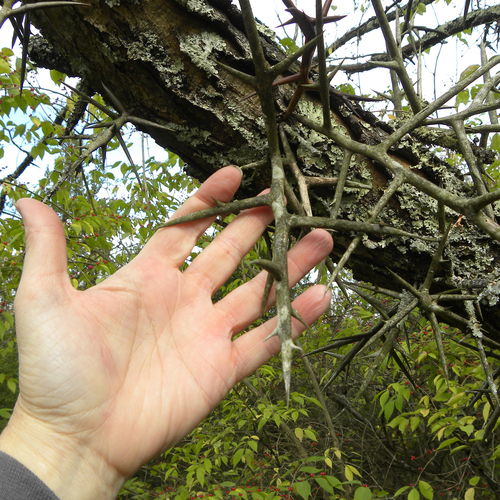
Wild honeylocust trees produce those vicious trunk thorns as a defense against large browsing animals, and the leading theory is that mammoths and ground sloths were the original seed dispersers that ate the pods. The 'honey' in the name comes from the sweet, edible pulp inside the seed pods, which native peoples and livestock have eaten for centuries. Your landscaped thornless cultivar is a fairly recent human invention layered over a tree with a genuinely ancient ecological history.
Where Honeylocust Is Found
Honeylocust is common in 421 of the US communities we cover, across 1 climate regions.
... and 409 more cities
Need Honeylocust Care?
Find ISA-certified arborists experienced with Honeylocust in your area.
Take the Tree Risk Quiz