Honey Locust
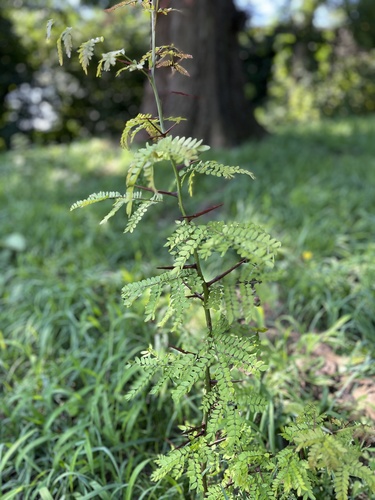
In good conditions, honey locust can live 120 years or more. In typical suburban settings with compacted root zones and hard surfaces baking the soil, plan on 60 to 80 years as a realistic figure.
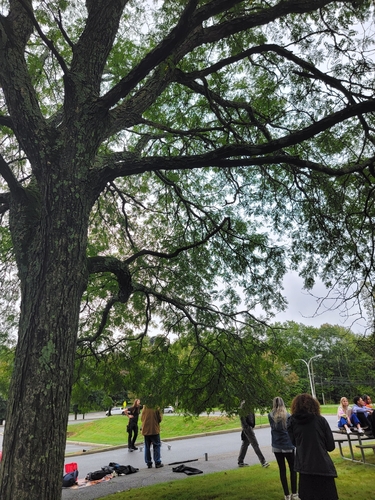
Most cultivars reach 40 to 70 feet tall with a canopy spread of 30 to 50 feet. 'Shademaster' tends toward the broader, larger end of that range; 'Skyline' grows more upright and is a better choice for tighter spaces near buildings or under utility lines.
Care & Maintenance
Honey locust wants full sun and is genuinely adaptable, tolerating clay, alkaline soil, and the kind of root zone abuse that kills oaks and maples. Water young trees deeply once a week during dry stretches for the first two to three years; after that they largely take care of themselves. Skip routine fertilizing unless a soil test shows a deficiency, because pushing fast growth on a honey locust makes the wood weaker and the tree more attractive to pests.
Common Issues & Threats
- Mimosa webworm (Homadaula anisocentra): This is the one you'll most likely deal with. The caterpillars web together leaflets and feed inside, and by late summer a bad infestation can make the whole crown look brown and scorched. One generation per year in the north, two in warmer areas.
- Thyronectria canker: A fungal disease that kills individual branches and can eventually girdle the trunk. Look for sunken, discolored bark with small orange or yellow fruiting bodies. Trees stressed by drought, compaction, or poor planting are far more susceptible, and there is no fungicide fix once the trunk is involved.
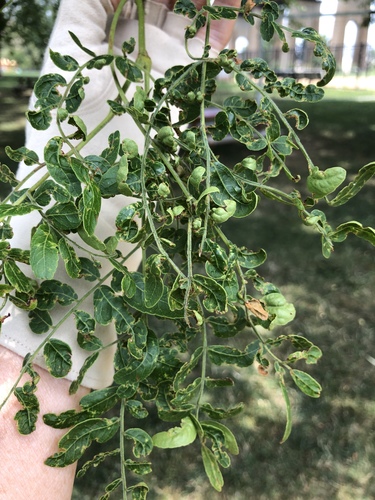
- Honey locust plant bug (Diaphnocoris chlorionis): This small insect feeds on new growth in spring, leaving stippled, distorted, yellowed leaves. Most established trees tolerate it without long-term damage, but if you see it every year on a young tree that is still trying to get established, it is worth addressing.
Pruning Guide
Prune in late fall through early winter when the tree is fully dormant. What most people get wrong is waiting too long to correct structure: honey locust cultivars commonly develop narrow, tight branch unions that look fine for 15 years and then split under a snow load. Identifying and removing competing leaders when the tree is young, around 6 to 10 feet tall, is the single best thing you can do for its long-term safety. Avoid heavy cuts in spring when the tree is leafing out hard.
Did You Know?
The thorns on a wild honey locust are not a curiosity, they are a survival adaptation likely evolved to deter now-extinct megafauna like mastodons. Some researchers think the massive seed pods were also sized for those animals to eat and disperse. The other thing worth knowing as a homeowner: the pods on wild trees are filled with a genuinely sweet edible pulp, which is how the tree got its name, and deer will strip the ground clean of them in fall.
Where Honey Locust Is Found
Honey Locust is common in 1369 of the US communities we cover, across 1 climate regions.
... and 1357 more cities
Need Honey Locust Care?
Find ISA-certified arborists experienced with Honey Locust in your area.
Take the Tree Risk Quiz