Hala
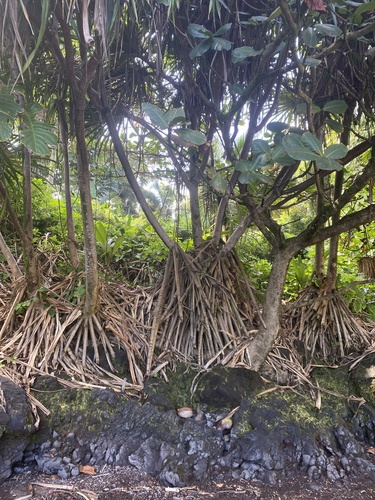
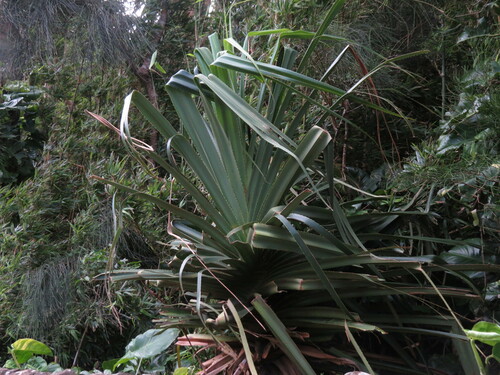
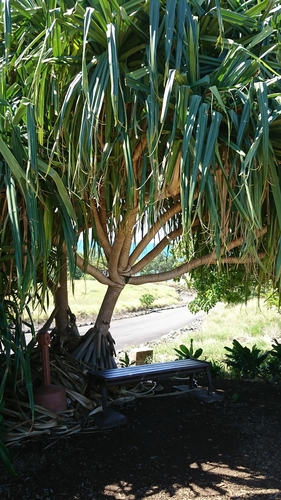
Hala can live well over 100 years in appropriate coastal conditions. In poorly drained or heavily disturbed sites, expect a significantly shorter and more problematic life.
Typically 20 to 30 feet tall with a spread of 15 to 25 feet, though the prop root spread often makes the footprint feel larger. In optimal conditions with room to develop, some specimens push 35 feet.
Care & Maintenance
Hala is extremely drought-tolerant once established and actually prefers to dry out between waterings. It wants full sun and loose, sandy, well-drained soil. Overwatering or planting in heavy clay are the fastest ways to kill it. Fertilizing is rarely necessary in a coastal setting, but if your tree looks pale or slow-growing, a slow-release palm fertilizer once or twice a year is sufficient.
Common Issues & Threats
- Scale insects: Hala is prone to armored scale, particularly along the leaf midrib. You'll see crusty brown or white bumps on the underside of leaves. A heavy infestation causes yellowing and leaf drop. Horticultural oil applied during the crawler stage is effective, but you have to get thorough coverage on those long leaves.
- Root rot from poor drainage: The prop root system is impressive, but it does not protect against saturated soil. If your hala is in a low spot that holds water after rain, expect yellowing fronds, soft trunk tissue at the base, and eventual collapse. This is a planting decision problem, not something you can fix with treatment.
- Leaf tip dieback: Brown, dry tips spreading inward often signal salt burn or inconsistent watering in younger trees. In established coastal trees, some tip dieback is normal. If it's progressing past the outer third of the leaf, investigate watering and drainage.
Pruning Guide
Here's what most people get wrong: they prune hala like a palm, removing all the lower leaves to 'clean it up.' That strips the prop roots of their support structure and stresses the tree unnecessarily. Remove only dead or fully brown leaves, cutting close to the trunk. The prop roots are structural, not decorative, so do not cut them unless they are creating a specific hazard. Late winter or early spring pruning is fine, but honestly, this tree needs very little intervention.
Did You Know?
Hala is dioecious, meaning individual trees are either male or female. Male trees produce the fragrant flower clusters called hinano, which you will smell before you see them. Only female trees produce the fruit. So if you have a male hala, you will never get fruit no matter how long you wait. The leaves, called lau hala, were woven into mats, baskets, and hats for centuries, and the craft is still actively practiced in Hawaii today.
Where Hala Is Found
Hala is common in 121 of the US communities we cover, across 1 climate regions.
... and 109 more cities
Need Hala Care?
Find ISA-certified arborists experienced with Hala in your area.
Take the Tree Risk Quiz