Hackberry
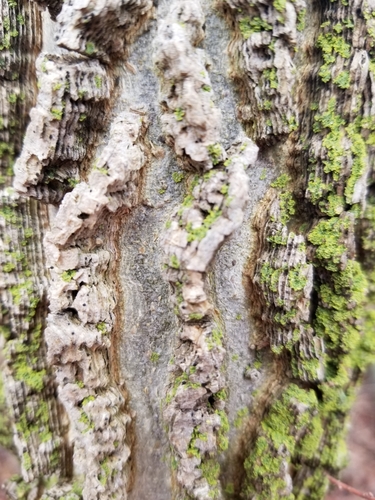
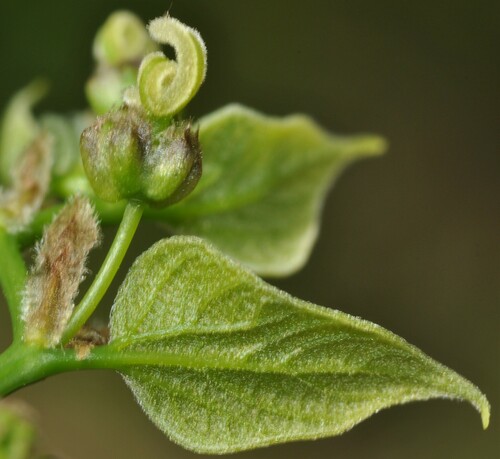
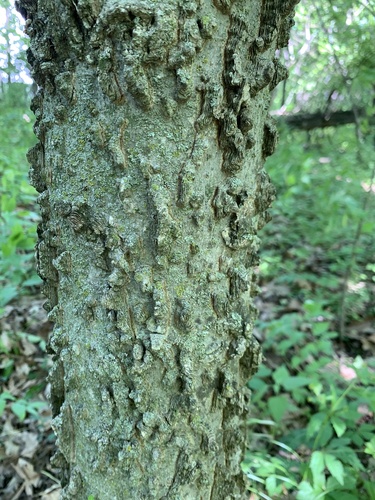
150 to 200 years under good conditions, sometimes longer. Urban trees in compacted soils typically live 75 to 100 years.
40 to 60 feet tall with a spread of 40 to 60 feet. Some open-grown specimens in favorable conditions push 70 feet.
Care & Maintenance
Hackberry needs almost nothing from you once established. It handles drought, compaction, road salt, and poor drainage without complaint. If you want to encourage a young tree, a deep watering once a week during the first two summers helps it root in faster, but fertilizing a mature hackberry is usually unnecessary and can actually push weak, fast growth.
Common Issues & Threats
- Hackberry nipple gall (Pachypsylla celtidis-mamma): Small, wart-like bumps covering the leaves every summer. This is a psyllid insect laying eggs inside the leaf tissue. It looks alarming but causes zero long-term harm to the tree. Here is what most people get wrong: they spray for it. By the time you see the galls, the insect is sealed inside the leaf and insecticides do nothing. You would need a soil-injected systemic applied in early spring before budbreak, and honestly, the tree does not need it.
- Witches' broom: Dense, tangled clusters of twigs that look like bird nests scattered through the canopy. This is caused by a combination of a powdery mildew fungus and an eriophyid mite working together. It is ugly but not a death sentence. Heavy infestations on young trees can slow growth, but on a mature tree it is mostly cosmetic.
- Structural failures at co-dominant stems: Hackberry commonly grows with two or more trunks of equal size competing from a low crotch. Over time, included bark develops at that union and the stems are prone to splitting apart in ice storms or high wind. This is the one issue that can turn your hackberry into a liability. Catch it early with corrective pruning on young trees and you avoid a much harder decision later.
Pruning Guide
Prune hackberry in late winter while it is still dormant, ideally February through early March in the Upper Midwest. The priority on young trees is establishing one dominant central leader and removing co-dominant stems before they get large enough to cause structural problems. On mature trees, focus on deadwood removal and any branches hanging over structures. Hackberry bleeds sap heavily in spring, which looks alarming but does not harm the tree.
Did You Know?
The berries are edible for humans and taste like a dry, mealy date with a thin sweet skin. Indigenous communities across the Midwest used them as a food source for centuries. On the wildlife side, hackberry is a host plant for the hackberry emperor butterfly and the tawny emperor, meaning if you have one of these trees, you are probably already supporting those caterpillars without knowing it.
Where Hackberry Is Found
Hackberry is common in 308 of the US communities we cover, across 1 climate regions.
... and 296 more cities
Need Hackberry Care?
Find ISA-certified arborists experienced with Hackberry in your area.
Take the Tree Risk Quiz