Green/White Ash
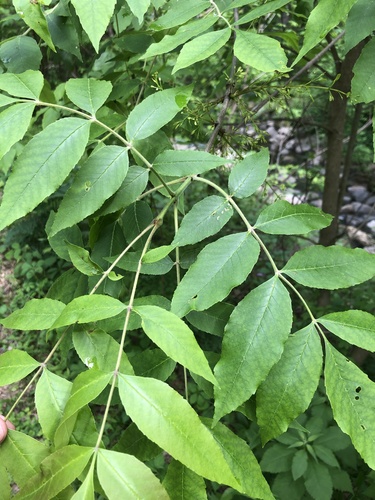
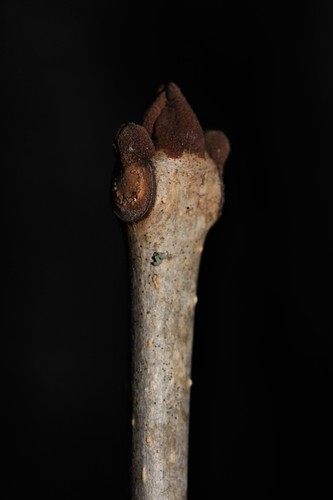
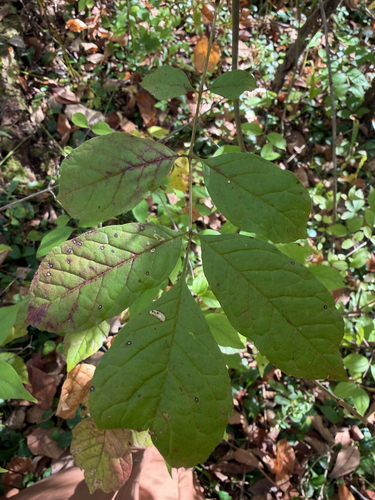
Both species can live 200 or more years under natural conditions. In Upper Midwest urban landscapes today, untreated ash have an effective lifespan measured in years, not decades.
Typically 50 to 80 feet tall with a canopy spread of 40 to 50 feet, though street-planted trees are often smaller due to soil compaction and root restriction.
⚠ Problem Species
Why it's a problem: Functionally extinct in urban landscapes due to Emerald Ash Borer
Care & Maintenance
Before you spend money on fertilizing or watering an ash, get it assessed for Emerald Ash Borer. Both species prefer full sun and tolerate the clay-heavy soils common across the Upper Midwest, which made them popular street trees. If you have a confirmed healthy ash and are already on a treatment program, deep watering during drought stress can slow overall decline.
Common Issues & Threats
- Emerald Ash Borer (Agrilus planipennis): This invasive Asian beetle has killed hundreds of millions of ash trees across North America. Larvae cut S-shaped galleries beneath the bark, blocking water and nutrient flow. You will see D-shaped exit holes about 1/8 inch wide, heavy woodpecker activity stripping bark off upper limbs, and dieback starting at the crown top. Here is what most people get wrong: by the time those symptoms are obvious, the tree is often already more than 50 percent infested and well past the point where treatment makes financial sense.
- Ash Anthracnose: A fungal disease that causes brown, irregular blotches on leaves during cool, wet springs. It looks alarming but is rarely fatal on its own. Trees typically releaf by midsummer and do not need treatment unless they are already weakened by EAB.
- Verticillium Wilt: A soil-borne fungal infection that blocks the tree's water-conducting tissue, causing branch dieback and wilting even when the soil is moist. There is no cure. Infected trees should be removed and the wood disposed of off-site, not chipped into mulch used around other trees.
Pruning Guide
If you prune ash, do it between October and March when EAB adults are not flying. Adults are active roughly June through August, and fresh pruning cuts can attract them to a tree that might otherwise go undetected longer. If the tree is already in an EAB-affected area and not on a treatment program, structural pruning is rarely worth the investment.
Did You Know?
White ash wood is exceptionally strong and flexible, which is why it was the wood of choice for Major League Baseball bats for most of the 20th century. It is also worth knowing that moving ash firewood is one of the primary ways EAB spreads to new areas, so if you have a dead ash taken down, do not transport the wood outside your immediate area.
Where Green/White Ash Is Found
Green/White Ash is common in 308 of the US communities we cover, across 1 climate regions.
... and 296 more cities
Need Green/White Ash Care?
Find ISA-certified arborists experienced with Green/White Ash in your area.
Take the Tree Risk Quiz