Gambel Oak
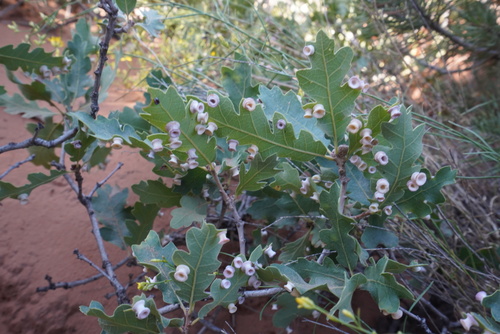
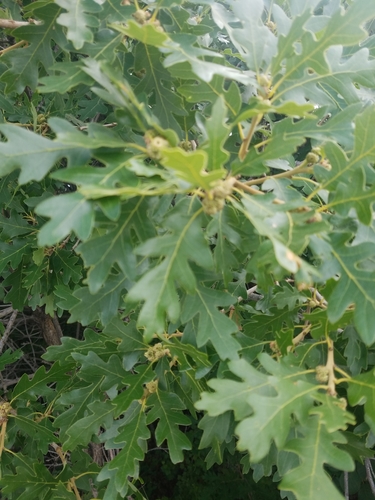
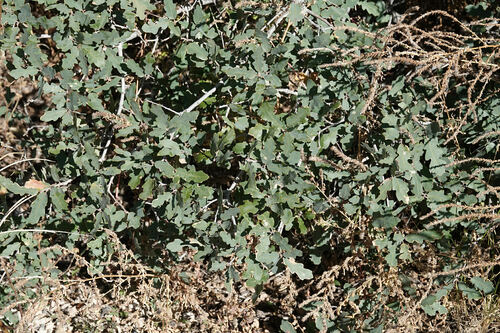
Individual stems typically live 50 to 150 years, but the clonal root system they grow from can persist for thousands of years, continually sending up new sprouts as older stems die back.
Shrub form typically reaches 6 to 15 feet tall with equal or greater spread. In favorable conditions with deep soil and reliable moisture, Gambel oak can grow as a single-trunk tree reaching 20 to 30 feet tall with a 15 to 25 foot canopy.
Care & Maintenance
Once established, Gambel oak wants to be left alone. It evolved on dry, rocky, nutrient-poor soils and does not need supplemental fertilizer. Overwatering is the most common way homeowners kill this tree, especially if you have irrigation running near it during summer. Full sun is ideal, though it tolerates some afternoon shade at lower elevations.
Common Issues & Threats
- Oak twig borer (Agrilus angelicus and related species): Look for swollen, girdled twigs and dieback at branch tips. The larvae tunnel just under the bark and you'll see the characteristic D-shaped exit holes when adults emerge. Stressed or drought-weakened trees are far more vulnerable.
- Phytophthora root rot: This water mold kills Gambel oaks that sit in poorly drained soil or get hit by lawn irrigation. You'll notice general decline, yellowing leaves, and bark that looks water-soaked or dark at the base. There is no cure once it's established in the root system.
- Gall wasps (Cynipidae family): You'll find round, marble-like galls on leaves, stems, or acorns. They look alarming but are almost never a serious health threat to a mature, established tree. Most homeowners panic and spray unnecessarily.
Pruning Guide
Prune between November and February when the tree is fully dormant. Gambel oak is in the white oak group, which makes it less vulnerable to oak wilt than red oaks, but you still don't want to make fresh cuts during the April through July window when sap beetles are actively spreading the fungus. Avoid heavy structural pruning on thicket-form plants since removing dominant stems often triggers aggressive suckering from the root system.
Did You Know?
What most people get wrong: that clump of Gambel oak they want to thin out may be a single clonal organism connected underground, and some of those colonies are estimated to be several thousand years old, even though individual aboveground stems only live a few decades. A mature Gambel oak thicket can produce several hundred pounds of acorns in a good mast year, which is why you'll see elk, black bear, and wild turkey using these areas heavily in fall.
Where Gambel Oak Is Found
Gambel Oak is common in 421 of the US communities we cover, across 1 climate regions.
... and 409 more cities
Need Gambel Oak Care?
Find ISA-certified arborists experienced with Gambel Oak in your area.
Take the Tree Risk Quiz