English Ivy
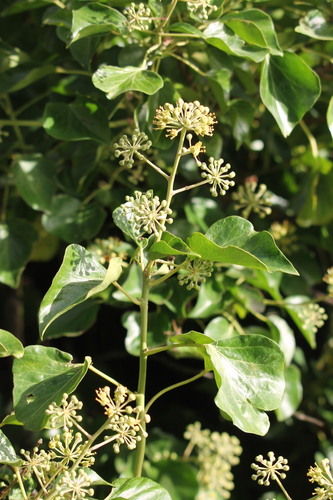
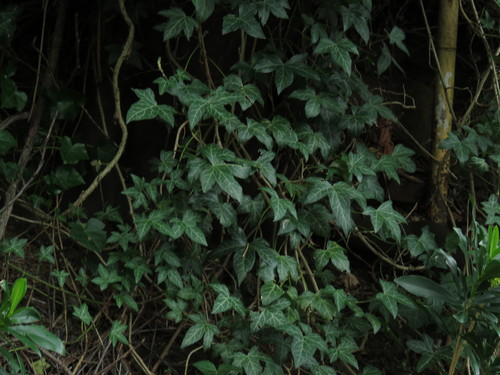
English ivy colonies are effectively indefinite. Individual stems may die back, but the root network and vegetative spread continues for decades or longer without active removal.
As a ground cover it spreads without limit, routinely covering thousands of square feet on a single property. As a climbing vine it can reach 80 to 100 feet into the canopy of a large tree.
⚠ Problem Species
Why it's a problem: Not a tree but the #1 tree killer in PNW - smothers and topples trees
Care & Maintenance
Ivy thrives in the Pacific Northwest without any help from you. It tolerates deep shade, poor soil, dry summers, and wet winters, which is why it outcompetes nearly everything native. If you have ivy on your property, there is no care regimen that applies here. The only relevant task is removal.
Common Issues & Threats
- Tree toppling from added weight: A large Douglas-fir or bigleaf maple covered in ivy can carry hundreds of extra pounds of wet vine, especially after a rain or snowfall. That shifts the tree's center of gravity and dramatically increases the chance of windthrow during a storm.
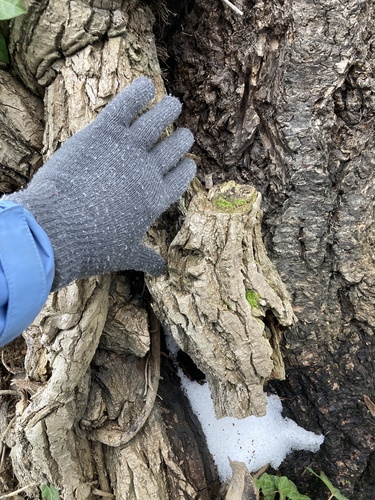
- Bark suppression and hidden decay: Ivy covering a trunk traps moisture against the bark and blocks your ability to see what is happening underneath. Cankers, fungal conks, and rot can develop for years without you noticing until the tree is already structurally compromised.
- Root competition and 'ivy desert': Dense ivy ground cover starves tree roots of oxygen and suppresses any natural regeneration beneath the canopy. You end up with a tree standing in a monoculture of ivy with no understory, no competition, no feedback that the ecosystem is collapsing.
Pruning Guide
Do not pull ivy off a tree. Yanking dried stems strips bark and opens wounds directly into the wood. Instead, cut every ivy stem at the base of the tree, all the way around the trunk, using loppers or a handsaw. Then cut again at chest height to create a section you can remove. Leave the dead vines attached to the trunk and let them dry out and fall on their own over the next year or two. Create a three-foot ivy-free zone around the base and maintain it.
Did You Know?
Here is what most people get wrong: they think the ivy on the ground is the problem and the ivy in the tree canopy is just decorative. It is the opposite. Arboreal ivy, the mature form that grows up into the crown, produces the berries that birds eat and spread across the city. Ground ivy rarely fruits. If you cut the ivy at the trunk and keep that buffer zone, you stop the cycle. The other surprise is how fast it works: a healthy 80-year-old tree can be structurally compromised within a decade of heavy ivy colonization.
Where English Ivy Is Found
English Ivy is common in 345 of the US communities we cover, across 1 climate regions.
... and 333 more cities
Need English Ivy Care?
Find ISA-certified arborists experienced with English Ivy in your area.
Take the Tree Risk Quiz