English Holly
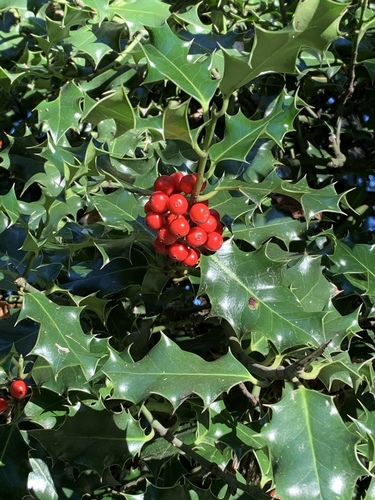
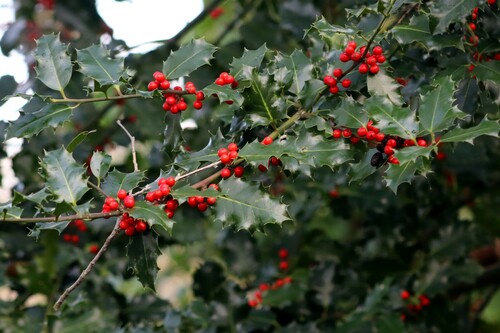
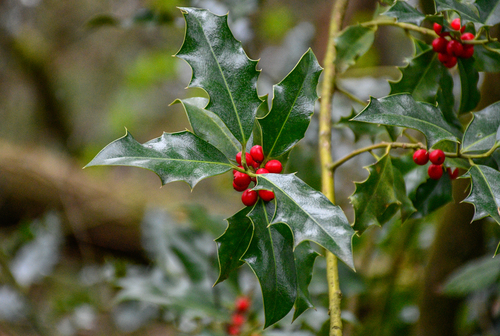
English Holly can live over 100 years in favorable conditions. In the Pacific Northwest climate, there is no natural limiting factor, which contributes to its persistence once established.
Typically 15 to 30 feet tall and 8 to 15 feet wide in managed landscapes, though unpruned specimens in ideal conditions can reach 50 feet. Shrubby thicket growth from bird-seeded volunteers tends to stay under 10 feet for many years but eventually develops into full-sized trees if left alone.
⚠ Problem Species
Why it's a problem: Invasive, spread by birds, forms dense thickets
Care & Maintenance
English Holly tolerates shade better than almost any other broadleaf evergreen, which is part of why it outcompetes native plants under tree canopies. It prefers moist, well-drained, slightly acidic soil and establishes easily in Pacific Northwest conditions without any help from you. Fertilizing or irrigating an established holly is unnecessary and will only make it more vigorous.
Common Issues & Threats
- Bird-spread seedlings in your yard and neighboring properties: Robins and cedar waxwings eat the berries and deposit seeds widely. You will find seedlings popping up in mulch beds, at the base of fences, and in any shaded area within a wide radius of a mature plant.
- Holly leaf miner (Phytomyza ilicicola): This small fly lays eggs inside the leaves, and the larvae tunnel through the tissue, leaving yellowish or brown blotchy trails. It looks alarming but rarely kills the plant. On a native or desirable specimen it warrants treatment; on an invasive holly, it is honestly the least of your concerns.
- Dense thicket formation: A single female holly with a male nearby can produce hundreds of viable seeds per year. Over time this creates impenetrable thickets that eliminate native shrubs and wildflower understory. If you live near a park, greenway, or wooded area, your holly is actively seeding into that habitat.
Pruning Guide
If you are keeping the plant and maintaining it, prune in late winter just before new growth starts, or immediately after the holiday season when many people harvest branches anyway. Hard renovation pruning is tolerated well. Here is what most people get wrong: they cut holly back every few years to manage size, but never address the berry-producing female plant itself, which continues seeding the neighborhood the entire time.
Did You Know?
English Holly is dioecious, meaning individual trees are either male or female. Only females produce berries, but they need a male within roughly 30 to 100 feet to pollinate them. Removing the male plant does not sterilize your female holly immediately, since neighboring properties may have males. The berries that look festive in December are toxic to children and dogs, causing vomiting and serious gastrointestinal distress if more than a few are eaten.
Where English Holly Is Found
English Holly is common in 345 of the US communities we cover, across 1 climate regions.
... and 333 more cities
Need English Holly Care?
Find ISA-certified arborists experienced with English Holly in your area.
Take the Tree Risk Quiz