Eastern Hemlock
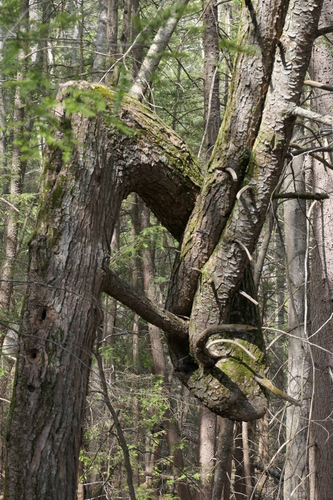
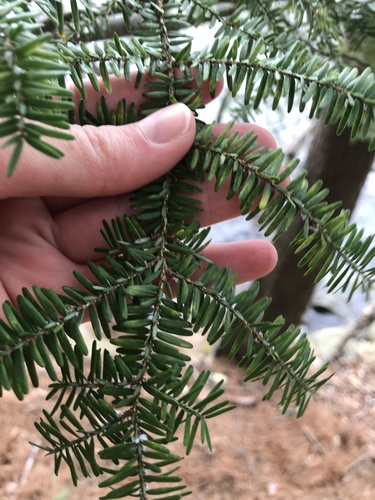
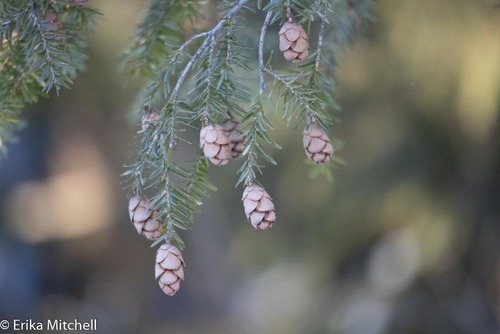
200 to 500 years in natural settings. In suburban yards with stress from heat, compaction, and pests, expect 50 to 100 years without active management.
40 to 70 feet tall with a spread of 25 to 35 feet, though growth is slow. Most suburban specimens stay on the smaller end of that range.
Care & Maintenance
Hemlock wants moist, well-drained, acidic soil and does not tolerate drought, compaction, or road salt. If you have one near pavement or in a dry, sunny spot, it's already under stress. Supplemental watering during dry summers matters more than fertilizing, though a light acidic fertilizer in early spring can help in depleted soils.
Common Issues & Threats
- Hemlock woolly adelgid (HWA): This is the big one. A tiny invasive insect from Asia, it colonizes the base of needles and looks like tiny white cotton puffs on the undersides of branches. It kills trees within 4 to 10 years if untreated, and it's widespread across the Mid-Atlantic and Northeast. Soil-injected imidacloprid or dinotefuran treatments work, but timing matters and you need a licensed applicator.
- Elongate hemlock scale: A separate insect pest, distinct from HWA, that causes yellowing needles and dieback. It's often overlooked because people are focused on adelgid. Look for tiny, oyster-shaped bumps along the needles.
- Root stress from heat and drought: Most hemlocks in suburban landscapes are dying slowly from the wrong site conditions, not pests. A tree planted in full sun on a south-facing slope near asphalt is already compromised, and no amount of pest treatment will save it long-term if the roots are cooking.
Pruning Guide
Honestly, Eastern Hemlock rarely needs pruning. It has a naturally graceful form, and the more you cut it, the more you invite problems. If you need to shape it as a hedge, shear lightly in late spring after new growth hardens. Never remove more than one-third of the canopy at once, and avoid heavy cuts into old wood, which does not regenerate well.
Did You Know?
Here's what most people get wrong: they think a hemlock with white woolly deposits is already dying and skip treatment. In reality, early-stage HWA infestations are very treatable, and trees with good root systems can be saved with a single trunk or soil injection. The other thing worth knowing is that Eastern Hemlock can live 500 to 800 years in undisturbed forest. The one in your yard will not hit that, but it's not a short-lived ornamental either.
Where Eastern Hemlock Is Found
Eastern Hemlock is common in 1369 of the US communities we cover, across 1 climate regions.
... and 1357 more cities
Need Eastern Hemlock Care?
Find ISA-certified arborists experienced with Eastern Hemlock in your area.
Take the Tree Risk Quiz