Dogwood
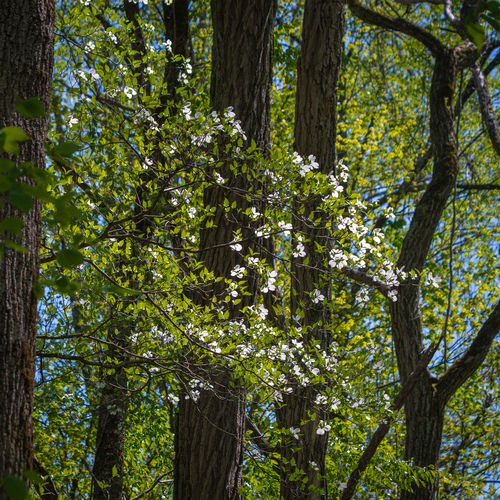
In ideal conditions, Cornus florida lives 40 to 80 years. In typical suburban landscapes with compacted soil, drought stress, and lawn equipment damage, that number drops significantly, often to 20 or 30 years. Dogwoods planted in the wrong spot age fast.
Cornus florida typically reaches 15 to 25 feet tall with an equal or slightly wider spread. Pacific dogwood (Cornus nuttallii) runs larger, often 20 to 40 feet in height. Both stay well within the scale of a residential yard, which is part of their appeal.
Care & Maintenance
Dogwoods want partial shade, especially afternoon shade in the South where summer heat stresses them hard. They need moist, well-drained, acidic soil with plenty of organic matter, which means mulching out to the drip line is not optional, it's essential. Go light on fertilizer, especially nitrogen. Heavy feeding pushes soft growth that's more vulnerable to disease and gives you a weaker tree long-term.
Common Issues & Threats
- Dogwood anthracnose (Discula destructiva): This fungal pathogen is the reason so many dogwoods in the Mid-Atlantic and Pacific Northwest are dying. It starts as tan leaf spots with purple borders, moves into the twigs, and eventually kills branches from the top down. It thrives in cool, wet springs, which is why Pacific dogwoods in the Northwest are getting hammered. There are no resistant cultivars of the Pacific dogwood. For Cornus florida, look for the Appalachian series cultivars, which show improved resistance.
- Dogwood borer (Synanthedon scitula): This is the pest most homeowners miss entirely because the damage happens under the bark. The larvae of this clearwing moth tunnel into the sapwood, usually entering through lawn mower wounds or existing injuries near the base. You'll see swollen, cracked bark and sawdust-like frass. By the time you notice it, significant damage is already done. Keeping the base of your tree free from mechanical damage and maintaining good mulch are your best defenses.
- Powdery mildew: Common in humid summers across the Southeast and Mid-Atlantic, this fungal issue coats leaves with a white or gray powder late in the season. It looks alarming but rarely kills a tree outright. It does weaken it over time, making it more susceptible to Discula. Improving air circulation through selective pruning and avoiding overhead irrigation helps considerably.
Pruning Guide
The best window to prune dogwoods is right after they finish flowering in late spring, or in late fall once they go dormant. Avoid late winter and early spring because dogwoods bleed sap heavily at that time. The bleeding won't kill the tree, but it attracts insects and can introduce stress. Dogwoods have a naturally beautiful form and need very little shaping. Your job is to remove crossing or dead branches, not reshape the tree. Never top one.
Did You Know?
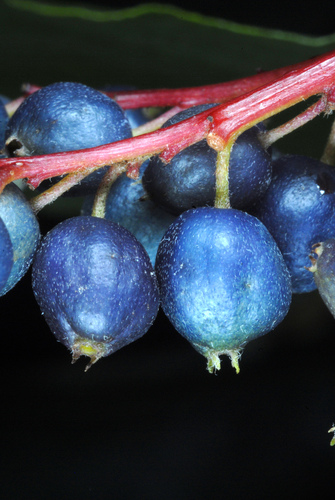
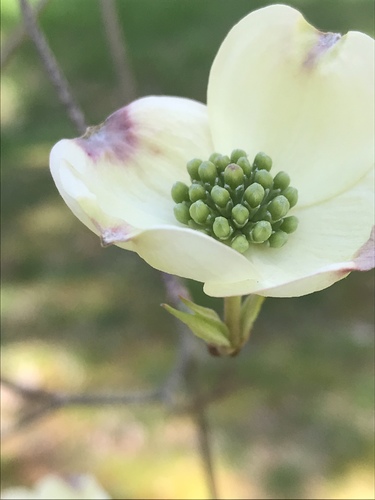
Here is what most people get wrong: the four white or pink petals you love every spring are not petals at all. They are bracts, specialized leaves that act as visual lures to pollinators. The actual flowers are the small yellow-green cluster at the center. The other thing worth knowing is that dogwood berries, which look like small glossy red clusters in fall, are a critical food source for migratory birds including thrushes and warblers. A well-sited dogwood with a decent berry crop can attract more bird activity in two weeks of fall migration than a bird feeder does all year.
Where Dogwood Is Found
Dogwood is common in 2172 of the US communities we cover, across 3 climate regions.
... and 2160 more cities
Need Dogwood Care?
Find ISA-certified arborists experienced with Dogwood in your area.
Take the Tree Risk Quiz