Desert Willow
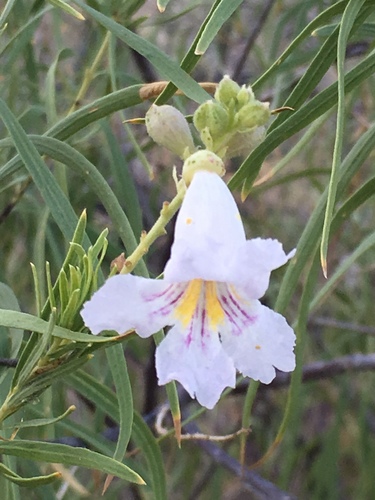
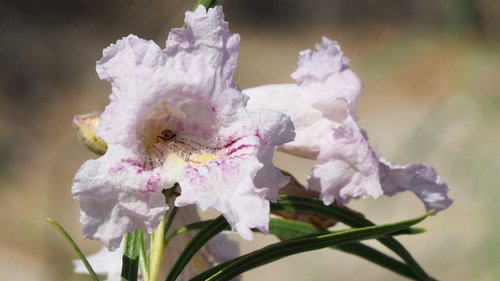
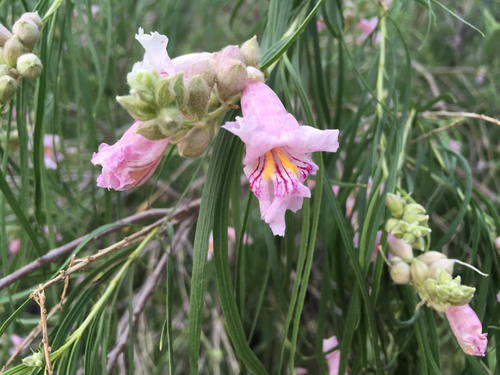
Typically 40 to 60 years under good conditions, though trees in native desert washes with no supplemental water have been documented older. Overwatering shortens that range significantly.
Generally 15 to 25 feet tall and 10 to 20 feet wide, though growing conditions vary this considerably. Trees in reflected heat with minimal water stay smaller and tighter. Give it room and it will use it.
Care & Maintenance
Once established, desert willow wants almost no supplemental water. Here is what most people get wrong: they keep watering it like a thirsty ornamental, and that kills it slower than a drought ever would. Deep water every two to three weeks in summer during the first year, then back off dramatically. It needs full sun and fast-draining soil. Fertilizer is unnecessary and often counterproductive, pushing soft growth that attracts pests.
Common Issues & Threats
- Root rot from overwatering: The number one killer. If your soil stays moist for more than a day or two after watering, you are on a slow path to a dead tree. Yellowing leaves that drop out of season are your first warning sign.
- Aphid colonies on new growth: You will see clusters of small soft-bodied insects on tender shoot tips, often with sticky honeydew residue below. A hard spray of water knocks most of them off. Healthy, understressed trees outgrow the damage without intervention.
- Spider mites in dry heat: Fine stippling on leaves and faint webbing on undersides are the giveaway. Mites thrive when dust builds up on foliage. Rinsing the canopy with water periodically keeps populations from exploding.
Pruning Guide
Prune in late winter before new growth breaks, which in the Southwest usually means January through February. The tree naturally wants to grow as a large multi-stemmed shrub, so if you want a single-trunk tree form, start training it young and keep at it annually. Avoid heavy pruning in summer. Cutting back hard in heat stress triggers excessive regrowth that drains the tree's energy at the worst time.
Did You Know?
Desert willow is one of the few trees with a documented relationship with specific hummingbird species. The flower tube length co-evolved with hummingbird bill length, which is why you see hummingbirds working this tree more aggressively than nearby plants. The seed pods, which look like long brown beans and hang on through winter, are not a disease or a problem. A lot of homeowners call worried about them, but they are completely normal and drop on their own.
Where Desert Willow Is Found
Desert Willow is common in 94 of the US communities we cover, across 1 climate regions.
... and 82 more cities
Need Desert Willow Care?
Find ISA-certified arborists experienced with Desert Willow in your area.
Take the Tree Risk Quiz