Desert Ironwood
Documented lifespans run from 800 to 1,500 years in the wild. Landscape trees under irrigation stress or in poor soils will not reach those numbers, but a well-sited ironwood can easily outlive your house.
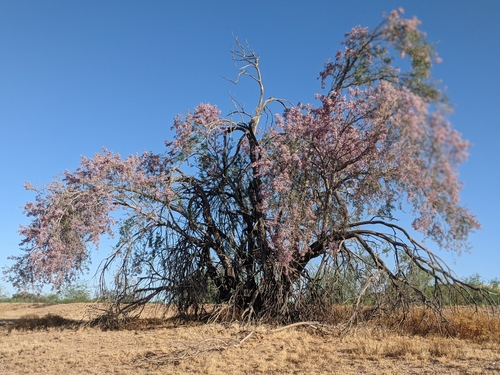
Typically 15 to 25 feet tall with a spread of 15 to 20 feet, though very old specimens in ideal conditions can reach 30 feet. Growth is slow enough that the tree you plant today will look roughly the same in 10 years, so site it where you want a mature tree, not where a small shrub is convenient now.
Care & Maintenance
Once established, do not water it like a landscape tree. Supplemental summer irrigation every 2-3 weeks is fine for the first few years, but mature trees in native or xeriscape settings need almost nothing extra. No fertilizer, full sun, and fast-draining rocky or sandy soil are what this tree wants. Clay soil will kill it slowly.
Common Issues & Threats
- Desert mistletoe (Phoradendron californicum): This parasitic plant is the most common problem you will see on ironwood. It forms dense yellow-green clumps in the canopy and steals water and nutrients directly from the host branches. Light infections can be pruned out, but heavy infestations weaken the tree over years and there is no spray solution.
- Root rot from overwatering: This is not a pest, but it kills more ironwoods in residential landscapes than anything else. If your irrigation system hits this tree regularly, you are likely shortening its life by decades. Signs are yellowing foliage, branch dieback from the tips, and bark that looks sunken or discolored at the base.
- Ironwood borer (various cerambycid beetles): These wood-boring beetles target stressed or declining trees and are rarely a problem in healthy specimens. If you see D-shaped exit holes in the bark or sawdust-like frass at the base, the tree is already under stress from something else, and the borers are a symptom, not the original cause.
Pruning Guide
Most people prune ironwood way too much, way too often. This tree grows maybe 6 inches a year and every large cut you make takes years to close. Prune only to remove deadwood, crossing branches, or anything below about 6 feet if you need clearance. The best window is late winter before the spring flush, but avoid pruning during the summer heat when cut wounds heal poorly and stress is higher.
Did You Know?
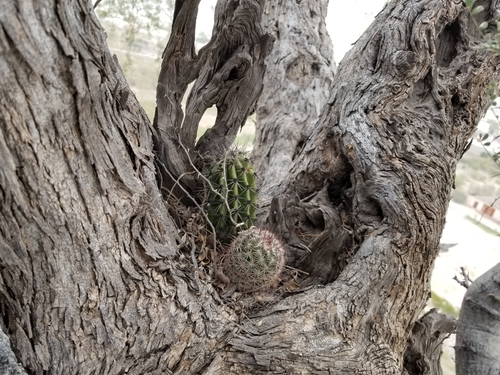
Here is what most people get wrong: they assume a slow-growing tree is fragile. Ironwood is the opposite. Its wood is so dense it sinks in water, and a mature ironwood has survived centuries of drought, freeze events, and flash floods that killed everything around it. The other thing worth knowing is that ironwood is a nurse tree for saguaro cacti. A significant percentage of saguaros in the wild germinate and establish under ironwood canopies because the shade and slightly cooler microclimate give seedlings a foothold. If you have both on your property, that relationship took decades to develop.
Where Desert Ironwood Is Found
Desert Ironwood is common in 94 of the US communities we cover, across 1 climate regions.
... and 82 more cities
Need Desert Ironwood Care?
Find ISA-certified arborists experienced with Desert Ironwood in your area.
Take the Tree Risk Quiz