Date Palm
100 to 150+ years under good conditions, though urban stress and pest pressure can shorten this considerably.
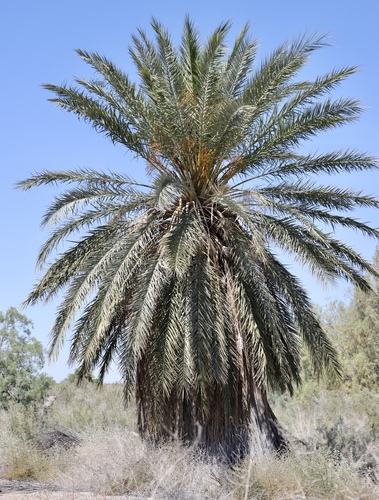
50 to 80 feet tall with a canopy spread of 20 to 40 feet, depending on cultivar and growing conditions.
Care & Maintenance
Established date palms are surprisingly drought-tolerant, but young trees need deep watering every 7-10 days in summer to develop a strong root system. They are heavy potassium feeders, and most fertilizer problems you will see are potassium or magnesium deficiencies, not nitrogen. Plant in full sun with well-draining soil and never let water pool at the base, which invites Fusarium crown rot.
Common Issues & Threats
- Red Palm Weevil (Rhynchophorus ferrugineus): This beetle is now established in parts of California and Arizona, and it is the most serious threat to date palms in the world. The larvae bore into the crown and trunk, and by the time you see the wilting or the fermented smell, the palm is usually unsavable.
- Graphiola Leaf Spot (false smut): Small, hard, black wart-like pustules appear along the fronds, caused by the fungus Graphiola phoenicis. It is rarely fatal but indicates the palm is stressed, often from overwatering or poor drainage. Improving conditions matters more than spraying.
- Potassium deficiency: Older fronds develop yellow-orange necrotic spotting and premature death, working from the oldest fronds inward. Most people mistake this for drought stress and water more, which makes it worse. A soil-applied potassium sulfate application is the actual fix.
Pruning Guide
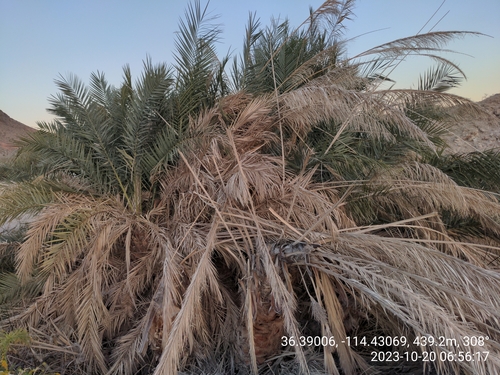
Here is what most people get wrong: they over-prune date palms into what landscapers call a 'hurricane cut,' leaving only a tiny tuft of fronds. This starves the palm and stunts new growth because palms photosynthesize almost entirely through their canopy. Remove only brown, dead, or severely damaged fronds, and never cut into the green fronds. Fruit stalks and the fibrous 'boots' at frond bases can be removed for aesthetics, but do it in fall after fruit harvest wearing heavy leather gloves and arm protection because those thorned petiole bases will draw blood.
Did You Know?
A single mature date palm can drop 200 to 300 pounds of fruit in a season if it is a fruiting female, and unmanaged fruit drop is a genuine slip-and-fall liability on paved surfaces. Date palms can live for over 100 years and some cultivated specimens in the Middle East are documented at over 150 years old, still producing fruit.
Where Date Palm Is Found
Date Palm is common in 94 of the US communities we cover, across 1 climate regions.
... and 82 more cities
Need Date Palm Care?
Find ISA-certified arborists experienced with Date Palm in your area.
Take the Tree Risk Quiz