Coconut Palm
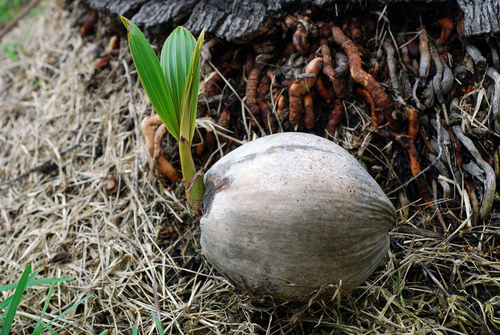
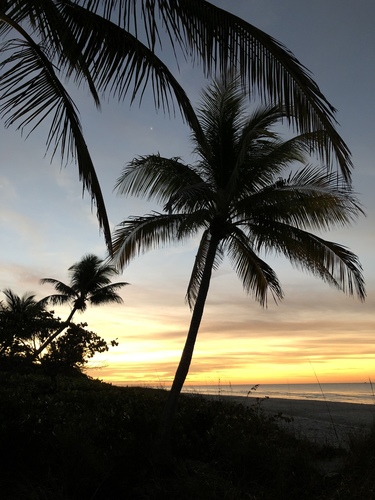
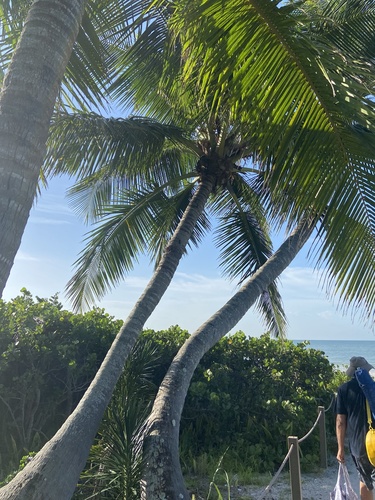
60 to 100 years under good conditions, with some documented trees reaching 120 years. Productivity peaks around years 15-60, after which nut yield gradually declines.
60 to 100 feet tall with a crown spread of 20 to 40 feet. Dwarf varieties stay shorter, typically 20 to 40 feet, and are meaningfully safer for residential properties.
Care & Maintenance
Coconut palms thrive in full sun and well-drained sandy or loamy soil with good salt tolerance. They're moderately drought-tolerant once established but produce more fruit and stay healthier with regular deep watering during dry periods. Fertilize three to four times a year with a palm-specific fertilizer that includes potassium, magnesium, and manganese — standard lawn fertilizers won't cut it and can actually cause nutrient deficiencies.
Common Issues & Threats
- Falling coconuts: A mature tree can drop 50-200 coconuts per year, each weighing up to 5 pounds and falling from 60+ feet. That's not a minor concern — a coconut hits the ground with enough force to seriously injure a person or damage a roof, car, or fence. If your tree hangs over a yard where people spend time, you need a regular denutting schedule.
- Lethal yellowing disease: This is a phytoplasma infection spread by the planthopper Myndus crudus, and it kills palms fast. You'll see premature nut drop first, then the fronds yellow from the bottom up, then the whole crown collapses. There's no cure once it's established, but if you catch it early, tetracycline trunk injections can slow it. Malayan Dwarf varieties have significant resistance — worth considering if you're replanting.
- Nutrient deficiencies: Frizzle top is the most visible one — the new growth at the crown looks stunted, twisted, and bronze-colored. That's a manganese deficiency, and it's very common in Hawaii soils. It looks like a disease but it's a soil chemistry problem, and it responds well to manganese sulfate applications if you catch it before the growing point is destroyed.
Pruning Guide
Only remove fronds that are fully brown and dead. Here's what most people get wrong: they think yellowing fronds should come off right away, but green and yellow fronds are still photosynthesizing and pulling nutrients back into the trunk. Cutting them prematurely weakens the tree. Never cut fronds that are growing horizontally or above horizontal — that's a sure sign of over-pruning, which stresses the palm and makes it more vulnerable to disease. If you're pruning for coconut removal, hire someone experienced with rope work — these trees are too tall and the trunk too smooth for amateur climbing.
Did You Know?
The coconut palm is often called the 'tree of life' in Pacific cultures because nearly every part has a use, but here's the fact that actually matters to a homeowner: the tree has no tap root. It anchors itself with thousands of thin fibrous roots that spread wide and shallow, which means it handles wind surprisingly well but also means it can heave pavement and irrigation lines without you noticing until the damage is done. Also, coconut palms are not native to Hawaii — they were brought by Polynesian voyagers and have been there for over 1,500 years.
Where Coconut Palm Is Found
Coconut Palm is common in 121 of the US communities we cover, across 1 climate regions.
... and 109 more cities
Need Coconut Palm Care?
Find ISA-certified arborists experienced with Coconut Palm in your area.
Take the Tree Risk Quiz