Coast Redwood
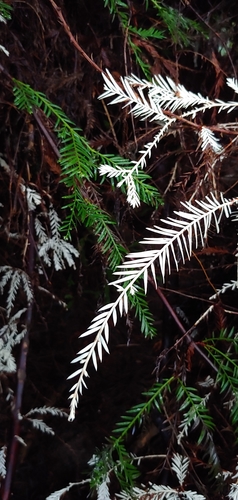
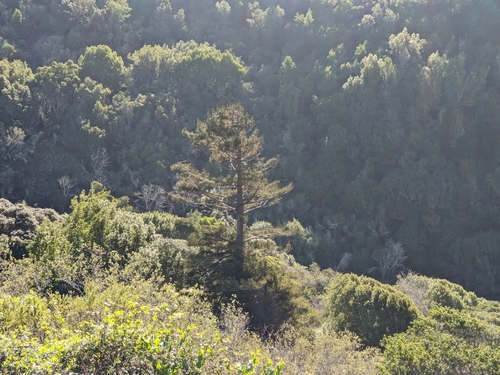
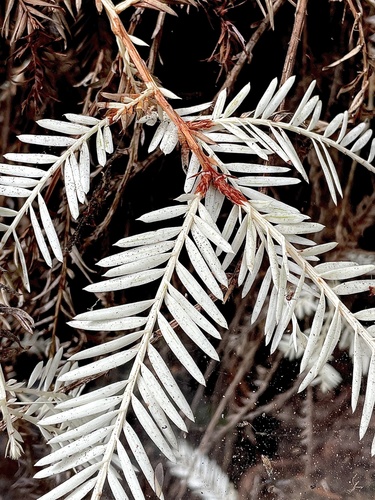
Coast redwoods can live over 2,000 years in the wild. On a residential property with root zone restrictions and pavement nearby, realistic lifespan depends heavily on how much undisturbed root space the tree actually has.
In the wild, 200 to 350 feet tall with trunk diameters of 10 to 20 feet. On a residential lot, expect 70 to 120 feet in height with a canopy spread of 15 to 25 feet, though trees with good water access and uncompacted root space will push toward the upper end of that range.
Care & Maintenance
Here is what most people get wrong: coast redwoods in residential settings need summer irrigation, even in the Bay Area. Their native habitat delivers consistent fog drip all summer, and a tree on a dry hillside lot without supplemental water will slowly decline over years before you notice the symptoms. Deep, infrequent watering out to the drip line beats frequent shallow watering every time. They prefer slightly acidic, well-drained soil and generally do not need fertilizer if the soil is reasonably healthy.
Common Issues & Threats
- Spider mites (Oligonychus ununguis): During hot, dry summers you may notice bronzed or stippled foliage, especially on inner branches. A close look reveals fine webbing. This is the most common pest on residential redwoods and is almost always a sign the tree is drought-stressed rather than a standalone pest problem.
- Sequoia pitch moth (Synanthedon sequoiae): This pest causes resin masses on the trunk and branches with reddish-brown, sawdust-like frass mixed in. It looks alarming but rarely kills a healthy tree. Stressed trees are far more vulnerable, so treating the stress matters more than treating the moth.
- Root zone compaction and grade changes: If you have ever added a patio, extended a driveway, or raised soil grade near the base of your redwood, you may have set the tree on a slow decline. Redwoods have shallow, wide-spreading root systems and are extremely sensitive to compaction and drainage changes. This is the silent killer of residential redwoods, and the damage is usually done years before any canopy symptoms appear.
Pruning Guide
Never top a coast redwood. It is one of the most damaging things you can do to this species, it creates long-term structural problems as the tree sends up multiple competing leaders, and it does not keep the tree shorter for long anyway. Crown raising for clearance is reasonable and should be done by a certified arborist during dry weather, ideally late summer. Avoid heavy pruning in wet winter months when fungal pathogens spread easily through fresh cuts.
Did You Know?
Coast redwoods reproduce from burls, which is why you often see a ring of younger trees growing in a circle around an old stump. That ring is genetically identical to the original tree and can outlast the parent by centuries. Their bark can be up to a foot thick, which gives them remarkable resistance to fire and insects, but it offers zero protection against a backhoe cutting through their roots during a driveway project.
Where Coast Redwood Is Found
Coast Redwood is common in 279 of the US communities we cover, across 1 climate regions.
... and 267 more cities
Need Coast Redwood Care?
Find ISA-certified arborists experienced with Coast Redwood in your area.
Take the Tree Risk Quiz