Coast Live Oak
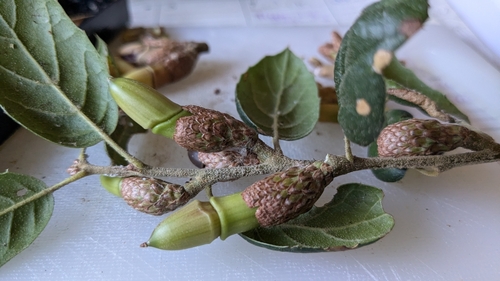
Coast Live Oaks routinely live 200 to 300 years. Some individuals in protected areas are estimated at over 500 years old. The tree in your yard may well outlive the house.
Typically 20 to 70 feet tall with a spread that often exceeds the height — 40 to 80 feet wide is common in open settings. Coastal trees in windier locations tend to be shorter and more sprawling, while inland specimens in protected spots can push the upper end of that range.
Care & Maintenance
Here's what most people get wrong: watering an established Coast Live Oak in summer is one of the fastest ways to kill it. This species evolved for dry summers, and summer irrigation promotes Phytophthora root rot and Armillaria. Never fertilize it either — high nitrogen pushes soft growth that attracts pests and disrupts the tree's natural cycle. If it's been in the ground more than five years, leave it alone from May through October.
Common Issues & Threats
- Sudden Oak Death (Phytophthora ramorum): A water mold, not a true fungus, that causes bleeding cankers on the trunk and rapid crown death. It spreads through infected nursery stock and water movement. There's no cure once a tree is infected, but early detection and systemic phosphonate treatments can slow progression in high-risk areas.
- Gold Spotted Oak Borer (Agrilus auroguttatus): A metallic wood-boring beetle that has killed tens of thousands of oaks in San Diego and Riverside counties. Look for D-shaped exit holes roughly 4-6mm wide, crown dieback, and weeping sap stains on the bark. It's moving north, and by the time you see symptoms, the damage is already significant.
- Armillaria Root Rot: A soil fungus that attacks the root crown and major roots, often triggered or accelerated by summer irrigation or soil disturbance near the trunk. You'll see white mycelial fans under the bark at the base, mushrooms after fall rains, and a slow decline in canopy density. Removing the source of stress — usually water — is the first step.
Pruning Guide
Prune Coast Live Oaks only during dry weather, ideally July through September in most of California. Wet-season pruning opens wounds when Phytophthora spores are most active in the soil and air. Never remove more than 15-20% of the canopy in a single year, and never lion's-tail this tree — stripping interior branches concentrates weight at the ends and makes limb failure far more likely. If the tree is protected, which it almost certainly is, check with your municipality before any significant pruning.
Did You Know?
A large Coast Live Oak can produce 20,000 acorns in a good year and supports more native wildlife than almost any other plant in California — from acorn woodpeckers to mule deer to dozens of moth and butterfly larvae. What surprises most homeowners is that these trees can regenerate from their root crown after fire, which means a tree that looks dead after a wildfire may push new growth from the base within months.
Where Coast Live Oak Is Found
Coast Live Oak is common in 667 of the US communities we cover, across 2 climate regions.
... and 655 more cities
Need Coast Live Oak Care?
Find ISA-certified arborists experienced with Coast Live Oak in your area.
Take the Tree Risk Quiz