Chinese Pistache
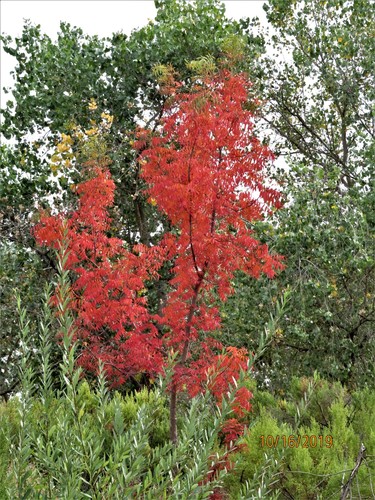
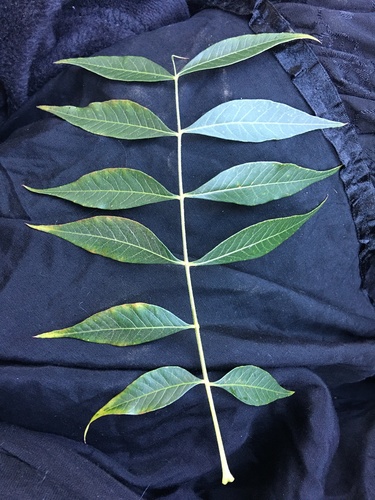
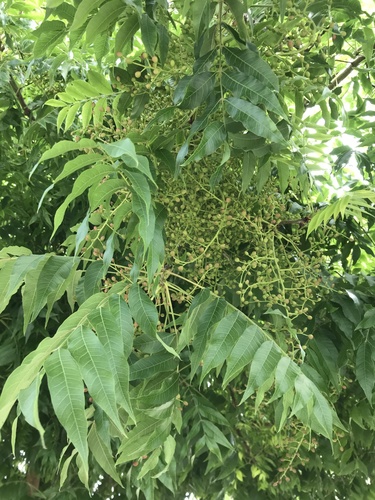
Under good conditions, Chinese pistache typically lives 80 to 150 years. It is a tree that improves with age, developing a broad rounded crown and attractive scaly gray bark over time.
Expect 25 to 35 feet tall with a canopy spread of 25 to 35 feet at full maturity. It is large enough to shade a patio or a significant portion of a typical yard, but not so large that it becomes a liability on a standard suburban lot.
Care & Maintenance
Full sun is essential. This tree needs at least 6 to 8 hours of direct sun daily to develop good structure and reliable fall color. During the first 2 to 3 years after planting, deep infrequent watering beats frequent shallow irrigation every time. Once established, it handles dry Bay Area summers with minimal intervention. Skip fertilizing unless a soil test points to a specific deficiency.
Common Issues & Threats
- Verticillium wilt: a soil-borne fungal pathogen that enters through the roots and causes sudden branch dieback, often on one side of the tree first. There is no cure. Vigorous young trees can sometimes outgrow mild infections, but asymmetrical summer wilting warrants a professional diagnosis before you assume drought stress.
- Pistacia psyllid (Agonoscena targionii): a small sap-sucking insect that causes leaf edges to curl inward and coats surfaces below with sticky honeydew. It has become increasingly common in Northern California over the past decade. It rarely kills the tree but weakens it over time and is a nuisance for anything parked or sitting underneath.
- Overwatering in clay soils during establishment: most people know this tree is drought-tolerant, but excess water in poorly draining clay before the roots are established is the most common way to kill a young Chinese pistache. If you are planting in heavy clay, set the rootball slightly above grade and let water drain away from the trunk.
Pruning Guide
The first 5 to 10 years are when your pruning work matters most. Establish one central leader early and remove competing upright branches while they are still small enough to cut without leaving significant wounds. Mature trees need very little intervention. When you do prune, late winter before leaf out is the right window, which keeps fresh cuts from sitting exposed through the wet season.
Did You Know?
Chinese pistache is in the same genus as the edible pistachio nut tree, Pistacia vera. Your tree will not produce anything you can eat, but female trees do grow small berry clusters that birds actively seek out in late fall. Here is what most people get wrong about the fall color: they assume it is consistent year to year. It is not. The intensity depends heavily on how hot and dry your summer was. A tree that looks dull one autumn and spectacular the next has not changed. The weather did.
Where Chinese Pistache Is Found
Chinese Pistache is common in 279 of the US communities we cover, across 1 climate regions.
... and 267 more cities
Need Chinese Pistache Care?
Find ISA-certified arborists experienced with Chinese Pistache in your area.
Take the Tree Risk Quiz