Chinese Elm
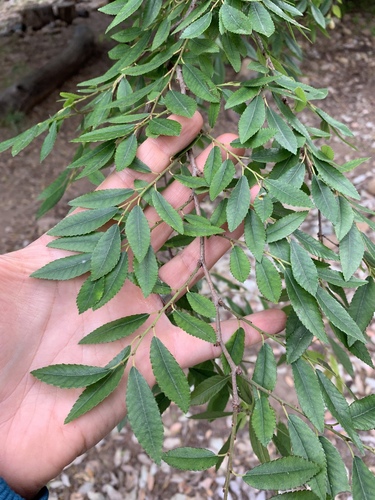
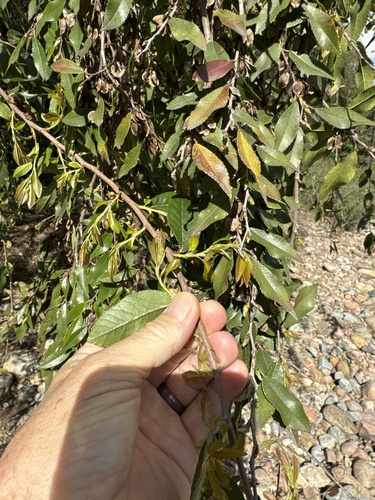
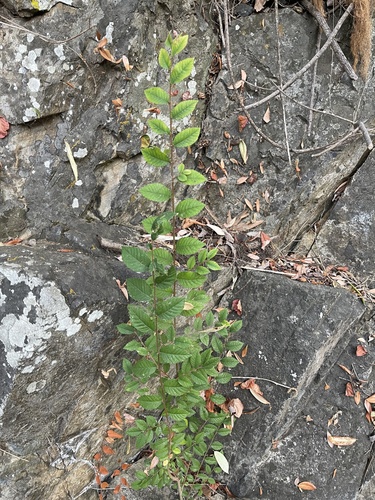
50 to 150 years under reasonable conditions. In the Southwest with proper establishment and occasional deep irrigation during drought years, trees routinely reach 80 to 100 years, which puts it in a different category than most fast-growing shade tree options.
40 to 60 feet tall with a canopy spread of 35 to 50 feet. In the Southwest heat with consistent water, expect trees to push toward the larger end of that range within 20 to 25 years.
Care & Maintenance
Once established, Chinese elm is genuinely drought-tolerant, but for the first two to three years it needs deep, infrequent watering every one to two weeks rather than frequent shallow irrigation that keeps the root zone wet. It wants full sun and handles alkaline soils reasonably well, though heavy clay or very high pH can cause leaf yellowing from iron deficiency. Hold off on fertilizer unless a soil test points to a specific deficiency; pushing fast growth with nitrogen invites pest pressure.
Common Issues & Threats
- Elm leaf beetle (Xanthogaleruca luteola): The larvae feed on leaf tissue from the underside, leaving a brown, papery skeleton behind. Heavy infestations can strip a mature tree by midsummer, and the same tree will get hit again year after year without treatment.
- Texas root rot (Phymatotrichopsis omnivora): This soil-borne fungus thrives in the alkaline, heavy soils common across the Southwest and can kill a mature tree fast. The first visible sign is usually the entire canopy wilting suddenly in summer heat, but by then the root system is already destroyed.
- Witches' broom: Dense clusters of thin, stunted twigs erupt on branches due to phytoplasma infection or eriophyid mite activity. It will not kill the tree outright, but affected branches should be pruned out and bagged, not left in the mulch pile.
Pruning Guide
Prune in late winter while the tree is dormant, or wait until the spring flush of growth has fully hardened off. Avoid fall pruning, which can push new growth that won't have time to harden before temperatures drop. Chinese elm has a naturally arching, layered structure that looks good without much intervention; topping it destroys that form permanently and opens large wounds that decay from the inside out.
Did You Know?
Here is what most people get wrong: the tree sold as 'Chinese elm' at many nurseries is actually Siberian elm (Ulmus pumila), which has rough, dark, furrowed bark and is a significantly weaker and more invasive tree. Real Chinese elm has smooth, camouflage-pattern bark that is hard to mistake once you have seen it. Chinese elm is also one of the only fast-growing trees that does not trade speed for weak wood, which is why it has been used in bonsai for centuries and why it actually holds up better in Southwest storms than most of the trees homeowners plant for quick shade.
Where Chinese Elm Is Found
Chinese Elm is common in 94 of the US communities we cover, across 1 climate regions.
... and 82 more cities
Need Chinese Elm Care?
Find ISA-certified arborists experienced with Chinese Elm in your area.
Take the Tree Risk Quiz