Cherry
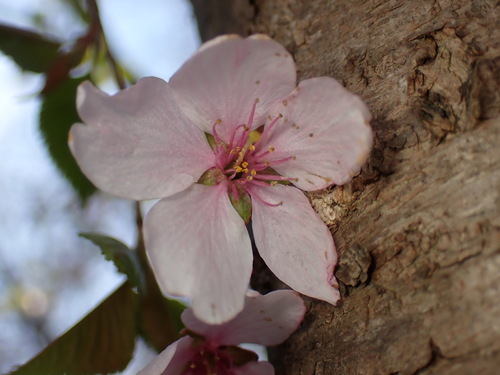
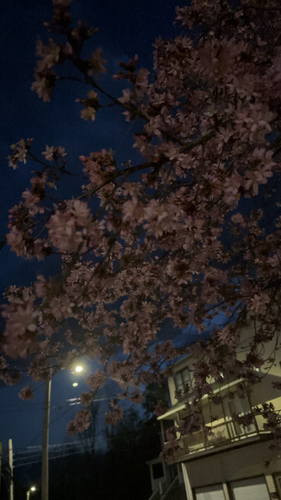
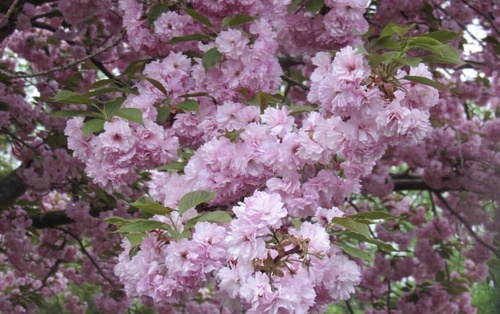
25 to 40 years under good conditions, though many suburban specimens decline well before that due to compacted soil, trunk damage from lawn equipment, and cumulative disease pressure.
Yoshino reaches 25 to 40 feet tall with a similar spread and a graceful vase shape. Kwanzan typically tops out around 30 feet tall with a rounder, more upright crown and a spread of 25 to 30 feet.
Care & Maintenance
Cherries want full sun and well-drained soil. They do not tolerate wet feet, and planting in a low spot or heavy clay is one of the fastest ways to shorten an already moderate lifespan. Once established, supplemental watering during drought stress matters more than fertilizing. High-nitrogen fertilizer pushes fast, soft growth that invites fungal infection.
Common Issues & Threats
- Black knot fungus (Apiosporina morbosa): This is the one you need to know. It starts as olive-green swellings on branches and hardens into black, warty growths that look like charcoal. It spreads tree to tree, and if you ignore it, it will strangle limbs and eventually kill the tree. Prune it out at least 4 inches below the knot, sterilize your tools between cuts, and burn or bag the wood. Do not compost it.
- Eastern tent caterpillar (Malacosoma americanum): Every spring, you may notice silky white tents forming in branch crotches. These are colonies of tent caterpillars that defoliate aggressively. One bad year won't kill a healthy tree, but repeated defoliation combined with other stressors absolutely will. Manual removal of tents in early morning when caterpillars are inside is effective for small trees.
- Borers, specifically the lesser peachtree borer (Synanthedon pictipes): These larvae tunnel under the bark at the base of the trunk or near old wounds. You'll see gummy sap mixed with sawdust at the entry points, called frass. By the time you see the symptom, the damage is already done inside. Keeping the tree healthy through proper pruning and avoiding trunk wounds is your main defense.
Pruning Guide
Prune cherries in late summer, not winter or spring. This is the one thing most homeowners get wrong. Pruning in the dormant season leaves wounds open and wet for months, which is a direct invitation to black knot and bacterial canker. August through early September, after the tree has hardened off, gives wounds time to callus before the wet fall sets in. Remove crossing branches and any dead wood, and do not leave stubs.
Did You Know?
The Yoshino cherry's famous bloom lasts only about two weeks, and the timing shifts by several weeks depending on the year based on winter temperatures. What most people don't realize is that these ornamental cherries were selected specifically because they produce little to no viable fruit, which means they are entirely dependent on the nursery trade for propagation. They have no wild self-sustaining population.
Where Cherry Is Found
Cherry is common in 1369 of the US communities we cover, across 1 climate regions.
... and 1357 more cities
Need Cherry Care?
Find ISA-certified arborists experienced with Cherry in your area.
Take the Tree Risk Quiz